
Meet the Brain’s Builders: Neurons, Glia, and the Spark of Thought
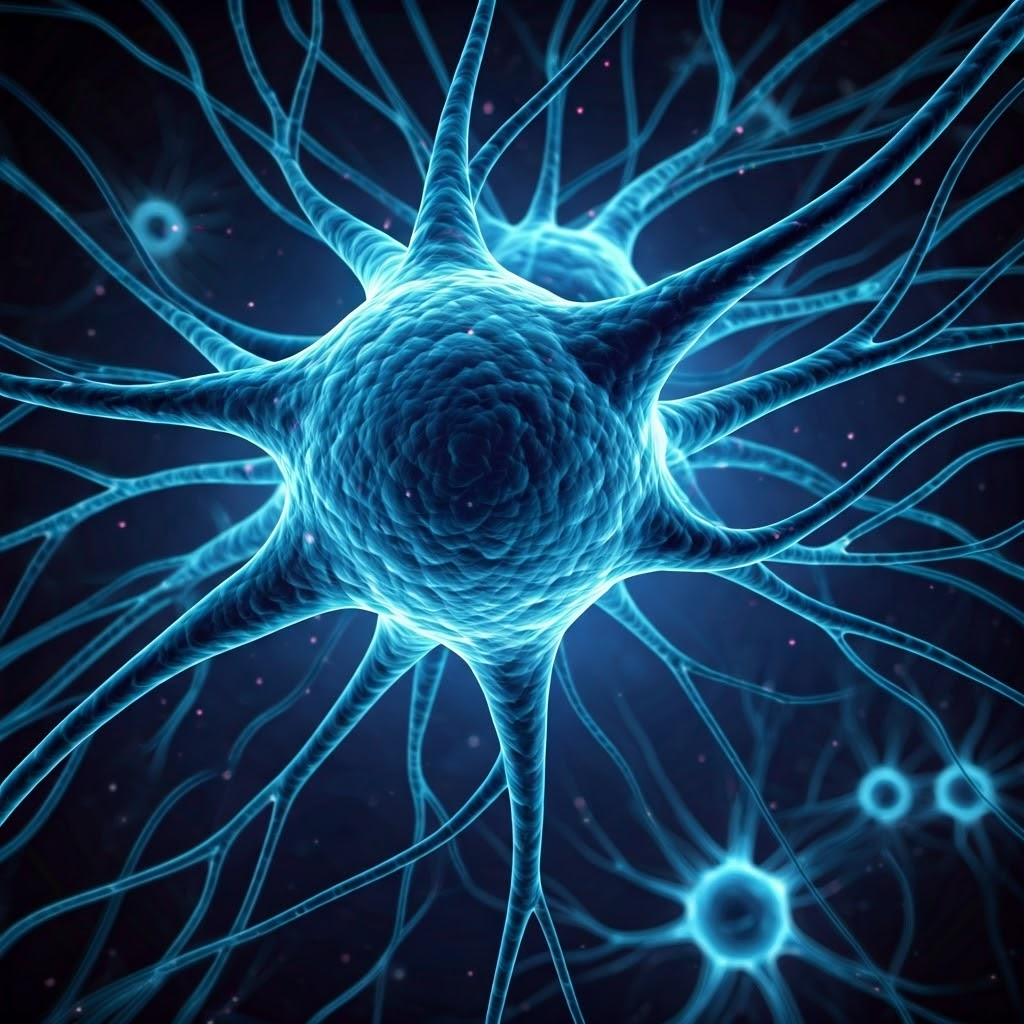
Your brain is a bustling worksite where neurons send quick messages while glial cells quietly keep everything running. Their partnership turns simple signals into thoughts, memories, and sudden flashes of creativity.
Imagine a neuron as a tall tree: a sturdy cell body, leafy dendrites catching signals, and a long axon trunk sending them on. Around this tree, glial cells act as caretakers, feeding, cleaning, insulating, and guarding.
Tiny Architects: Neurons and Glia
Neurons grab headlines because their electrical chatter powers every move or thought. Yet glia outnumber them, quietly running logistics. Astrocytes deliver nutrients and sweep away debris, oligodendrocytes and Schwann cells wrap axons in myelin, while microglia patrol for threats.
Without this support, neural traffic would slow, clog, or stop. Myelin loss in multiple sclerosis shows the risk—signals falter, coordination slips, and thinking becomes hard. The brain only thrives when its builders and support crew stay in sync.

Wired for Action: How Signals Travel
A neural message begins as an electrical surge called an action potential. Ions rush in and out of the axon membrane, creating a wave that races toward the synapse.
Myelin lets the wave leap between gaps called nodes of Ranvier, a shortcut named saltatory conduction. The result is speed—up to 120 meters per second in some fibers.
At the axon’s end, the signal meets a tiny gap. Vesicles release neurotransmitters that drift across, bind to receptors, and launch a new electrical surge in the next cell. Billions of these chemical handshakes happen every second.
Glia stay busy during this relay. They recycle used transmitters, steady ion levels, and repair damaged myelin. Their quiet work keeps the relay smooth and precise.
Branching Out: Dendrites and Idea Association

Dendrites sprout like branches, and each new twig adds another possible connections. A single neuron can listen to thousands of partners, weaving information from many sources.
Learning, play, and curiosity encourage extra growth. When you link a childhood melody to a fresh beat, the physical scaffold of that link forms along these branching tips.
Glia again assist, trimming unused branches yet nurturing active ones. This selective gardening lets useful paths strengthen while clutter clears away.
Structures Make Sparks Possible

Thought, memory, and imagination emerge from countless small events—electrical spikes, chemical handshakes, and structural tweaks. Neurons supply the signals, glia provide the support, and their synergy fuels every insight.
So when a new idea lights up your mind, picture that glowing forest inside your skull. Tiny architects are working together, turning simple signals into the spark we call creativity.
