16 min read  •  13 min listen

Wheels & Roads

How a Simple Idea Changed Everything

Wheels & Roads

AI-Generated

April 29, 2025

Ever wondered how a simple round thing and a stretch of dirt changed everything? This tome takes you on a journey from the first wheels to the roads that connected empires, showing how they shaped trade, cities, and even the way we think about travel. Get ready to see the world roll into focus.


Rolling Out: The First Wheels and Their Surprising Stories

Early Neolithic wooden wheel and axle uncovered near Ljubljana at sunrise, illustrating the origin of wheeled transport.

The first known wheel came from a muddy grave near Ljubljana. The 5,200-year-old wood disc lay beside an axle and hints of a cart. People had shaped tools for millennia, yet they took ages to put something round under a load. The delay was about problems, not brains.

The First Spin: Where and Why Wheels Appeared
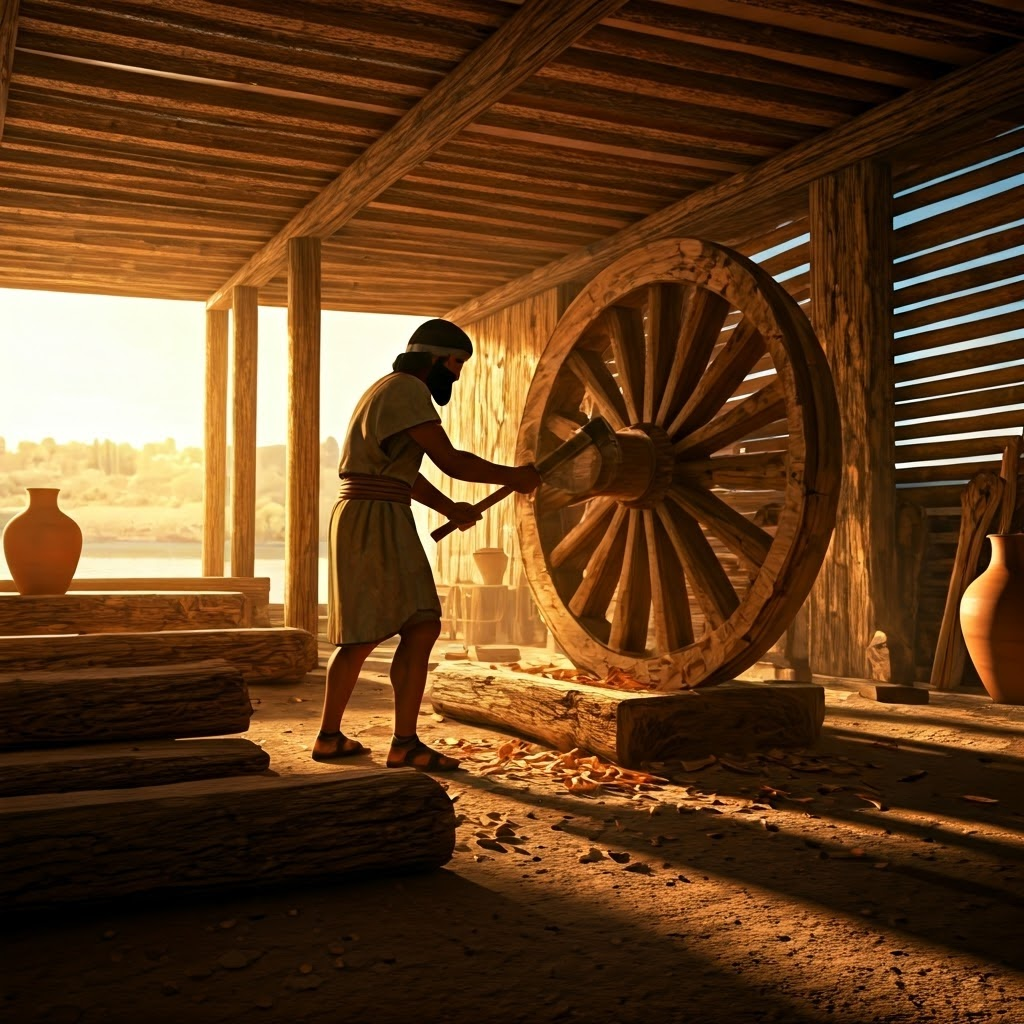
Ancient Mesopotamian carpenter carving a wooden wheel beside the Euphrates, showing early wheel construction techniques.

A wheel needs sturdy timber, sharp axes, and a reason to haul weight over land. In Mesopotamia around 3500 BCE potters already spun clay on small wheels. Someone enlarged the idea, set it under a box, and rolled away. Elsewhere rivers or rugged land made wheels less useful.

Sumerian king and deity with symbolic wheels behind them, highlighting how new technology merged with myth.

The leap wasn’t instant or inevitable

Wheel concepts surfaced in Mesopotamia, Europe, and the Indus Valley. Sumerian tales tied the wheel to kings and gods. Myths wrapped the device in awe, giving new tech cultural momentum that helped it spread and endure.

Mesopotamian potter shaping clay on a turning wheel under dim lamplight, the tool that inspired carts.

Potter’s Wheels and the Leap to Carts

A potter’s wheel was a flat spinning disc, first hand-turned, then axle-mounted for smoother motion. Once craftspeople felt how easily a balanced disc rotated, ambition grew. The same parts could carry a cart instead of clay.
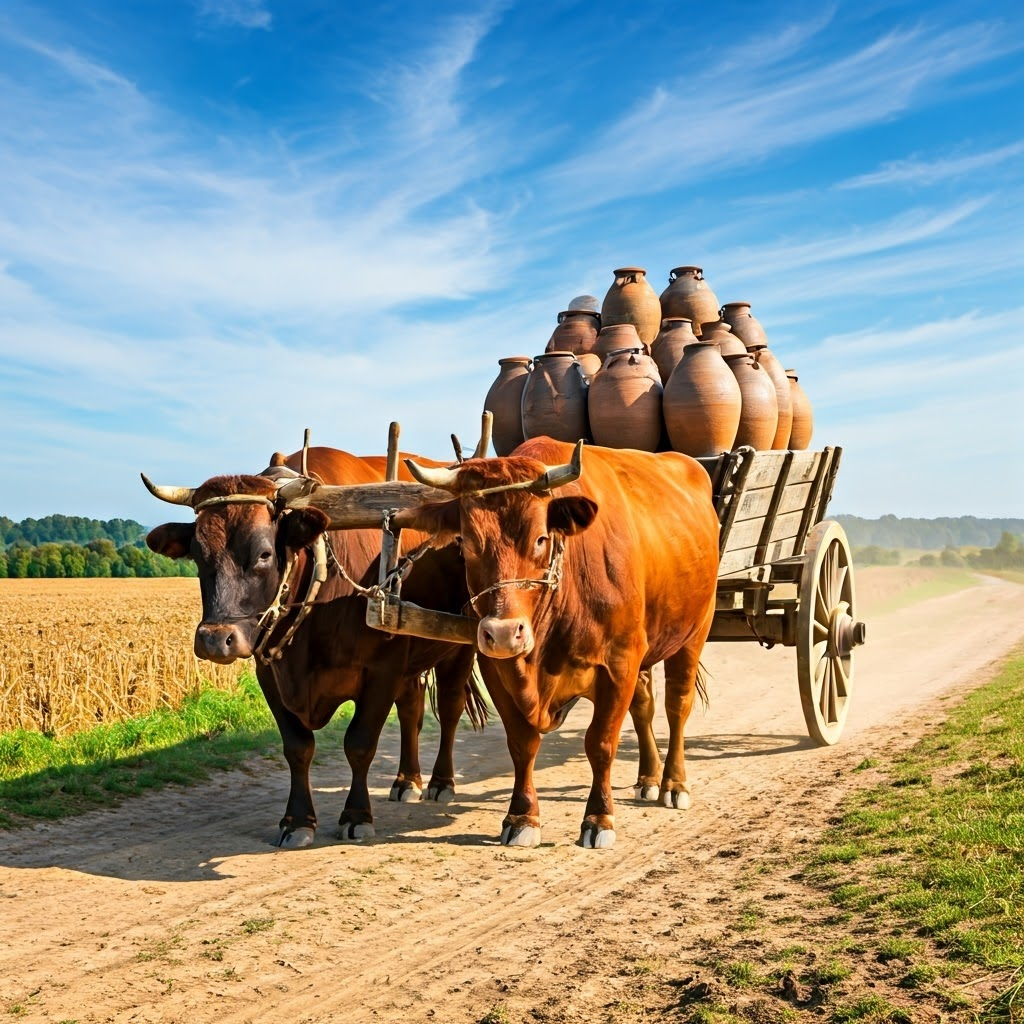
Pair of oxen hauling a timber cart loaded with jars across a dusty track, demonstrating the wheel’s power multiplier.

Early carts were heavy. Each wheel came from one thick slab or three planks pegged together. They were slow, yet two oxen moved loads that once required many people. The wheel multiplied muscle into mechanical force for farmers, builders, and armies alike.

Ancient artisan fitting wooden spokes into a hub, revealing the leap to lightweight chariot wheels.

Spokes, Hubs, and Bearings: The Secret Sauce

A solid wheel is strong but heavy. Spokes cut weight while staying firm, letting chariots race. The hub, drilled smooth, turns around the axle. Animal fat or bronze rings acted as early bearings, reducing friction and keeping the ride smooth.
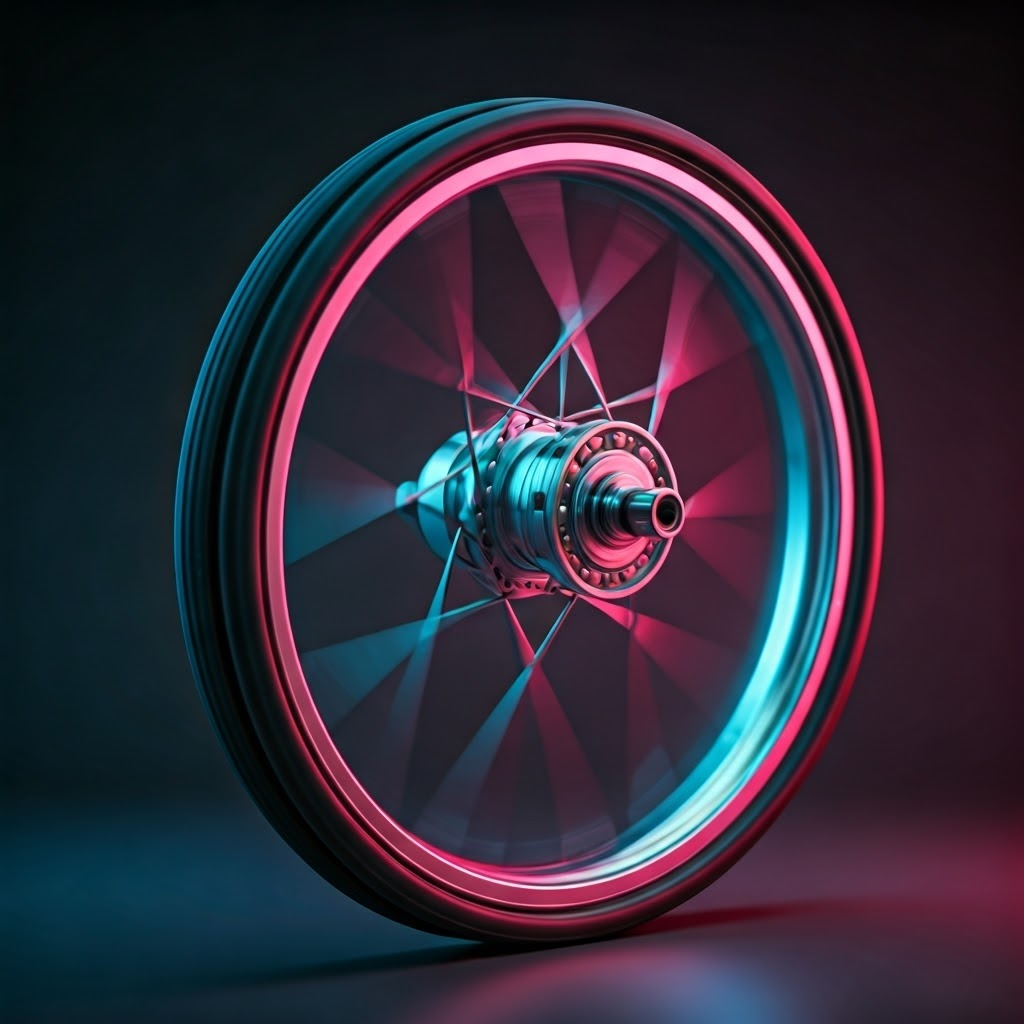
Close-up of a spinning bicycle wheel with neon trails, connecting ancient design to present technology.

Modern bicycle wheels show the same logic: light spokes, precise hubs, and tiny steel balls. From strollers to jets, today’s wheels refine the same principle first carved in wood.

Inca runners sprinting along mountain paths at dawn, succeeding without wheeled vehicles.

Why Some Societies Rolled and Others Didn’t

Dense jungle, steep hills, or lack of draft animals made full-size wheels less handy in Mesoamerica. People there still crafted toy wheels but moved goods by river, llama, or head-strap. Terrain shaped choices more than ingenuity.

Illustrated comparison of jungles, mountains, and plains showing why wheels suited some terrains but not others.

The Inca built 25,000 miles of roads, rope bridges, and relay runners covering 150 miles a day. Wheels were optional. Innovation works when it fits the setting. The story of the wheel reminds us that true adaptation means picking tools that match land, animals, and needs.


Tome Genius

Technology Through History

Part 2

Tome Genius

Cookie Consent Preference Center

When you visit any of our websites, it may store or retrieve information on your browser, mostly in the form of cookies. This information might be about you, your preferences, or your device and is mostly used to make the site work as you expect it to. The information does not usually directly identify you, but it can give you a more personalized experience. Because we respect your right to privacy, you can choose not to allow some types of cookies. Click on the different category headings to find out more and manage your preferences. Please note, blocking some types of cookies may impact your experience of the site and the services we are able to offer. Privacy Policy.
Manage consent preferences
Strictly necessary cookies
Performance cookies
Functional cookies
Targeting cookies

By clicking “Accept all cookies”, you agree Tome Genius can store cookies on your device and disclose information in accordance with our Privacy Policy.

00:00