
The Quantum Coin Toss: What Superposition Really Means

Picture a regular coin spinning through the air. Before it lands you cannot tell if it will show heads or tails. In everyday life the coin already has one face up at each instant—you are just unaware of it. This feeling of not knowing is classical uncertainty.
Now imagine a quantum coin. This coin is not merely tiny pocket change. While it flips, the coin does not pick heads or tails until you check. Instead, it sits in a genuine blend of both faces. That unresolved blend is called superposition.
Think of a lamp with a dimmer switch. A classical lamp stays on or off. A quantum lamp holds a blurred mix of the two—yet you cannot tap a slider to see its brightness. The coin keeps this in-between state until you look.

Physicists test superposition with the double-slit experiment. They fire electrons one by one at a barrier that has two slits. If electrons behaved like tiny balls, two neat piles would appear.
Instead, a striped pattern slowly builds up—a clear sign of interference. Each electron seems to travel through both slits at once. When detectors reveal the chosen slit, the stripes vanish and every electron acts like a lone particle.
This lab result shows superposition in action. The electron’s route is not simply hidden. Its state truly combines both paths until a measurement forces one outcome.
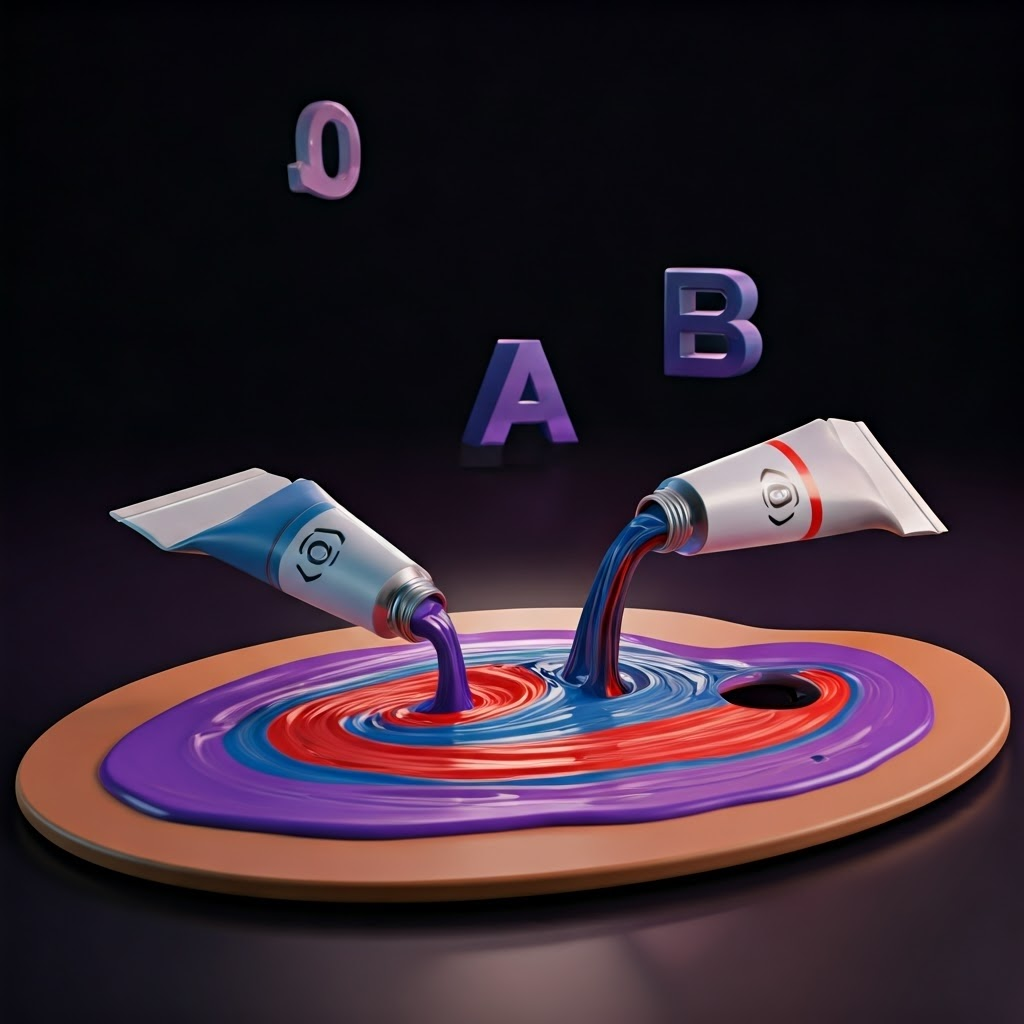
Physicists capture this blend with a compact formula:
Here, names the system’s state; is heads, and is tails. The numbers and weigh each part. Like paint, the mix creates a fresh color. This combination is not mere probability—it sparks new behavior, such as interference.
You can also picture a musical chord. Two notes blend to form something richer than either note alone.
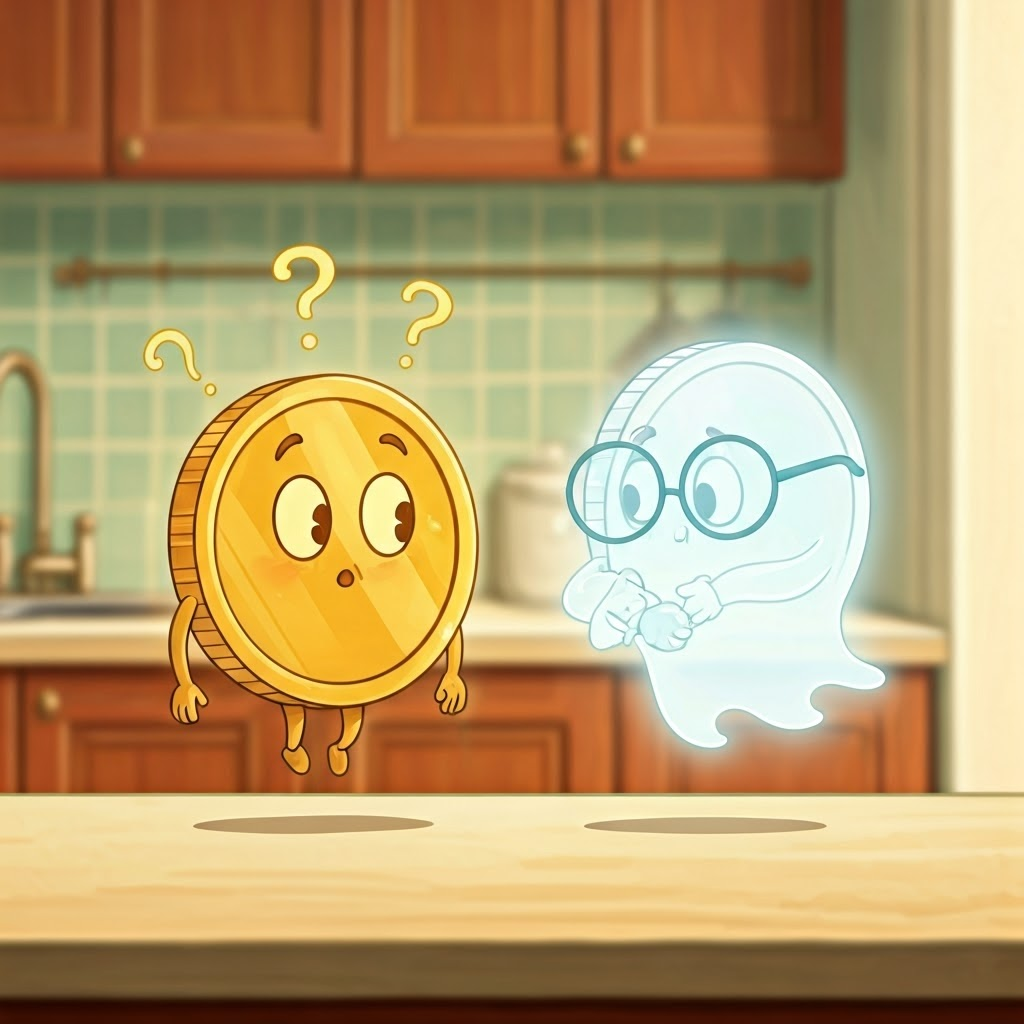
Many people think superposition just hides a definite state. In reality, the state is not set until measurement. The blend is real, not a placeholder for ignorance.
Another mistake is to picture a particle split physically into two pieces. Superposition instead describes one system whose mathematical state carries both options.
Do not confuse superposition with tossing two separate coins. A single quantum coin forms a unique state that behaves unlike any simple mix. That novelty is why electrons create interference while real coins never do.
Everyday objects are far too large and noisy to show this effect. Quantum pieces quickly lose their both-at-once nature. So your coffee cup will not hover in two spots unless you stray deep into theory.
In short, superposition is a fresh, deeply odd way of being. It is not just hidden information. Accept that and you are already thinking like a quantum physicist.
