
The Spark: Why Humans Started Shaping Stones
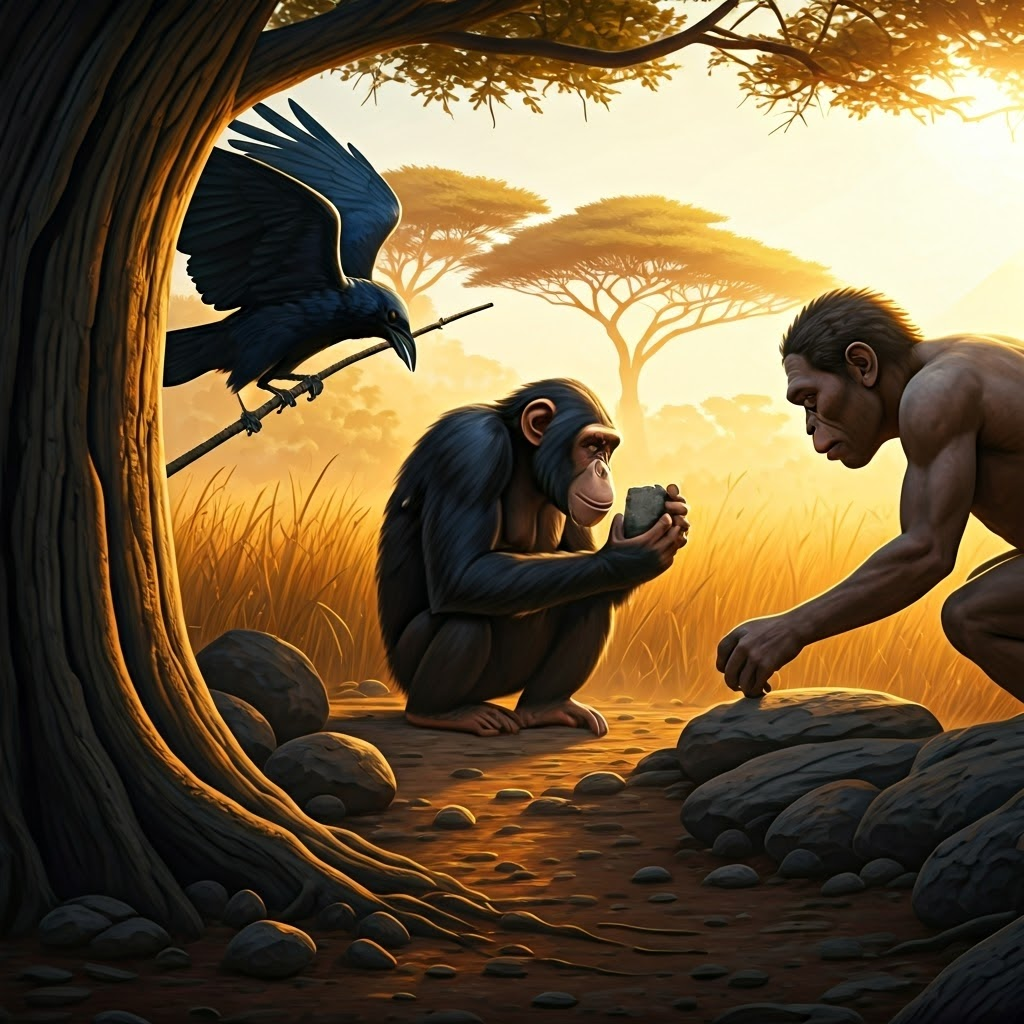
A New Way to Think: The First Toolmakers
Human ancestors saw more than a rock—they pictured possibility. They planned a tool before lifting a hand. Animals use sticks or stones as found, yet early people imagined changes first. This mental rehearsal—seeing not just the object but its hidden edge—set them apart.
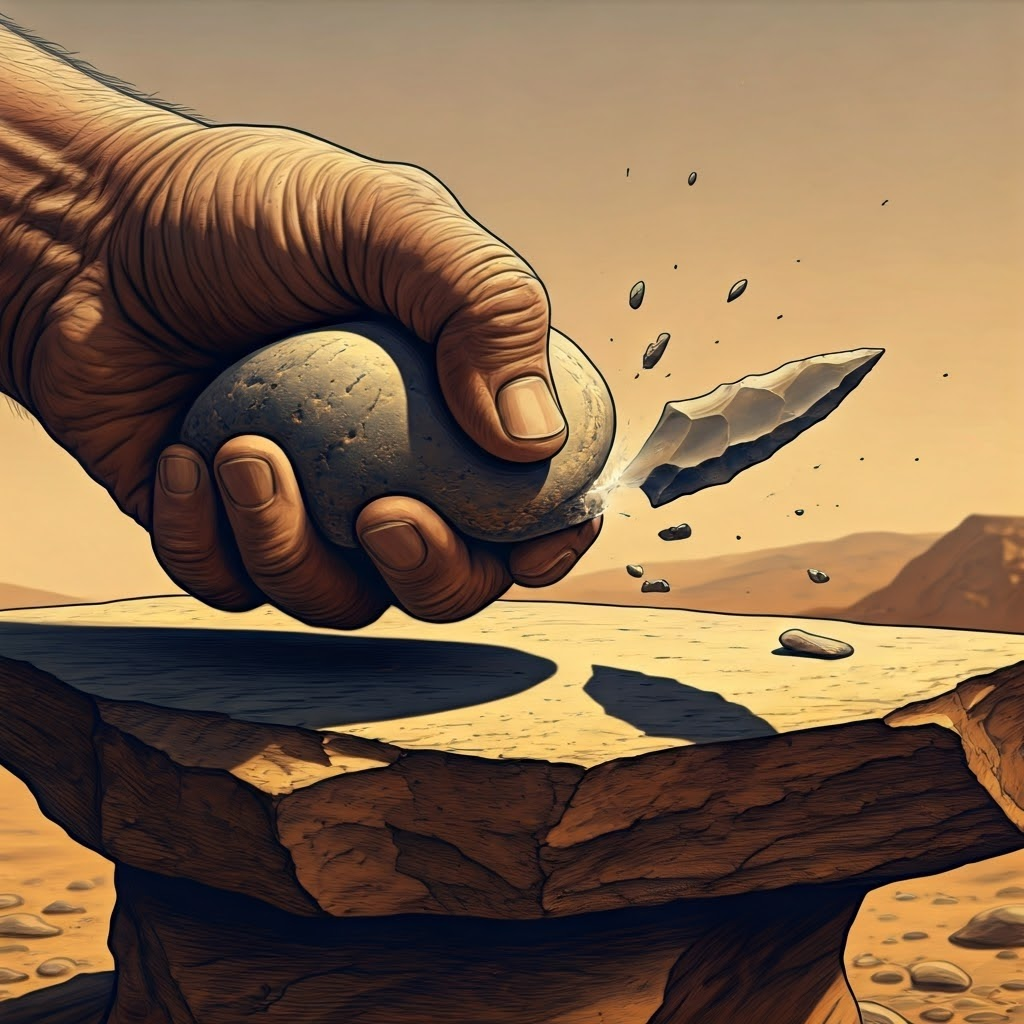
Oldowan makers chose a rounded pebble, angled a strike, and sent off a sharp flake. They followed a thought chain: hit here, get an edge, then slice. That deliberate sequence shows technological imagination, not random smashing.
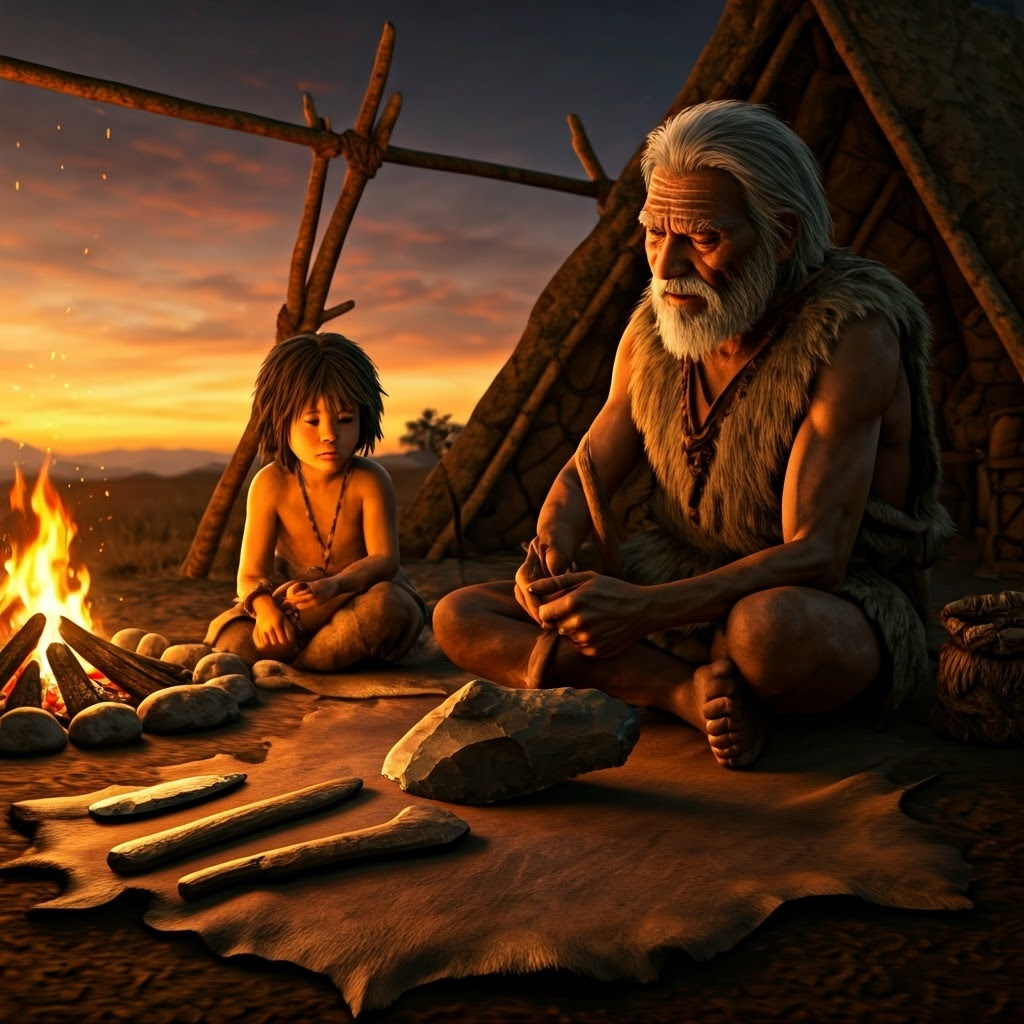
Birds and apes rarely repeat exact shapes. Humans refined forms for ages. Acheulean hand-axes—tear-shaped, two-sided—signal a cultural memory children copied for hundreds of millennia.
Passing skills matters. Watch one video on knapping and you trace maybe 30,000 grandparent-to-grandchild lessons. Minds that could imagine, plan, and teach pushed the leap.

Sharp Edges, Big Changes: Flint-Knapping Basics
A thin edge builds worlds. Early people learned to knap flint long before they dreamed of metal. Break a bottle while camping—glass cuts because it fractures thin and hard. Flint and obsidian can slice even cleaner.
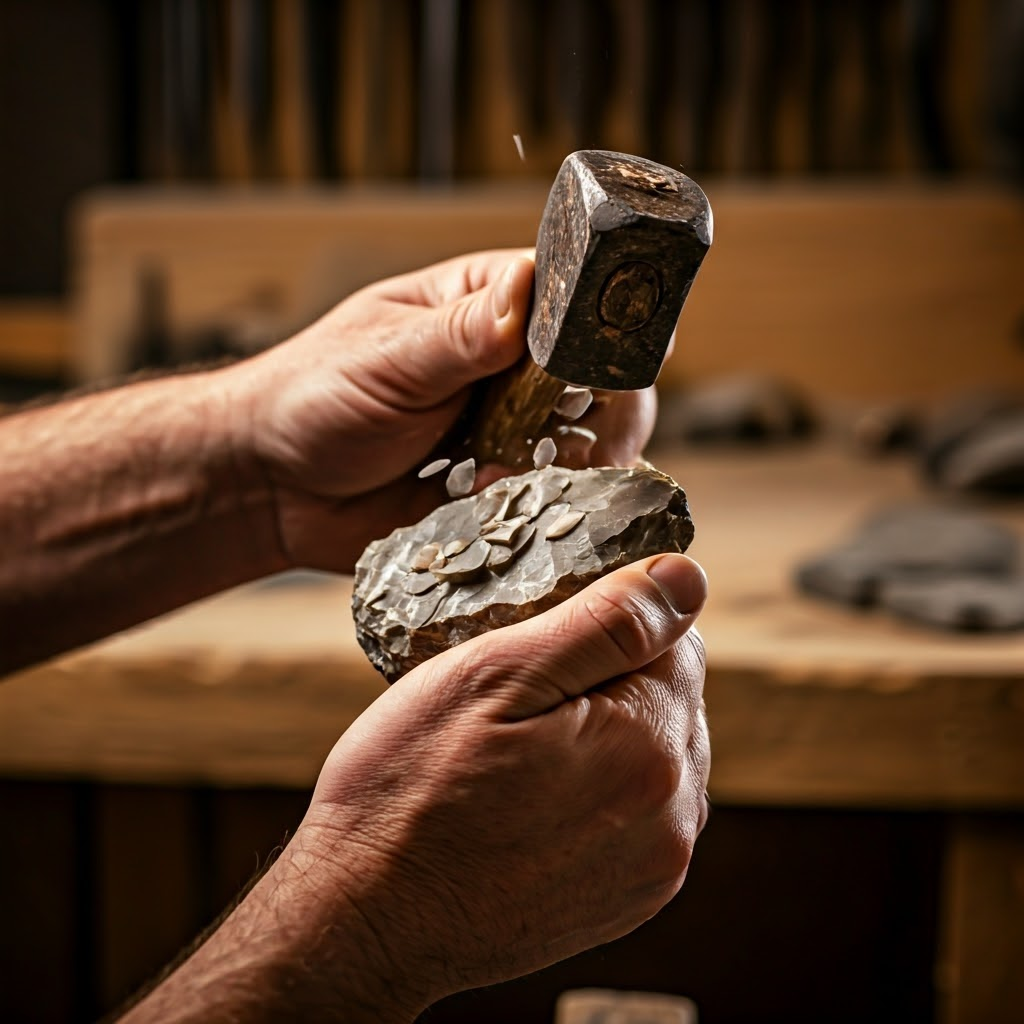
Every knapping choice matters—angle, force, hammer shape. The goal: edges under one millimeter. Acheulean tools feel good in the palm and can butcher an animal before dulling, proof of precision over chance.
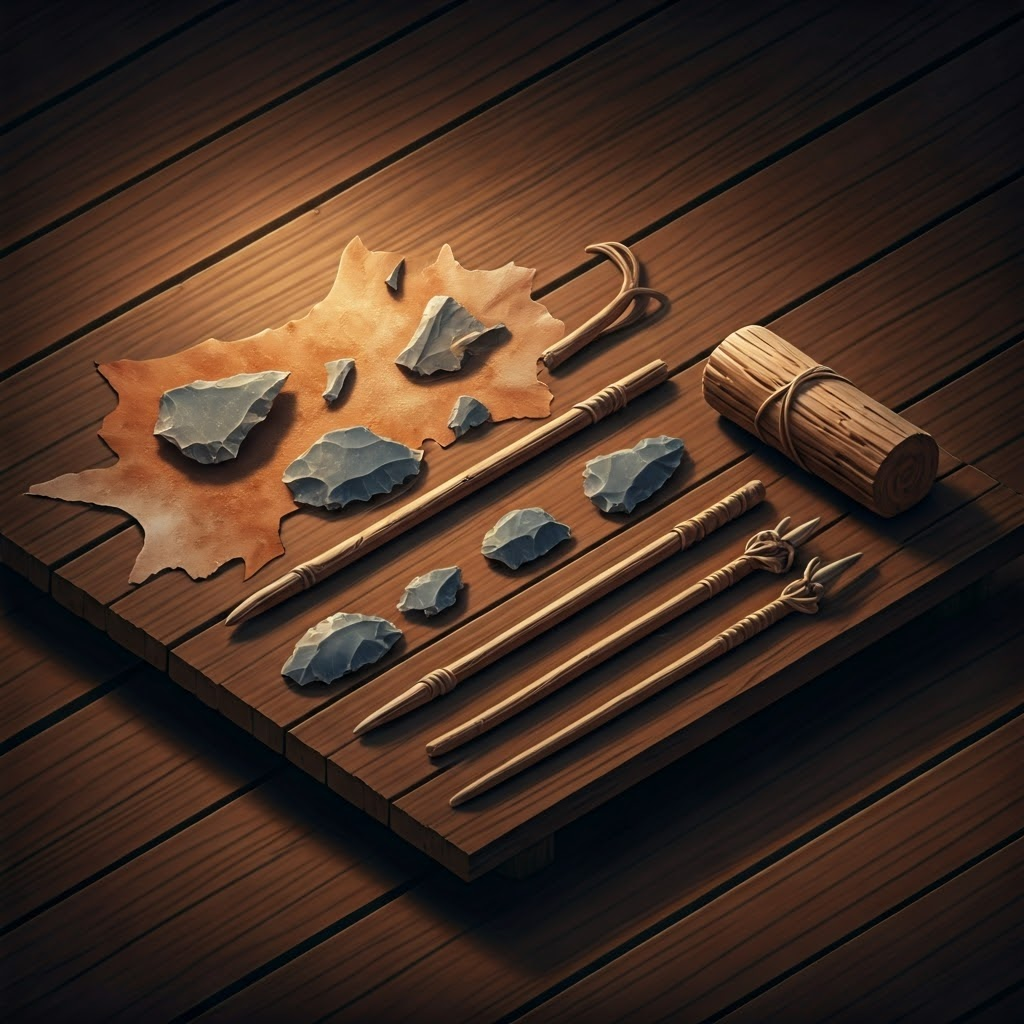
Stone flakes became original multi-tools. They skinned game, scraped hides, carved wood, and dug roots. Sharp stone let soft hands do what teeth could not—an edge revolution.
Styles evolved; shapes specialized; trade in quality stone spread. Each artifact is a fossilized idea, marking how thought traveled.
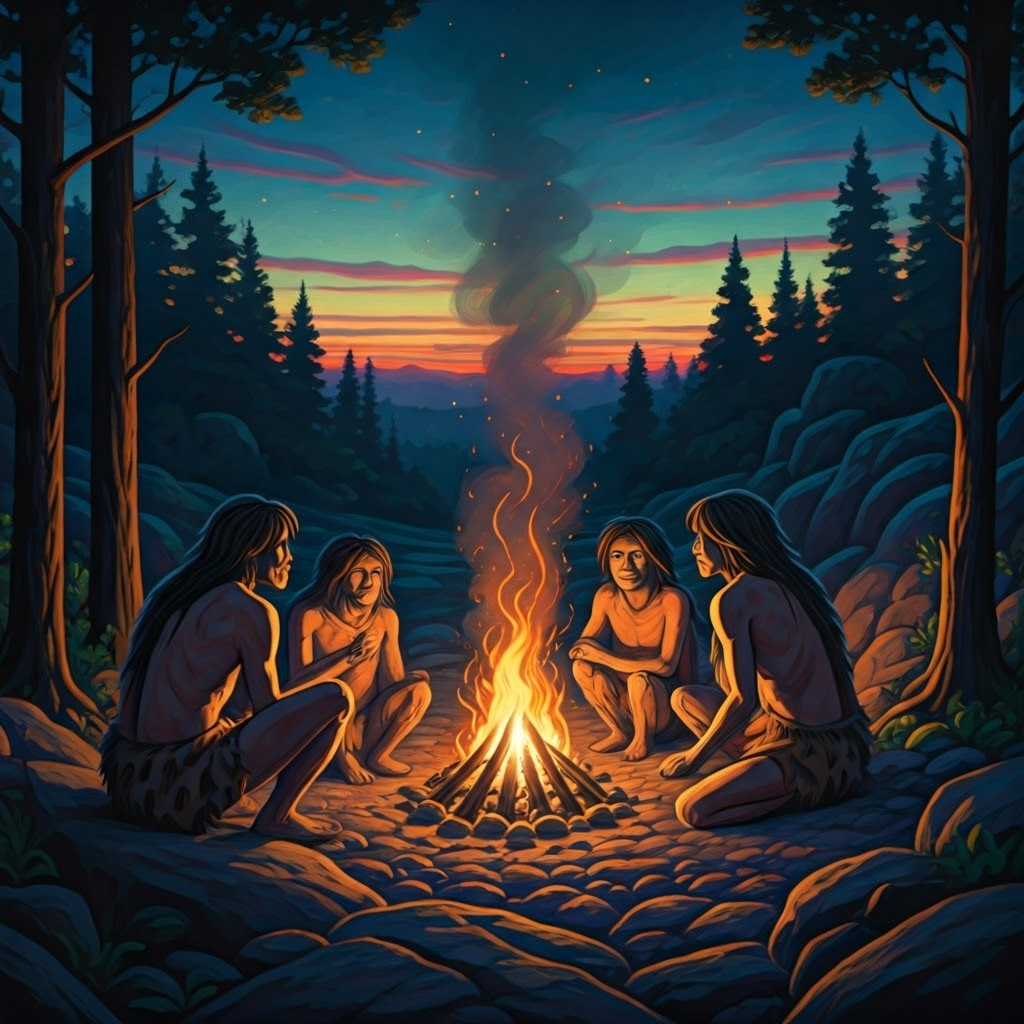
Fire: The Original Game Changer
Add fire and life shifts again. Once people mastered flame—perhaps stolen from lightning—they turned night into day and raw into cooked. Fire killed parasites, softened roots, and scared predators.
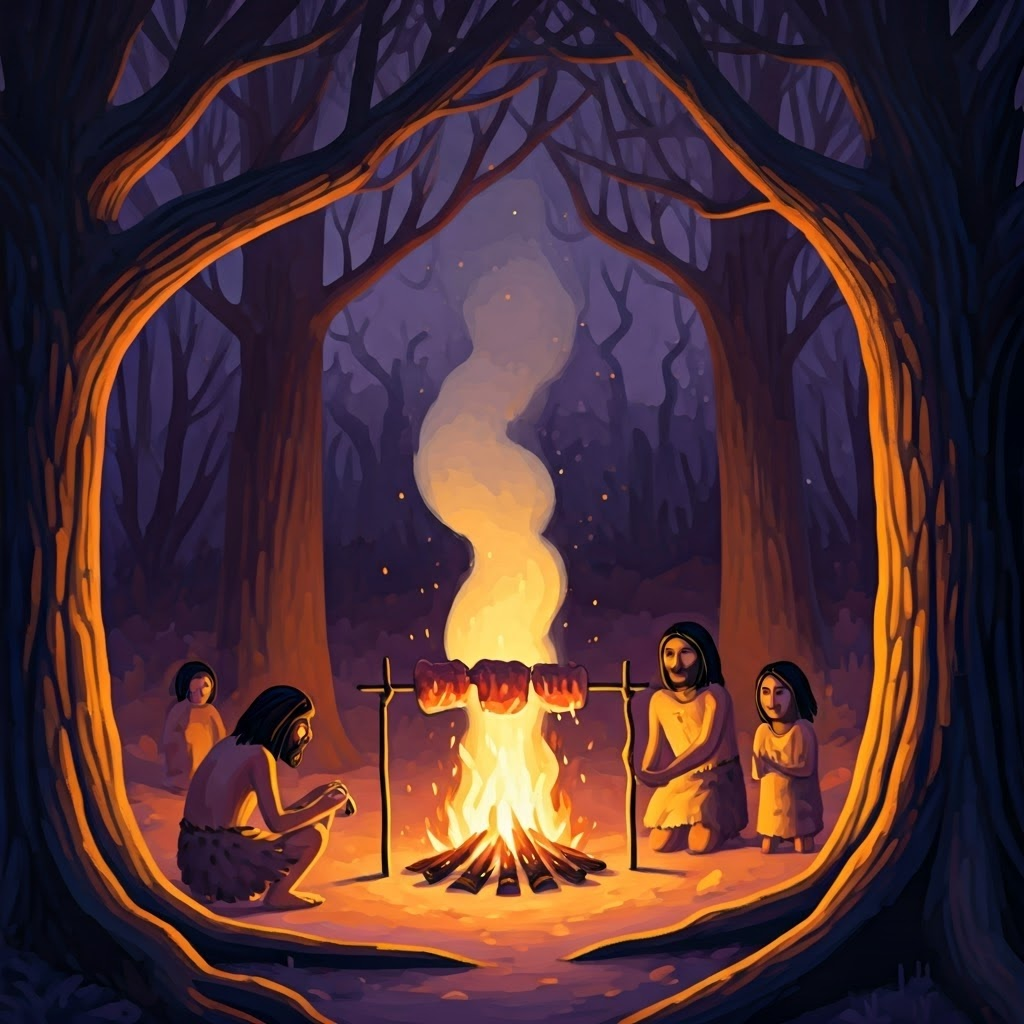
Picture dusk. Flames light faces, cook meat, and warm stones for cleaner knapping. Heated sap becomes glue, fastening stone to wood. Fire created hours for talking, teaching, and dreaming.
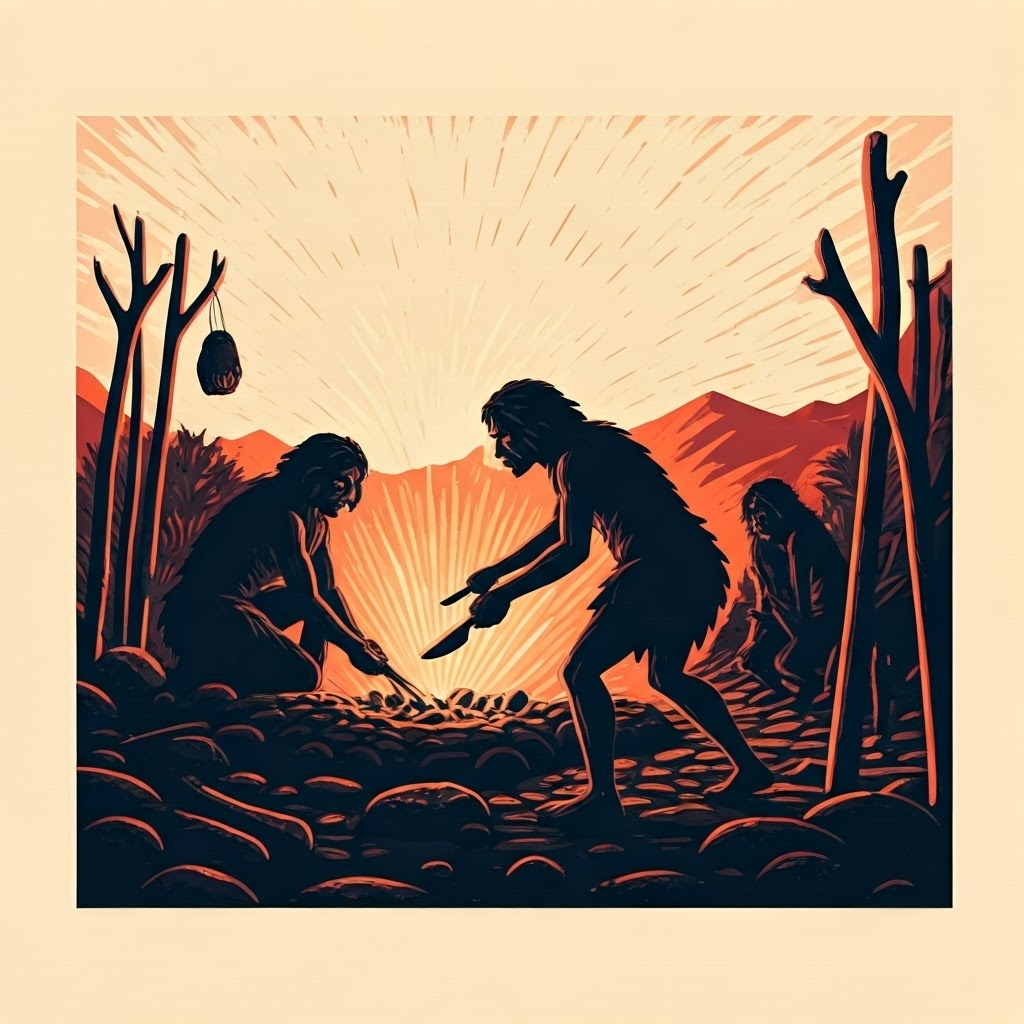
Daily routines formed: stir embers at dawn, roast leftovers, carve tools, share stories. Control of flame fostered community and planning.

Hearth remains—charred circles and split bones—show fire reshaped ideas of time, distance for fuel, and social space.

Why It Matters
Planned tools, keen edges, and fire form the roots of everything after. Sharp stone let us shape the world. Shared skills built culture. Fire freed energy for thought. Strip modern life down—knife, campfire, even your phone’s glass—and you see those first sparks that turned clever animals into storytellers and builders.
