
The Puzzle That Shook Einstein
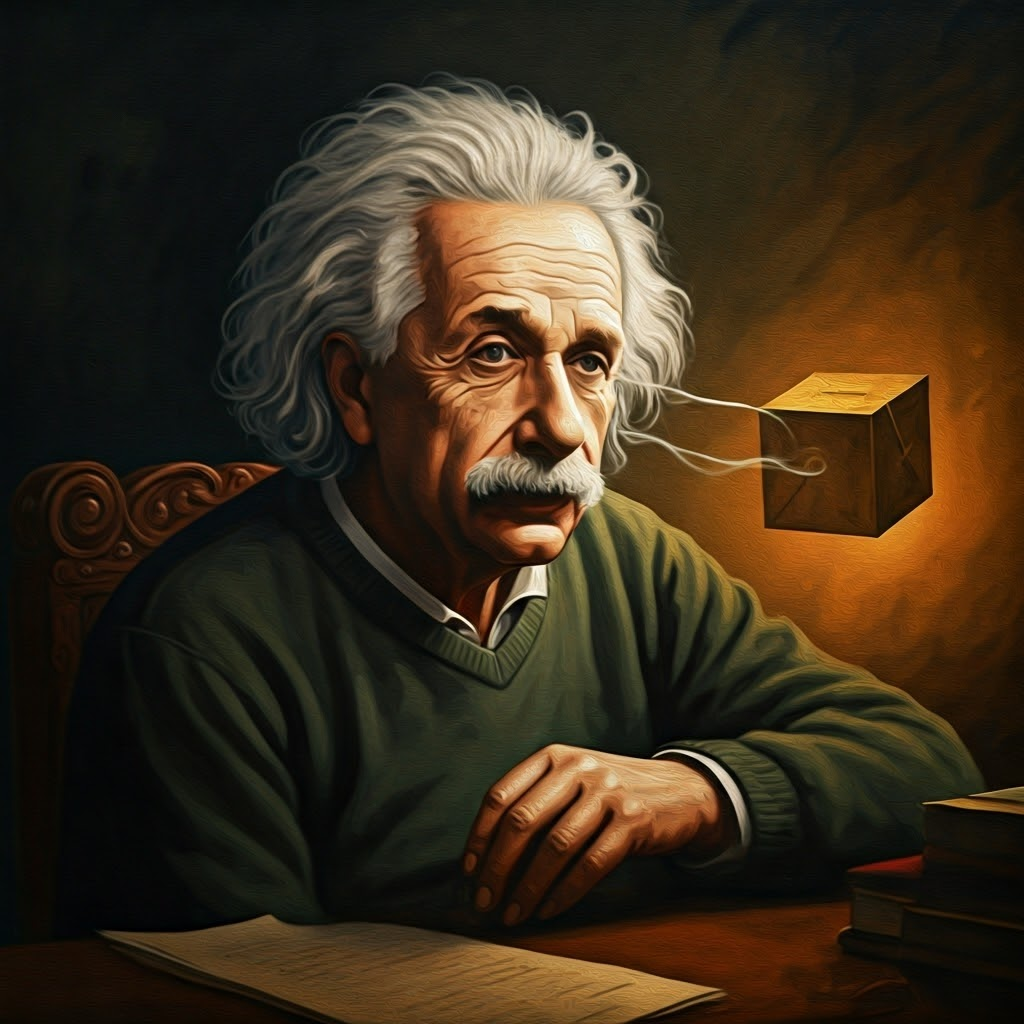
Picture the 1930s. Einstein sits with Boris Podolsky and Nathan Rosen, puzzled by quantum mechanics—the theory that lets particles exist in two places at once. Most physicists cheer. Einstein stays cautious. In 1935 they publish the EPR paper and ask if quantum theory truly describes everything.
Einstein admits the math works and matches experiments. Yet he feels it only tracks clouds, not the winds that shape them. He repeats, “God does not play dice.” The EPR paper becomes his firm, respectful pushback—an invitation for physicists to look for deeper rules.
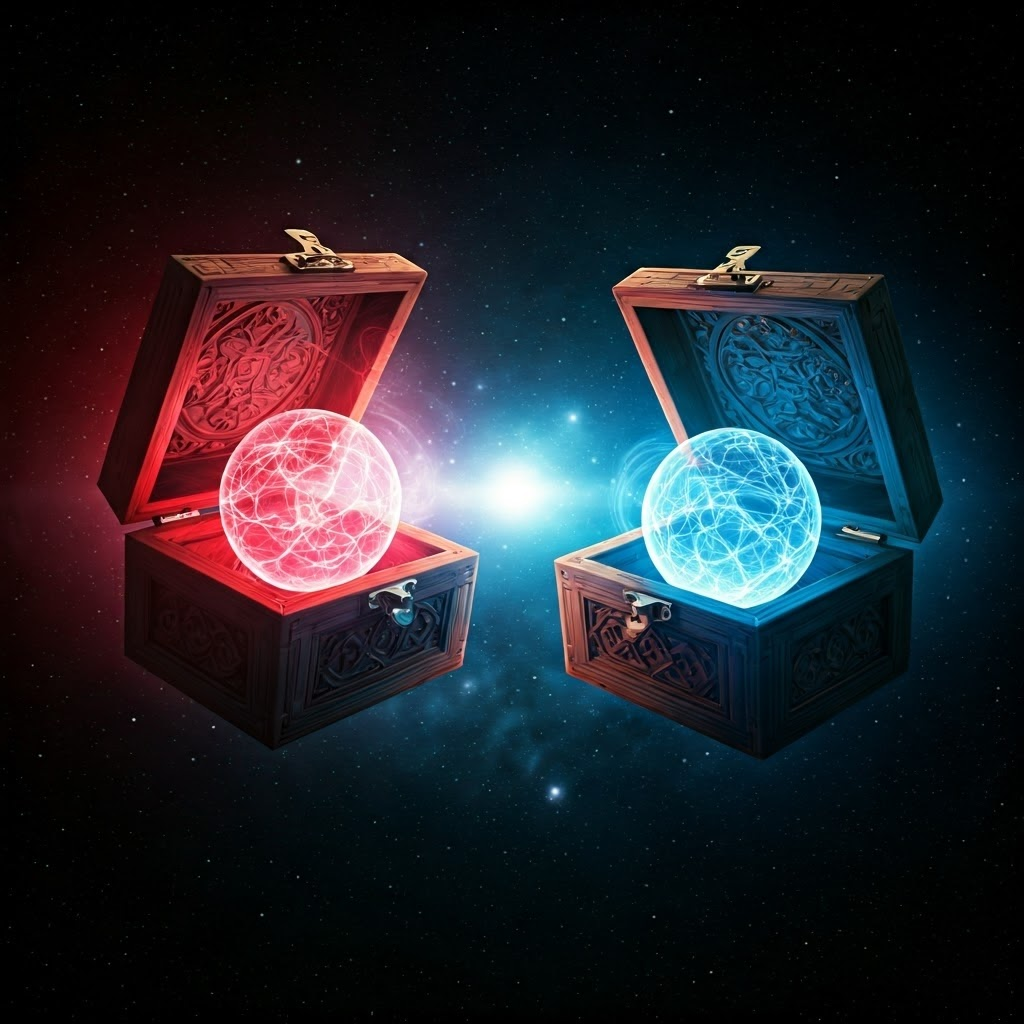
Two Boxes, Two Balls: The EPR Thought Experiment
Imagine two sealed boxes, each hiding a ball that might be red or blue. The balls are perfectly linked, or entangled. Open one box and see red, and you instantly know the distant ball is blue. Which color appears is random, yet the colors always oppose each other.
Now place one box in New York and the other in Tokyo. Open the New York box and find red. At that moment you know Tokyo’s ball is blue—no signal travels, yet the results mesh. This distance-defying link is what Einstein calls spooky.
Quantum theory says the colors are not set beforehand. They “become real” only when a box is opened, and that act somehow fixes the partner color. In labs, physicists replace colors with particle spin or polarization, yet the instant correlation stays identical.
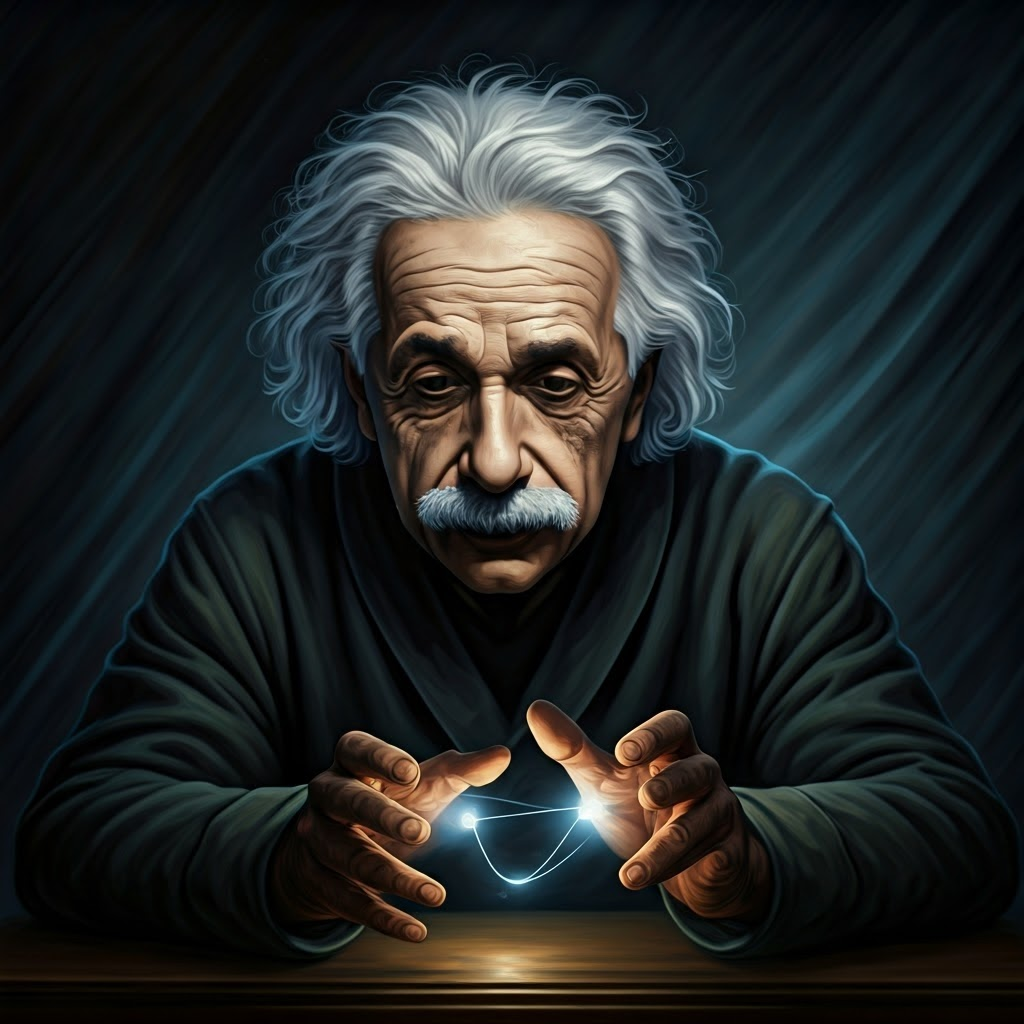
Einstein’s Worry: Spooky Action?
Einstein dislikes the idea that a measurement here can set a fact over there faster than light. Relativity forbids such instant messages. He suspects each ball holds hidden details—values fixed all along yet invisible. He seeks a universe that follows clear, local rules without random jumps.

What Does “Complete” Mean?
For EPR, a theory is complete when knowing its permitted facts lets you predict every feature of a system. No guessing. Quantum mechanics, however, offers only probabilities until you measure. To Einstein, this feels like checking a mailbox and having the letter appear because you looked.

The Long Shadow of the EPR Paradox
The EPR argument refuses to fade. It sparked Bell’s theorem and countless entanglement tests that still probe reality’s fabric. Each experiment asks if the universe is woven by hidden strands or if our notion of completeness needs a bold revision.
Einstein never saw these later results, yet his doubts keep guiding physics. Whenever we wonder whether observing something changes it or whether distant objects share more than space, we walk in the shadow of the paradox that once unsettled the world’s greatest mind.
