
Riding Beams of Light: The Strange Rules of Special Relativity

The Speed Limit of the Universe
Picture yourself watching two cars race down a highway. If one car is moving at 60 mph and the other at 70 mph, the second car gains on the first at 10 mph. Relative speed feels simple here.
Now swap the cars for flashlights. You stand still while a friend zooms past on a skateboard, and you both switch on beams aimed forward. The light always passes you at the same speed—about 299,792 kilometers per second ().
There’s no catching up to the beam. Repeated experiments, such as Michelson–Morley, showed that light’s cosmic speed limit never changes, so something else in space or time must shift to keep the rule.
Time Gets Weird
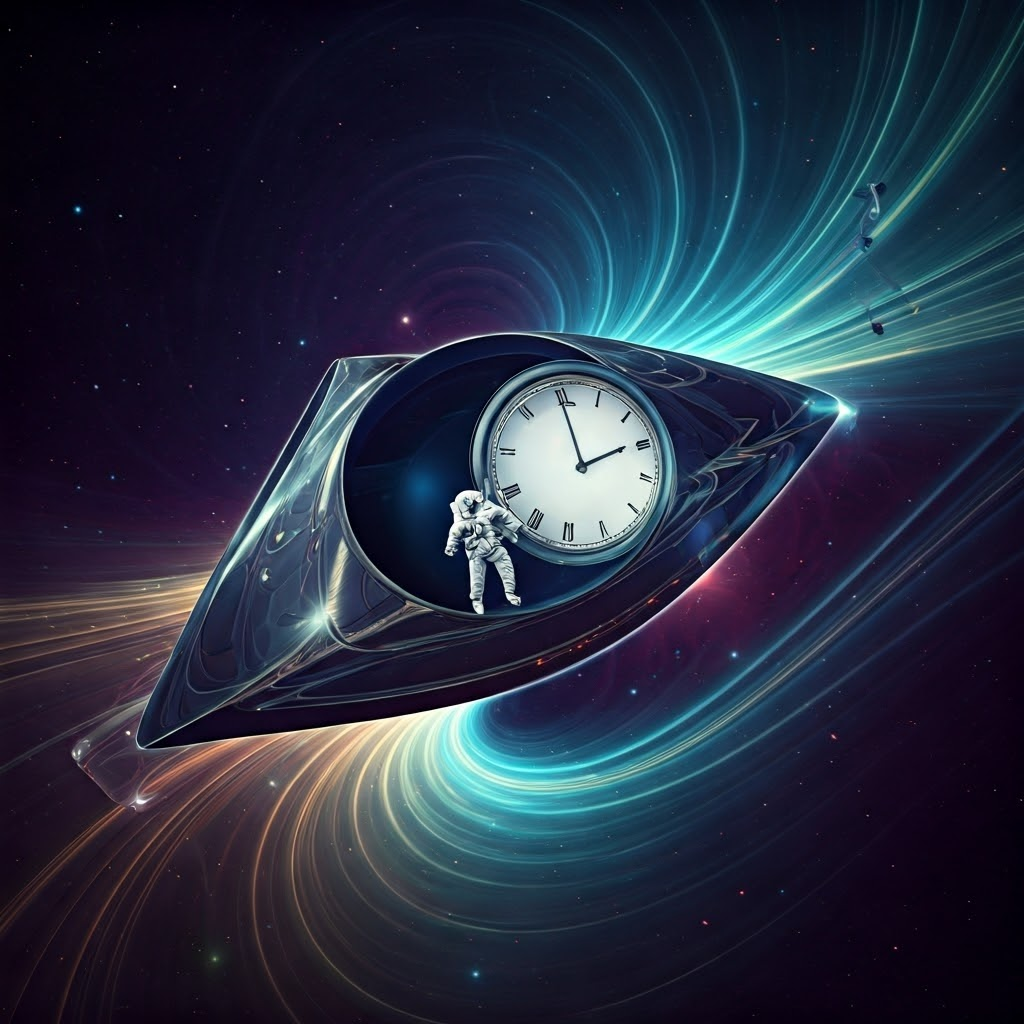
Here’s where things turn strange. If light’s speed is fixed, then clocks in motion must slow down. From Earth, you see a ship’s clock tick more slowly, revealing time dilation as a real effect.
A helpful picture is the twin paradox. One twin stays on Earth, while the other rockets away, turns back, and returns younger than the sibling who never left.

Time Gets Weird
Imagine shining a light straight up inside a moving train. To the rider, the beam travels straight up and down.
An observer on the platform sees a zigzag path, so the light covers more distance. To preserve its speed, the moving clock must tick slower.

Shrinking Distances and Shifting Nows
Space warps too. At high velocity, objects shorten along their motion; this squeeze is called length contraction.
If your ship is 100 meters long while parked, a bystander sees it shorter when you flash past, though everything feels normal onboard.
The oddest twist is simultaneity: two events that feel “at once” to you may unfold at different times for someone rushing past.

Everyday Relativity: GPS and Beyond
High-speed GPS satellites orbit where gravity is weaker. Speed slows their clocks, weaker gravity speeds them up, and engineers balance both effects to keep navigation exact.
Without these correct adjustments, your phone’s position would drift several miles each day.
Everyday Relativity: GPS and Beyond
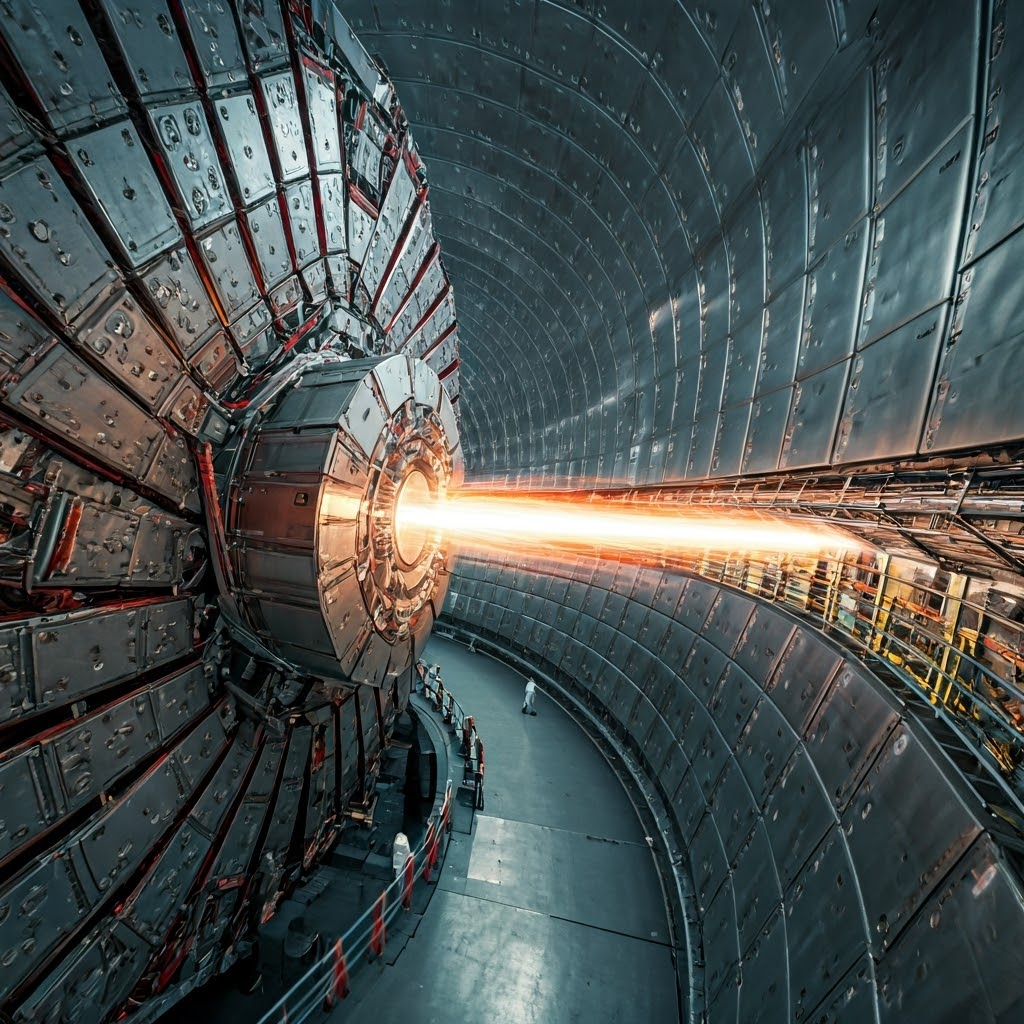
Even outside satellites, particle accelerators like the Large Hadron Collider rely on special relativity to guide near-light-speed beams.
High-speed muons from cosmic rays live longer in our atmosphere because their moving clocks tick slowly.
These day-to-day tests prove the machinery of the universe follows Einstein’s rules.

Relativity’s Everyday Magic
You don’t need to fly a spaceship to notice relativity’s fingerprints.
Whenever you check a map, send a photo, or gaze at the sky, you confirm space and time are flexible, not fixed.
Einstein showed that if we ride beams of light, we find a universe far stranger—and more beautiful—than common sense ever guessed.
