
From Counting Sheep to Clay Tablets: The First Marks

Why Memory Wasn’t Enough
Imagine a village thousands of years ago. Sheep graze on the hillside, jars of grain line a dusty storehouse, and neighbors trade goods by handshake. Everything runs on shared recollection: who owns which goat, who paid the temple, who still owes grain.
Memory works—until it doesn’t. Forget a goat or miscount a jar and trust unravels quickly. Early farmers knew a missed detail could spark conflict, threaten food stores, or break alliances.

Tallies, Tokens, and the Birth of Proto-Writing
When people needed proof that outlasted talk, they turned to marks. A bone or stick with one scratch per sheep created a clear, visible count anyone could verify later.
Around 8,000 years ago, inventiveness grew. Small clay shapes—cones, spheres, disks—became tokens. Each form matched a product: a cone for grain, a sphere for sheep, a disk for oil. Hand someone three spheres and you recorded a debt of three sheep.
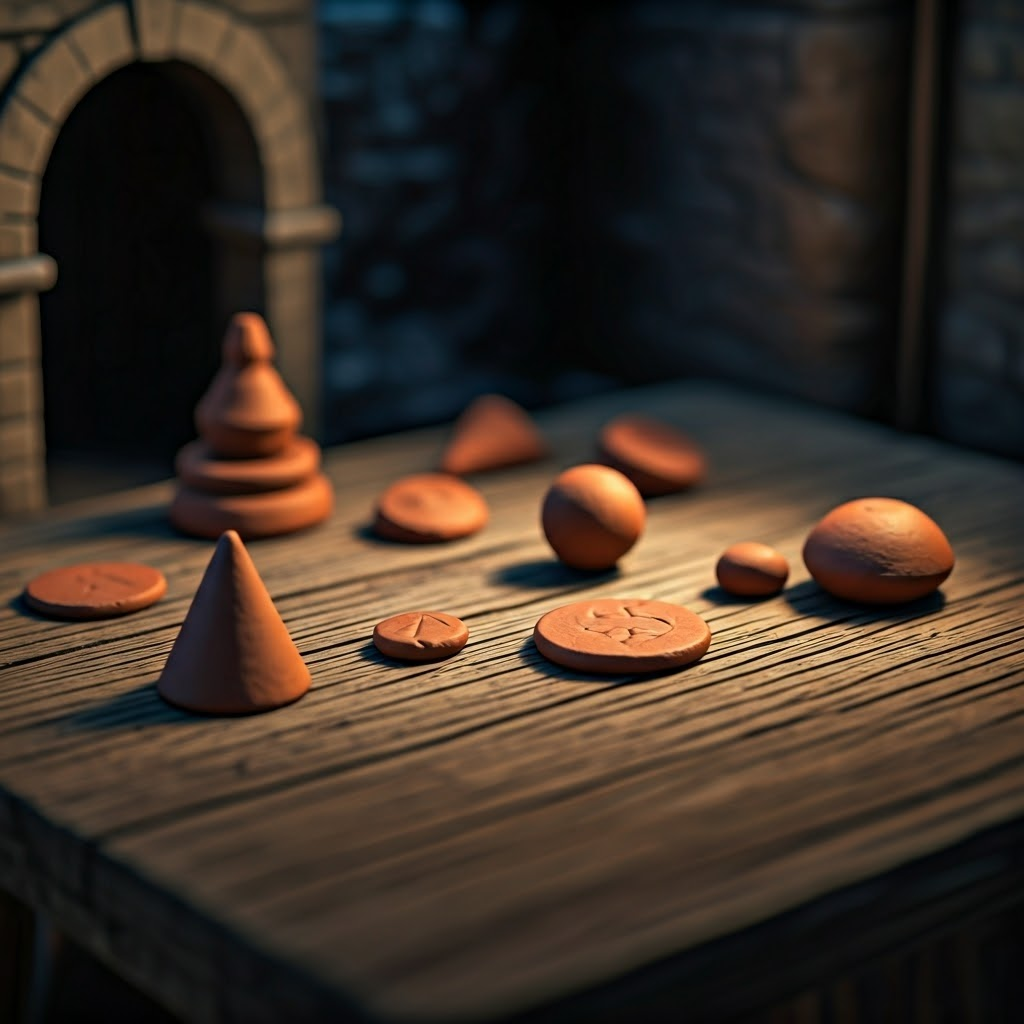
People stored tokens in clay envelopes called bullae. Sealed and stamped, these little packages acted like ancient receipts—safe from tampering, ready for inspection.
Yet counting alone wasn’t enough. Tokens said how much but not who, when, or why. As trades expanded, society demanded clearer, richer records.
From Objects to Impressions: The First Clay Tablets
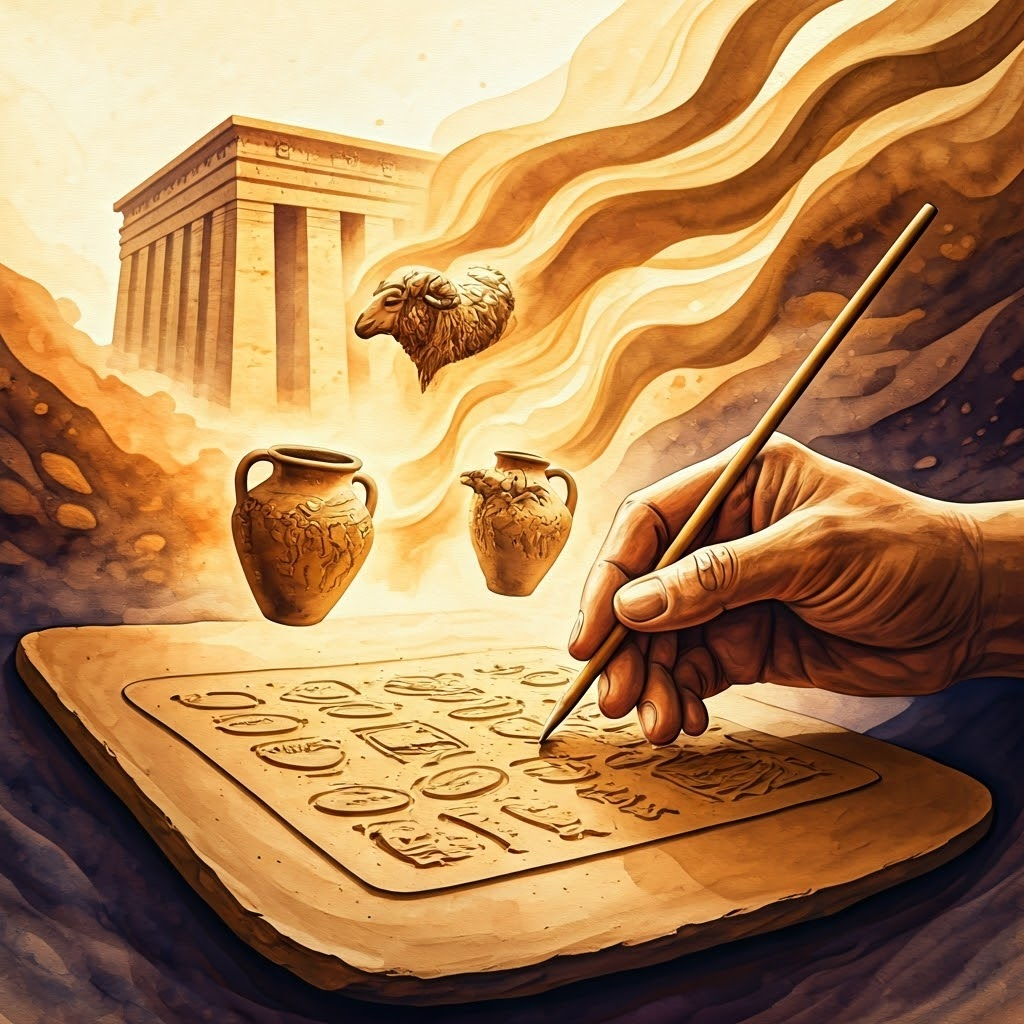
A clever fix appeared around 3500 BCE in Sumer. Instead of carrying tokens, scribes pressed them into soft clay, then baked the slab. One impression replaced a fragile object and lasted for ages.
Clay tablets soon carried more than numbers. With a reed stylus, writers added names, dates, and seals. A tablet might show two sheep transferred on a set day, witnessed by elders—turning bookkeeping into a story of responsibility.
Stacks of these tablets filled temple archives. Administration pushed writing forward, driven by the need to log taxes, offerings, and debts. Look around today—receipts, spreadsheets, calendar apps—and you’ll see the same impulse. Each new mark, from tally stick to tablet, gave people firmer control over life and laid early foundations for civilization.
