
Getting There: The First Leap

Why Go? The Case for Mars
You don’t pack for a six-month ride through deep space just because it sounds cool—though it does. The motives for reaching Mars are monumental.
Mars hides clues to ancient rivers and, perhaps, past life. Finding even a fossilized microbe would shake science and philosophy back home.
Survival also matters. Earth is a single basket; one surprise disaster could tip it. Visionaries like Elon Musk argue that a multi-planet species stands a better chance.

Frontiers stir the human spirit. Everest and Antarctica once pulled explorers; Mars now carries that magnetic draw.
Researchers such as Robert Zubrin note that new challenges keep a civilization growing. Even if you never fly, looking up sparks curiosity.

The Rocket Equation and the Ticket to Mars
Reaching Mars means wrestling with the rocket-equation reality—nothing launches for free.
Each kilogram must battle Earth’s gravity, then coast millions of kilometers. Physics sets the rules.

Launch windows appear every 26 months when the planets align. Crews ride a low-energy Hohmann transfer that lasts six to nine months. The needed is huge: escape Earth, cruise, then brake at Mars without crashing.

Plans like Mars Direct suggest sending fuel factories ahead, turning local resources into propellant. SpaceX’s Starship trims mass by refueling in Earth orbit. The best design balances safety with minimal mass.

Packing for the Red Planet
Think of the longest camping trip ever—forget one item and Mars offers no store. Life-support tops the priority list: water, oxygen, food, and ways to recycle them.
Habitats must endure 70 °F days and –100 °F nights while holding pressure. Solar arrays or small reactors supply power.
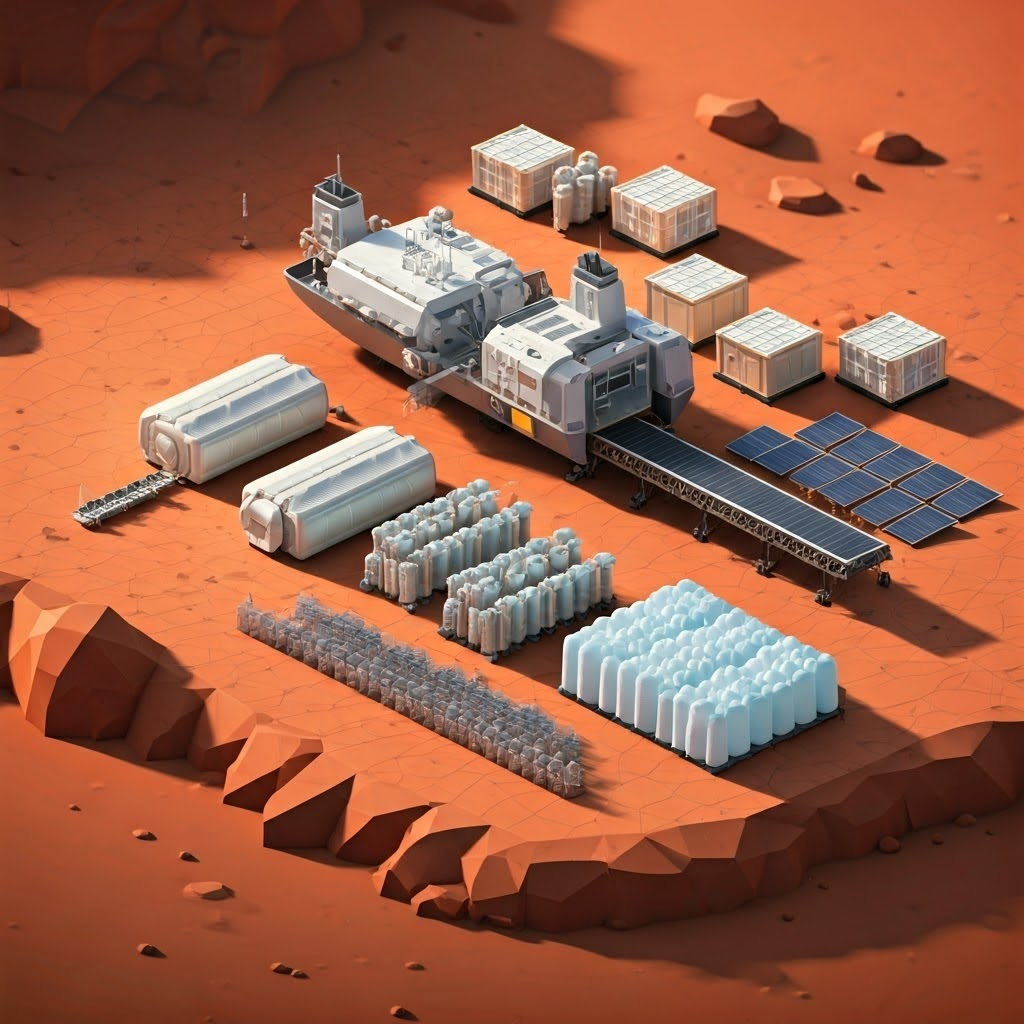
Every kilogram costs, so trade-offs rule. Sending cargo first lets robots stock supplies before people arrive. Crews still carry “MacGyver” kits—versatile tools for the unknown.
Landing: The Seven Minutes of Terror
After the marathon, touchdown is a seven-minute sprint where precision decides all.
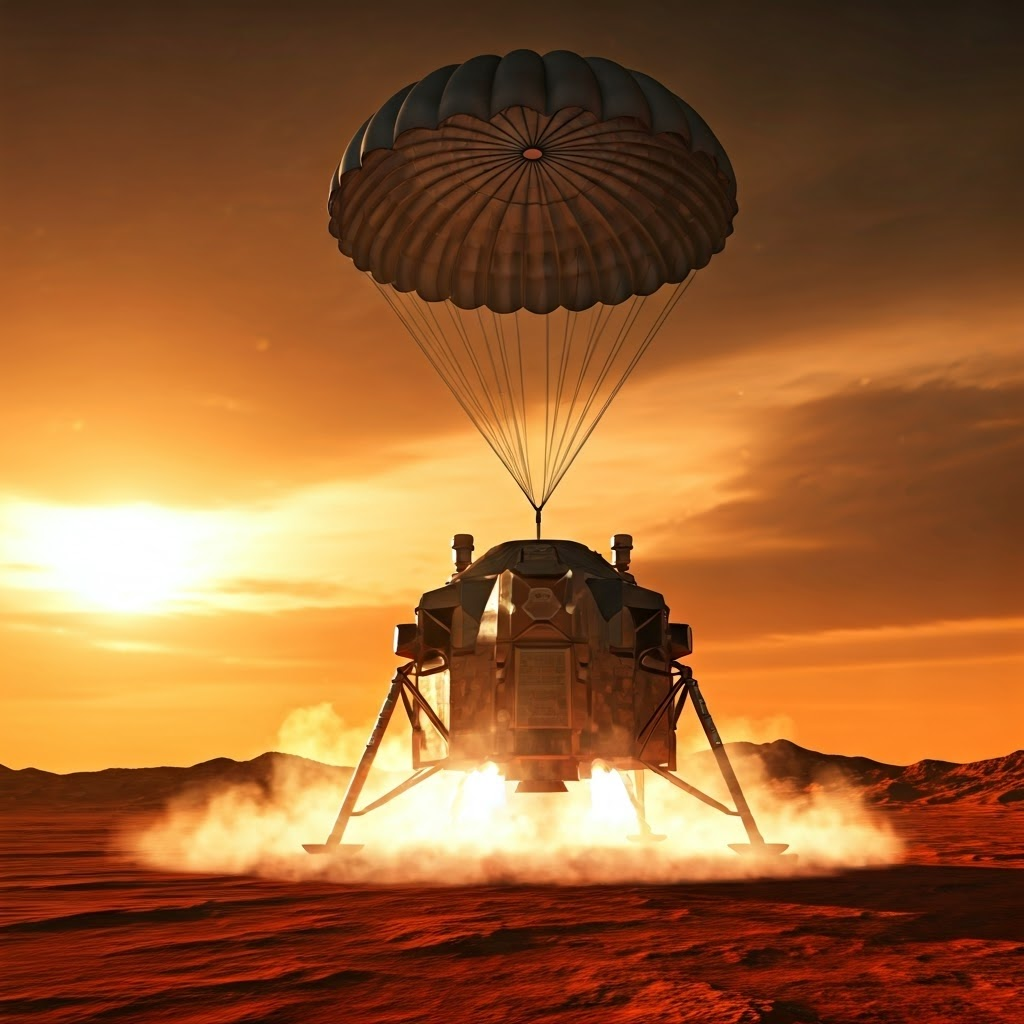
Mars’ thin air heats the capsule yet slows it poorly. A heat shield, parachutes, then rockets—each step must work. Starship plans a belly-flop and rocket landing, but dust storms still add risk.
First Steps: Surviving the Arrival
Once on the ground, crews focus on immediate survival. They inspect the lander, deploy power lines, and start life-support loops.
Backup shelters stand ready. Some members scout ice deposits or set up antennas while others handle routine checks.
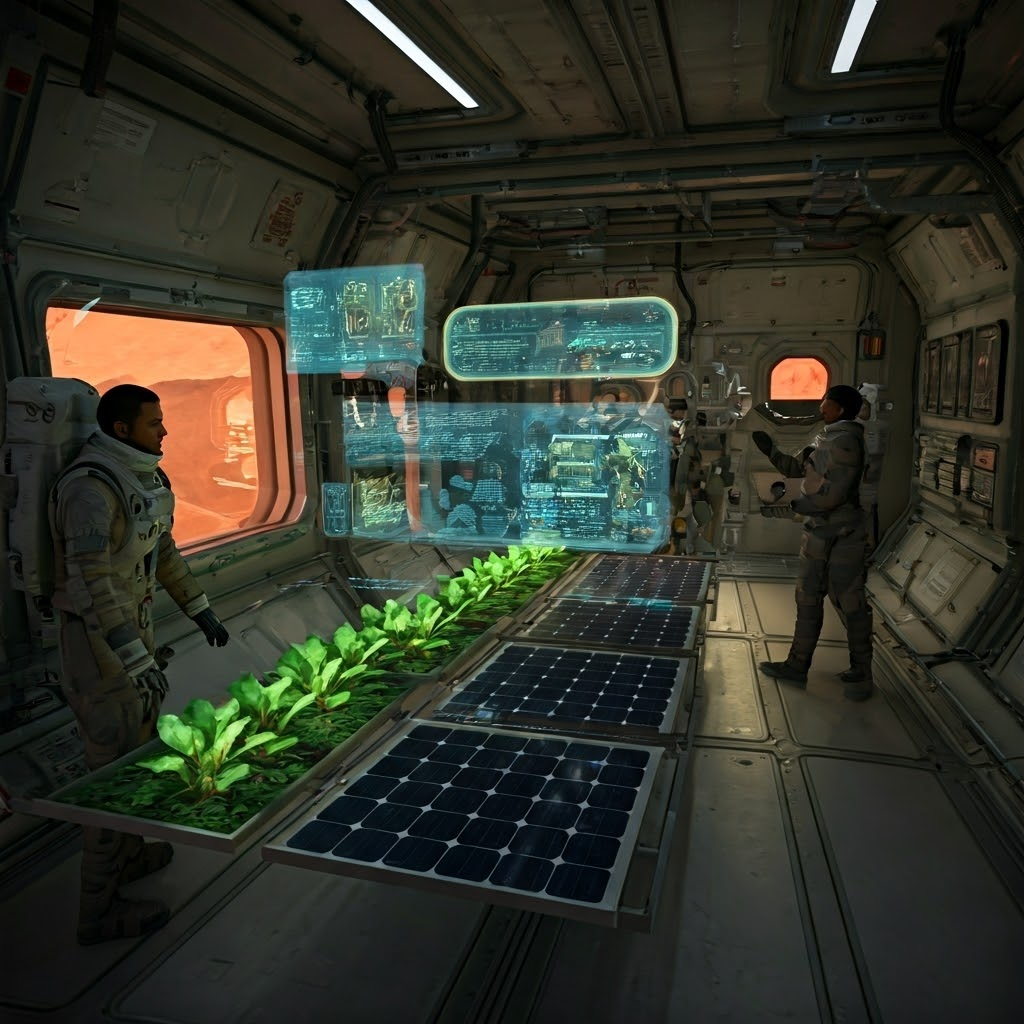
Teamwork keeps morale steady. Crews schedule breaks, share rehydrated meals, and contact Earth—messages lag 20 minutes but still matter. Solid habits and strong bonds offer mental redundancy along with hardware backups.
The first few sols shift the goal from “don’t die today” to “build for tomorrow.” It is the dawn of a new home.
