
Salt: The Simple Secret to Big Flavor
Why Salt Works
When you sprinkle salt on food, you set off a small chemical chain that changes what you taste. Salt splits into charged ions that meet the water in the dish and on your tongue. Those ions start the shift in flavor.
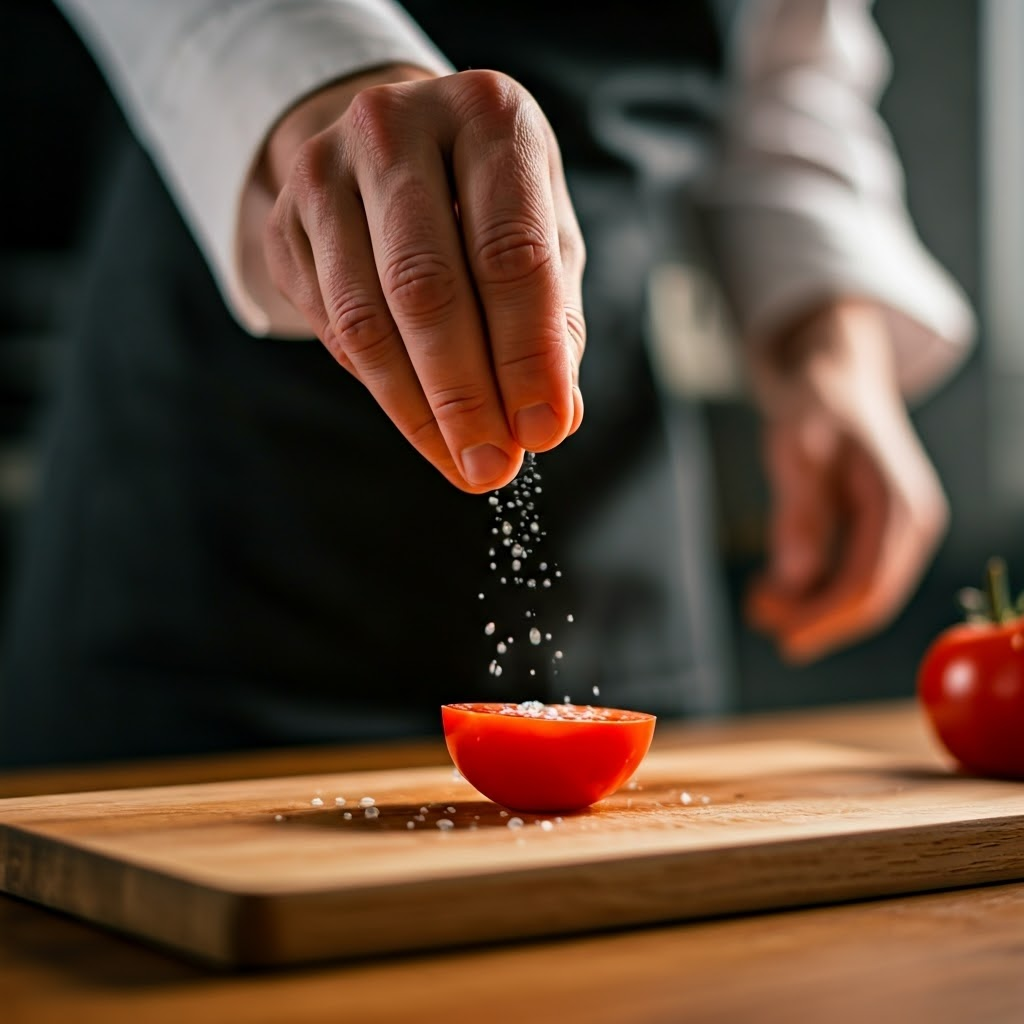
Your tongue hosts receptor cells for sweet, bitter, savory, and salty notes. Sodium ions touch the salty receptors, yet they also heighten the others. Sprinkle salt on a tomato and it suddenly tastes brighter, while an unsalted slice feels dull.
Scientists call this flavor enhancement. Salt does not simply add its own taste—it frees the hidden notes already inside the food.

Try it yourself. Bite a plain cucumber slice, then add a few grains of salt and taste again. A crisp, gentle sweetness appears. The experiment works on melon or chocolate too, which is why cooks everywhere rely on salt to lift almost every dish.

Brining: More Than Just Soaking
Brining keeps roast chicken juicy, beans tender, and pickles snappy. The process depends on osmosis—water moves toward higher salt levels, carrying flavor deep into each cell.
As salt and water enter the meat, they season it from within and change the proteins so they hold more moisture. The result is a texture that stays soft and juicy even after cooking.

Mix one-quarter cup of salt with four cups of water for a quick brine. Submerge chicken breasts, beans, or sliced cucumbers for 30 minutes to a few hours, then rinse and cook. You will notice fuller flavor, better texture, and lasting juiciness.

Salt’s Cousins: Sodium Alternatives
Some people need to cut back on sodium. Potassium chloride offers a familiar look and sprinkle yet tastes a bit bitter or metallic in large doses.
Swap up to 30 percent of the salt in cooked dishes with potassium chloride and most diners will not notice. When using it alone, add small amounts and taste as you go until the flavor swap feels right.

Everyday Tips for Using Salt
Season in layers. Add a pinch while cooking, taste, then adjust. Chefs favor kosher salt because its large flakes are easy to grasp and spread, while fine table salt dissolves fast and suits baking.
Explore unexpected pairings. A dash of salt in chocolate cookies, oatmeal, or even coffee brings balance to sweet, sour, and bitter notes. Each sprinkle turns cooking into a tiny science project.

Food writer Nik Sharma explains that salt interacts with every ingredient to bring harmony. So each time you reach for the salt cellar, remember you are activating chemistry and helping every flavor shine.
