
How to Think Like a Futurist: Building Your Scenario Toolkit

Why Guessing the Future is Hard (and Fun)
Predicting transportation feels tricky because new ideas appear fast. One year nobody mentions ride-hailing, the next year everyone says “grab an Uber.” That speed makes foresight challenging.
Change mixes technology, city growth, policies, and sudden events. Many people chase one perfect forecast, yet multiple futures are possible. Scenario thinking keeps your mind flexible.
Forecasts give odds, like a weather app. Scenarios help you carry sunglasses and an umbrella. Being ready feels lighter—and even fun.

Spotting Signals: Reading Today’s Clues
Big shifts start as small hints. A new scooter dock or a remote-work trend may signal a larger wave. Watch these early signals.
Rising fuel prices push riders toward bikes or buses. Quiet delivery robots hint at automated logistics. Linking small clues forms a clearer story.
Play urban detective. Listen, observe, connect patterns. Over time tiny cues grow into the next big change.
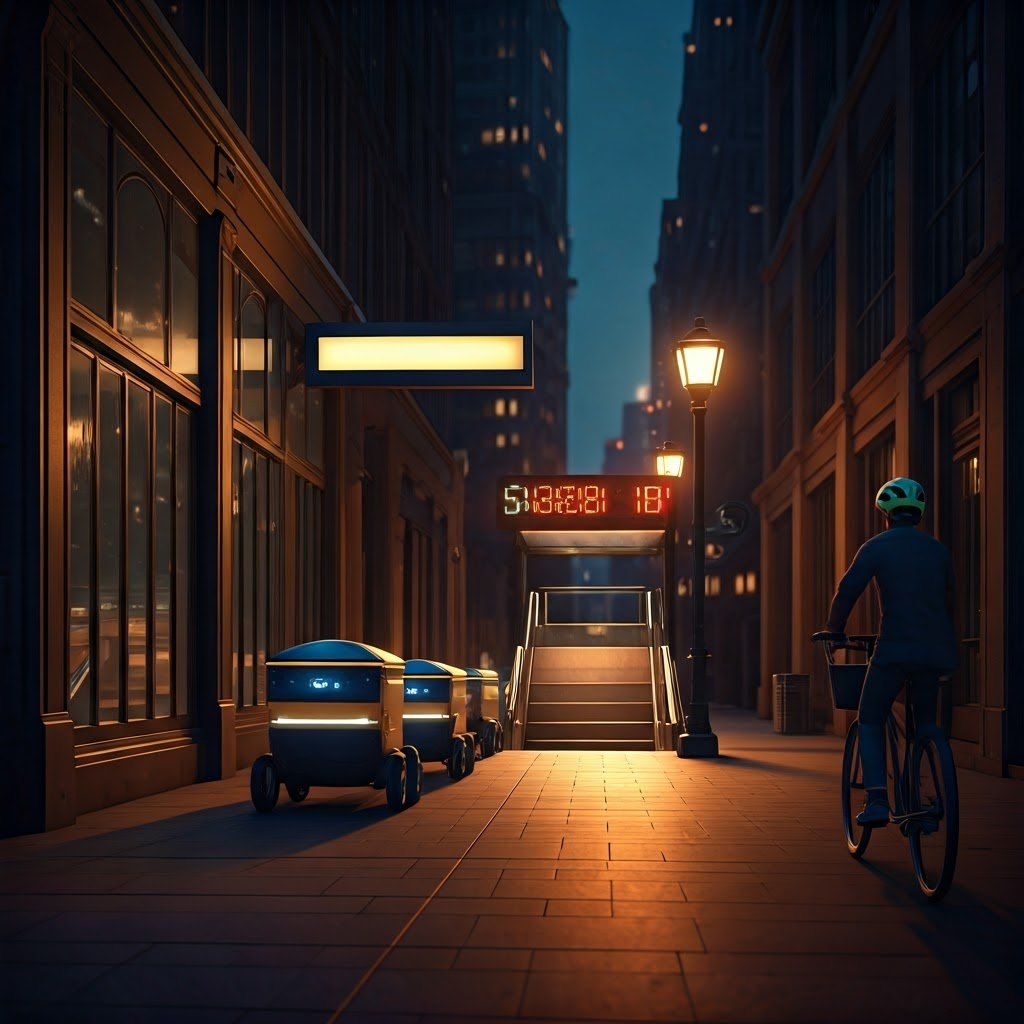
Drivers and Uncertainties: What Really Moves the Future
Drivers are steady forces like urban growth or cleaner batteries. They push forward much like a river’s current.
Uncertainties act as wild cards. Automation speed or energy costs could swing either way. List them beside your drivers.
Separate the likely from the unclear. Mixing these elements powers vivid scenarios.

Building Your First Scenario: A Step-by-Step Guide

Step 1: Pick a Focus Question
Choose something clear, such as “How might people commute in my city in 2040?” A sharp question narrows your view.
Step 2: List Your Drivers
Note steady forces—urban growth, carbon goals, remote work. Drivers ground your analysis.
Step 3: Identify Key Uncertainties
Add wild cards: new transit funding, public trust in shared rides, automation hurdles. These shape multiple paths.

Step 4: Imagine Different Outcomes
Cross two big uncertainties on a grid. Each quadrant reveals a distinct future.
Step 5: Flesh Out a Story
Select one box. Describe streets, sounds, and daily routines. Concrete details make the scenario real.

Step 6: Spot Signals That Would Hint You’re Heading There
Match current news to each story. New drone trials or transit lines can tip which scenario gains momentum.
Scenarios don’t promise accuracy; they expand readiness. Stay curious—the odd gadget you see today may define tomorrow’s commute.
