

The Family Tree of Rockets
You can picture rockets as one big family of vehicles, each built for a different job.
At the smallest end sit sounding rockets. These quick rides leap just beyond the atmosphere, grant a few minutes of microgravity, then drop back. Scientists love them for low-cost tests.
Step up in size and you reach small orbital rockets. They are the dependable sedans of space, lifting modest satellites to LEO on tight budgets and short schedules.
Heavy-lifters like Falcon 9, Soyuz, and Ariane 5 take over when cargo grows. They act as the family’s 18-wheelers, hauling large payloads or crews to the station.
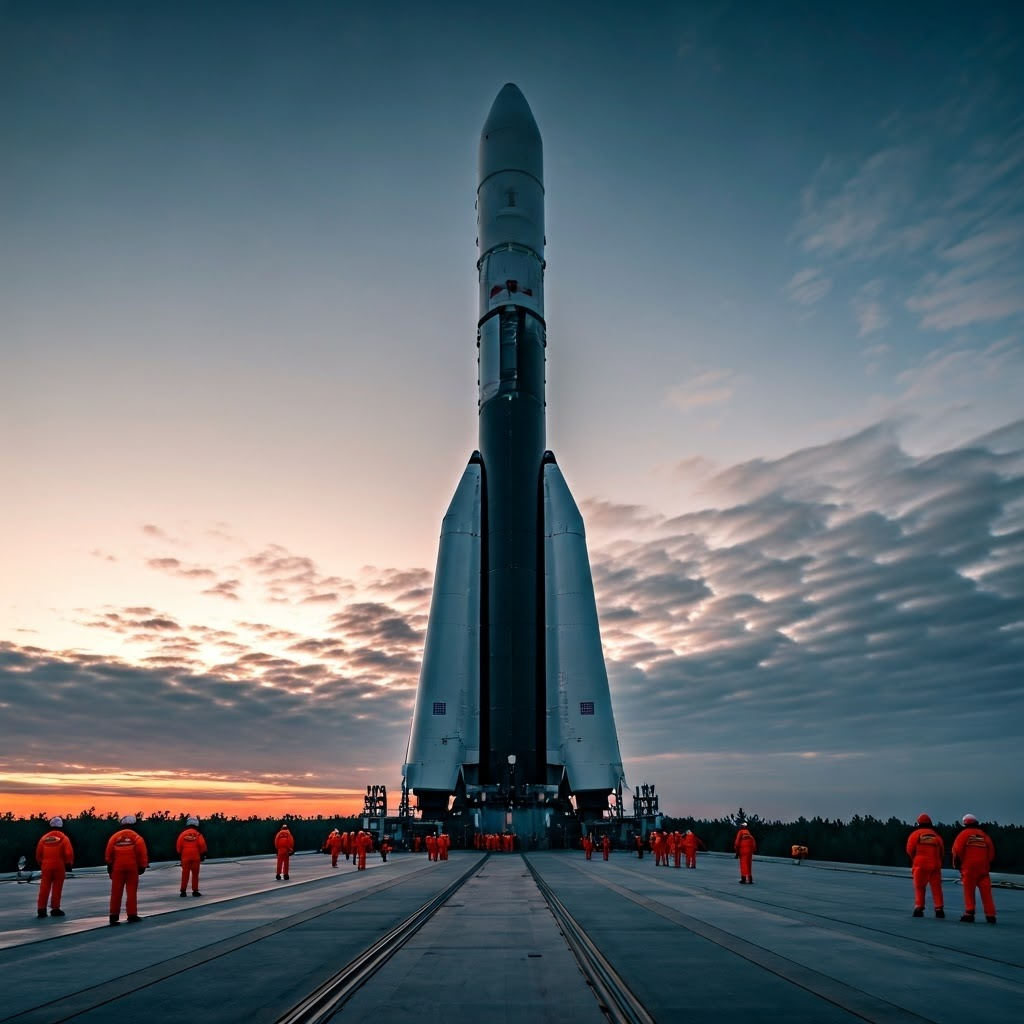 At the top stand the super-heavy giants—Saturn V or SLS—built for Moon shots and mega constellations. Small rockets fly often but light, while big ones launch rarely but huge.
What Makes a Rocket a Rocket?
A rocket’s heart is its engine. It burns fuel and hurls hot gas downward, pushing the vehicle up.
Fuel tanks feed those engines. Propellants may be liquid, like kerosene with oxygen, or solid, like oversized firecrackers under precise control.
 Above the tanks sits the fairing, a protective shell that peels away once air thins. On top lies the payload—anything from a science probe to a crew capsule.
Crewed rockets add an escape system. This small booster yanks the capsule free if trouble strikes early.
Staging: The Art of Letting Go
Staging lets a rocket drop empty tanks, much like a relay runner hands off a baton to stay swift.
 The first stage does the heavy lifting. Once dry, it falls away. The lighter second stage fires higher, where air is thin. Some designs add third or fourth stages for deep-space pushes.
Famous Rides: A Quick Look at Notable Rockets
Saturn V still holds the record for raw power. It lofted 140 tons to orbit and sent humans to the Moon.
 Soyuz is the reliable veteran, flying since the 1960s. Ariane 5 became Europe’s precision launcher. Falcon 9 changed the game by landing for reuse and cutting costs.
Smaller stars—H-IIA, PSLV, or Pegasus—serve unique niches, from polar weather satellites to air-dropped launches.

Rockets: More Than Just Big Engines
Every rocket tells a design story filled with trade-offs. Some chase low price, some chase reliability, a few manage both. When you watch a launch, remember you are seeing decades of innovation rolled into one fiery climb.
