14 min read  •  10 min listen

Packets in Motion

Why the Internet Chops Everything Up and How It All Stays Together

Packets in Motion

AI-Generated

April 28, 2025

Ever wondered how your messages, videos, and memes zip across the world in seconds? This tome reveals the secrets behind the Internet’s packet magic, showing you how tiny chunks of data keep everything connected, fast, and reliable. Get ready to see the Internet in a whole new way.


How the Internet Learned to Chop: The Birth of Packets

A lone vintage car cruises down an otherwise empty neon-lit highway, illustrating wasted space on a dedicated route.

Early networks reserved an entire line for one conversation. That dedicated path wasted capacity because silence still blocked others from using the line. Circuit-switching made sense for voice calls yet felt extravagant for data.

Why chopping data makes sense

A Victorian scholar stuffs torn book pages into wax-sealed envelopes, showing data broken into pieces for separate delivery.

Picture mailing a thick book in one box. If the box jams the slot, nothing moves. Split the pages into envelopes instead, and most arrive even if one lags. Packet switching copies that idea—small parts travel quickly and independently.

Glowing cubes zip through branching fiber-optic lines inside a cyberpunk control room, symbolizing packets finding varied routes.

Packet switching lets many users share the same wires. Each labeled chunk slips between others, so no one hogs the link. If one path fails, packets reroute and the conversation survives. That flexibility keeps today’s Internet resilient.

The packet pioneers: baran and davies

Paul Baran points at a chalkboard filled with node sketches, underlining routes a packet might choose.

In the 1960s, Paul Baran at RAND asked how messages could survive wartime damage. He proposed chunks that knew the destination but not the path, letting packets weave through any working link. His model promised a self-healing network.

Donald Davies studies packet diagrams beside blinking terminals at NPL, demonstrating a working prototype.

Across the Atlantic, Donald Davies coined the term “packet” and built a live system. He proved you could chop, send, and reassemble data cheaply and fast. Together, these thinkers inspired ARPANET and, eventually, the modern Internet.

Floating data-car cars glide along fiber-optic roads beneath signs for IP and TCP, depicting orderly digital traffic.

Protocols: the rules of the road

Protocols act like traffic laws, guiding every packet so networks avoid chaos. Rules tell devices when to send, wait, or retry, making global cooperation possible.
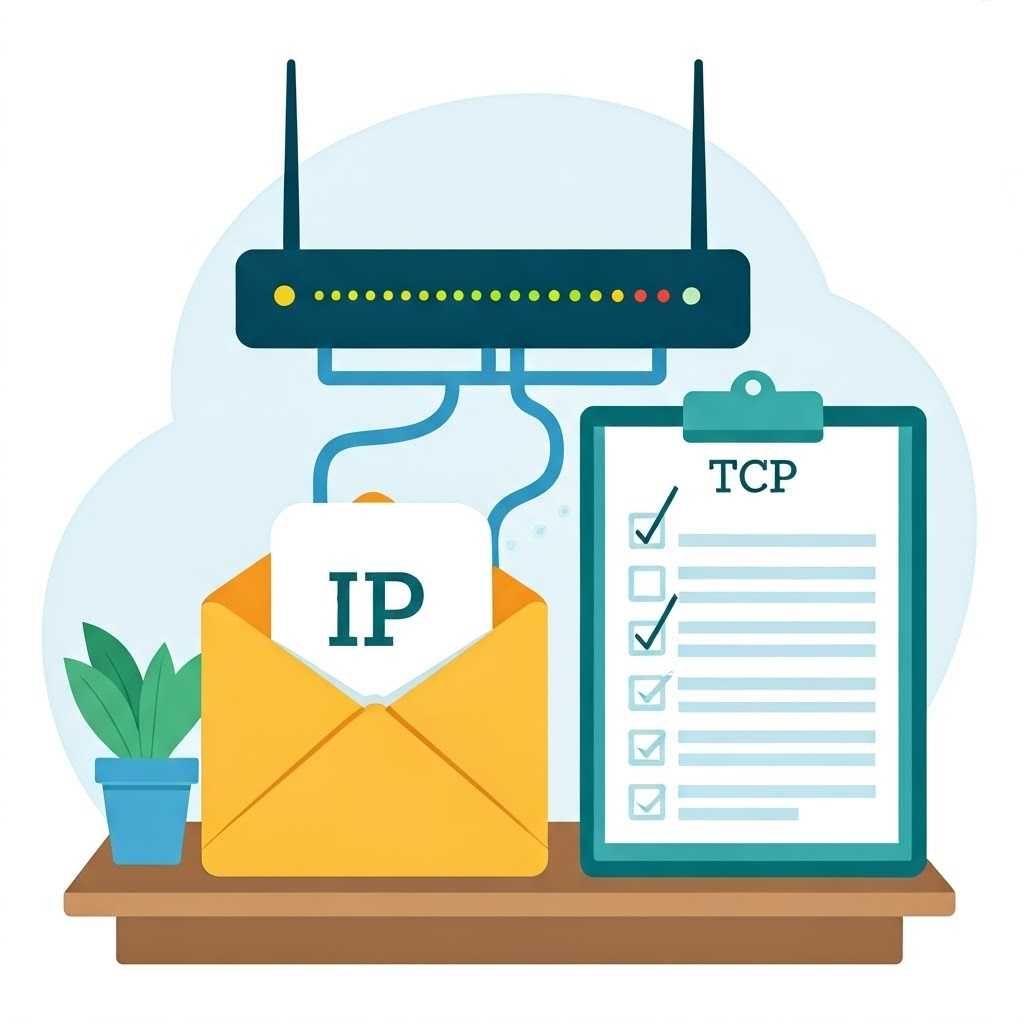
An envelope labeled IP rests beside a checklist named TCP on a tidy desk, stressing layered communication rules.

IP writes each packet’s address. TCP checks arrival, orders packets, and requests missing ones—similar to tracked mail. Lighter protocols handle quick tasks like pings or address assignments. Shared standards mean any computer, router, or phone can interoperate despite age or brand.


Tome Genius

The Internet & Web Technologies

Part 2

Tome Genius

Cookie Consent Preference Center

When you visit any of our websites, it may store or retrieve information on your browser, mostly in the form of cookies. This information might be about you, your preferences, or your device and is mostly used to make the site work as you expect it to. The information does not usually directly identify you, but it can give you a more personalized experience. Because we respect your right to privacy, you can choose not to allow some types of cookies. Click on the different category headings to find out more and manage your preferences. Please note, blocking some types of cookies may impact your experience of the site and the services we are able to offer. Privacy Policy.
Manage consent preferences
Strictly necessary cookies
Performance cookies
Functional cookies
Targeting cookies

By clicking “Accept all cookies”, you agree Tome Genius can store cookies on your device and disclose information in accordance with our Privacy Policy.

00:00