15 min read  •  13 min listen

Nothing About Us Without Us

How People with Disabilities Took the Lead and Changed the World

Nothing About Us Without Us

AI-Generated

April 29, 2025

Ever wondered how curb cuts, closed captions, and the right to access public spaces became everyday realities? This tome takes you on a journey from the days when people with disabilities were sidelined, to the moment they took the lead in shaping laws and culture. Meet the rebels, thinkers, and everyday folks who changed the world for everyone.


From Pity to Power: How Disability Rights Began

A parent quietly shuts a bedroom door while a neighbor passes coins through a window, showing 19th-century charity toward a disabled child.

You might be surprised how not long ago people with disabilities were rarely seen as equals. Charity, not inclusion, shaped opinions. Neighbors handed out spare coins, parents often hid children, and institutions kept people out of sight.

Even in the 1970s telethons paraded children to pull at heartstrings. Help came so donors felt good, not to create real fairness.
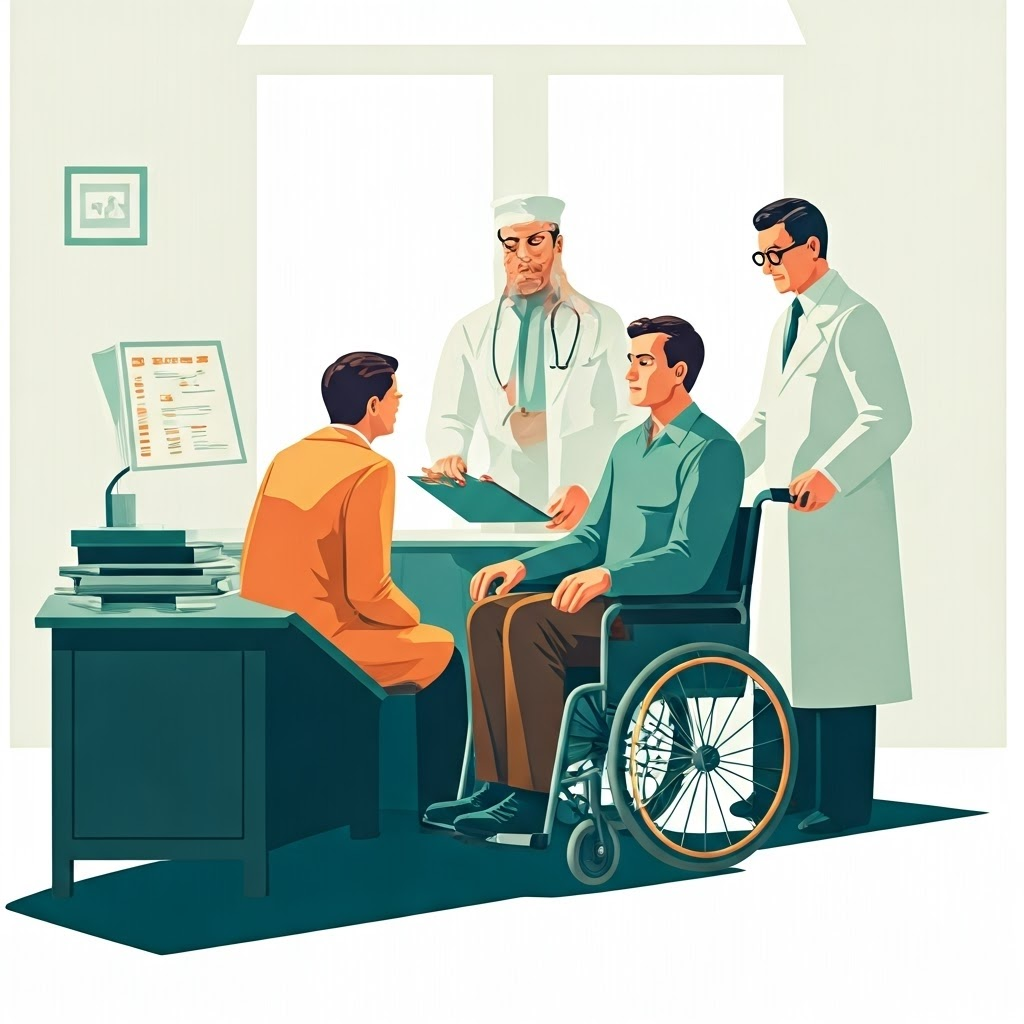
A stern doctor examines a wheelchair user in a bright white office, emphasizing clinical detachment and focus on defects.

Medicine took over. Diagnosis replaced dialogue. If you couldn’t be cured, you were told to settle for less—school, work, freedom. A student who used a wheelchair met stairs and a closed door. Blind riders met silent crosswalks. Limits felt normal, not unjust.

Strained hands grasp concrete stairs outside a building, capturing the struggle of an inaccessible entrance.

The charity and medical views shaped cities and schools. Barriers like missing ramps or captions sent a clear message: you are the problem. People learned not to expect much and seldom got asked what they wanted.

Two figures walk in a tranquil park, one guiding with a white cane amid soft watercolor greens.

A New Way of Seeing: The Social Model

A simple, radical idea emerged: maybe disabled people aren’t the issue—barriers are. The social model asks us to look at steps, silent videos, and low expectations, not bodies.

Two children—one in a wheelchair—face an elevator beside stairs in a neon-lit future classroom, highlighting accessible design.

Picture two students: one rolls, one walks. A second-floor class has only stairs. Under the old view, the child who rolls stays behind. The social model flips it: build a ramp or elevator and the class opens to everyone.

Glowing chalk icons of ramps, curb cuts, and captions invite diverse hands to point with hope.

This shift changed questions from “what’s wrong with you?” to “what’s wrong around you?” A small curb cut or caption unlocked access for all. Demands moved from pity to rights and equality.
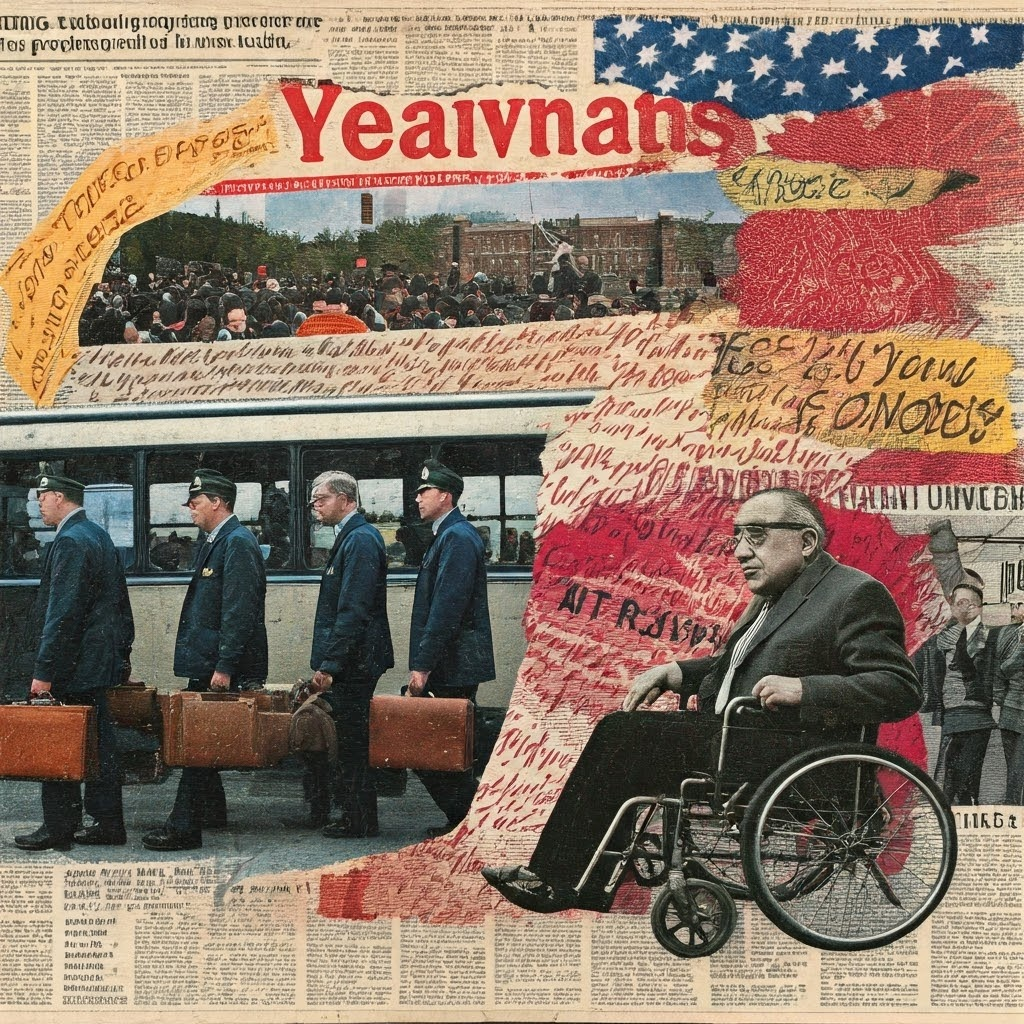
Layered collage of veterans, Ed Roberts at Berkeley, and bold protest slogans signals the rise of disability activism.

The Spark: Early Activists and the Birth of a Movement

Real change began when people with disabilities spoke for themselves. Veterans returned from war to find doors closed. Ed Roberts, paralyzed by polio, insisted on attending Berkeley and set up supports that helped thousands.

Abstract figures chained to railings outside a modern government building portray a bold wheelchair protest.

Judith Heumann fought New York City’s ban on her teaching and won. Advocacy grew louder. Inspired by civil-rights and women’s movements, activists used media, sit-ins, and their own stories.

Bold stencil art shows wheelchair users blocking buses and activists chaining themselves to doors in urgent red and black.

Society first called the demands unrealistic. Protests—blocking buses, fighting schools, occupying offices—forced attention. These actions seeded laws like the Rehabilitation Act and the Americans with Disabilities Act.

The first waves of activism rewrote the story. Disabled people moved from helpless to powerful, insisting on “nothing about us without us.” Every curb cut, ramp, and inclusive classroom today traces back to their courage.


Tome Genius

Social Movements & Civil Rights

Part 6

Tome Genius

Cookie Consent Preference Center

When you visit any of our websites, it may store or retrieve information on your browser, mostly in the form of cookies. This information might be about you, your preferences, or your device and is mostly used to make the site work as you expect it to. The information does not usually directly identify you, but it can give you a more personalized experience. Because we respect your right to privacy, you can choose not to allow some types of cookies. Click on the different category headings to find out more and manage your preferences. Please note, blocking some types of cookies may impact your experience of the site and the services we are able to offer. Privacy Policy.
Manage consent preferences
Strictly necessary cookies
Performance cookies
Functional cookies
Targeting cookies

By clicking “Accept all cookies”, you agree Tome Genius can store cookies on your device and disclose information in accordance with our Privacy Policy.

00:00