
The Price Tag of Power: Understanding Energy Costs

What Does Energy Really Cost?
When you turn on a light you pay for more than the bulb. You share every expense that delivered electricity to you. Energy costs blend upfront money for power plants with the steady spending on fuel, maintenance, and staff that follows.
Think of the choice between owning a car and riding a bus. Buying a car demands a big payment first, then gasoline, repairs, and insurance every year. Taking the bus means you only pay per ride. Upfront costs differ, yet both options still drain your wallet over time.
Natural-gas plants mirror the car example: cheap to build but costly to run because fuel never stops. Solar farms flip the story. Panels cost more at the start, yet sunshine is free and upkeep stays modest. Solar shows how higher initial spending can lead to lower lifetime bills.
Wind and hydro follow the same pattern. They ask for larger first checks but offer slim day-to-day costs. A region rich in sun or wind but low on capital may struggle to install these systems. Capital access often decides which projects move ahead.
How you count expenses guides every energy choice. Cities with tight budgets often pick cheaper-to-build gas even if the long-term outlay climbs. Accounting methods shape policy, investment, and what powers your home.
The Levelized Cost of Electricity: The Big Picture Number
Planners compare options with one yardstick: the levelized cost of electricity, or LCOE. It bundles building, fueling, operating, and retiring a project, then spreads that sum across every megawatt-hour the project will generate.
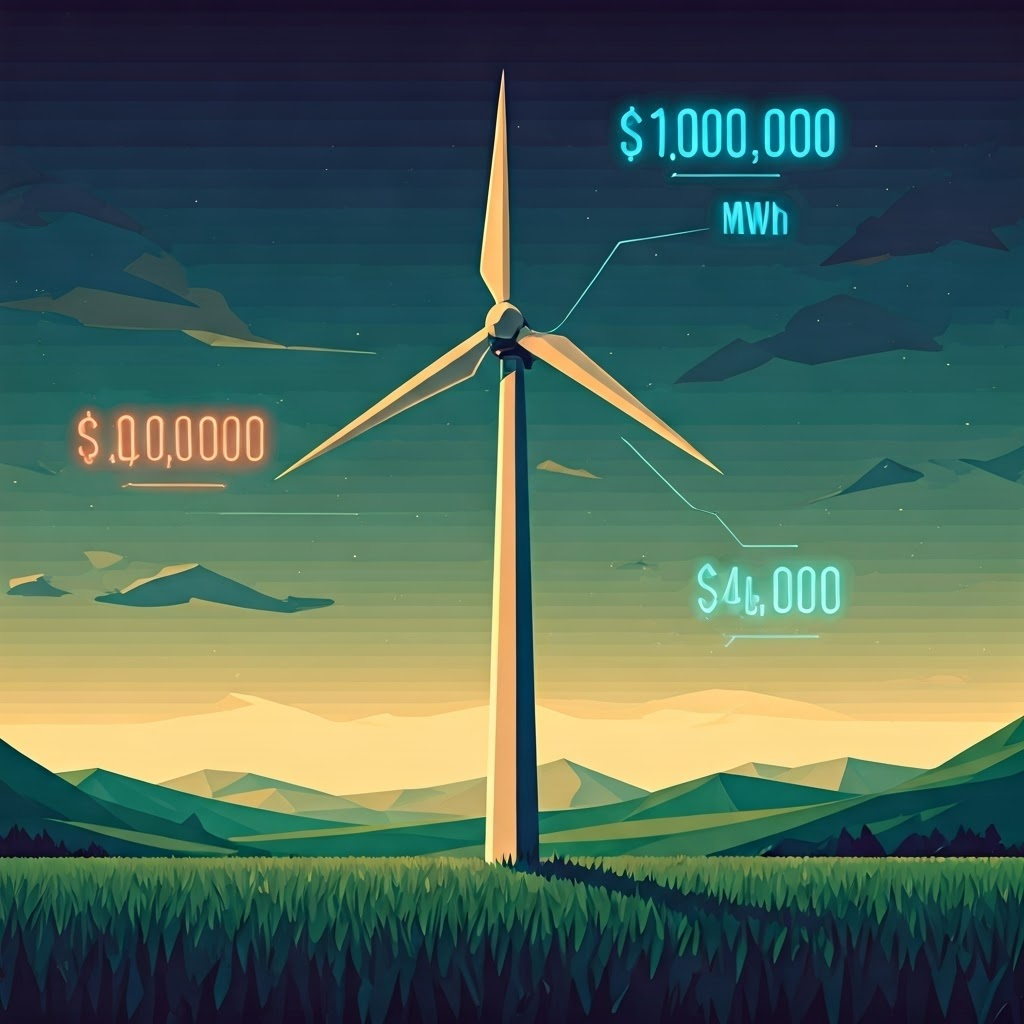
Suppose a small wind turbine costs $1 million to build and $400 000 to run over 20 years. It should produce 10 000 MWh in that time. Divide the $1.4 million by 10 000 MWh and you get $140/MWh.
This number lets you weigh wind, solar, coal, or nuclear on equal terms. If a coal plant posts $110/MWh while local solar dips below $50/MWh, sunshine wins where it shines brightest. Comparison becomes simple.
LCOE is useful but incomplete. It skips backup needs when the sun sets or new power-line costs. Even so, it remains the most common cost ruler in the industry. Limitations matter, yet the metric still drives decisions.
Learning Rates: Why Solar Gets Cheaper
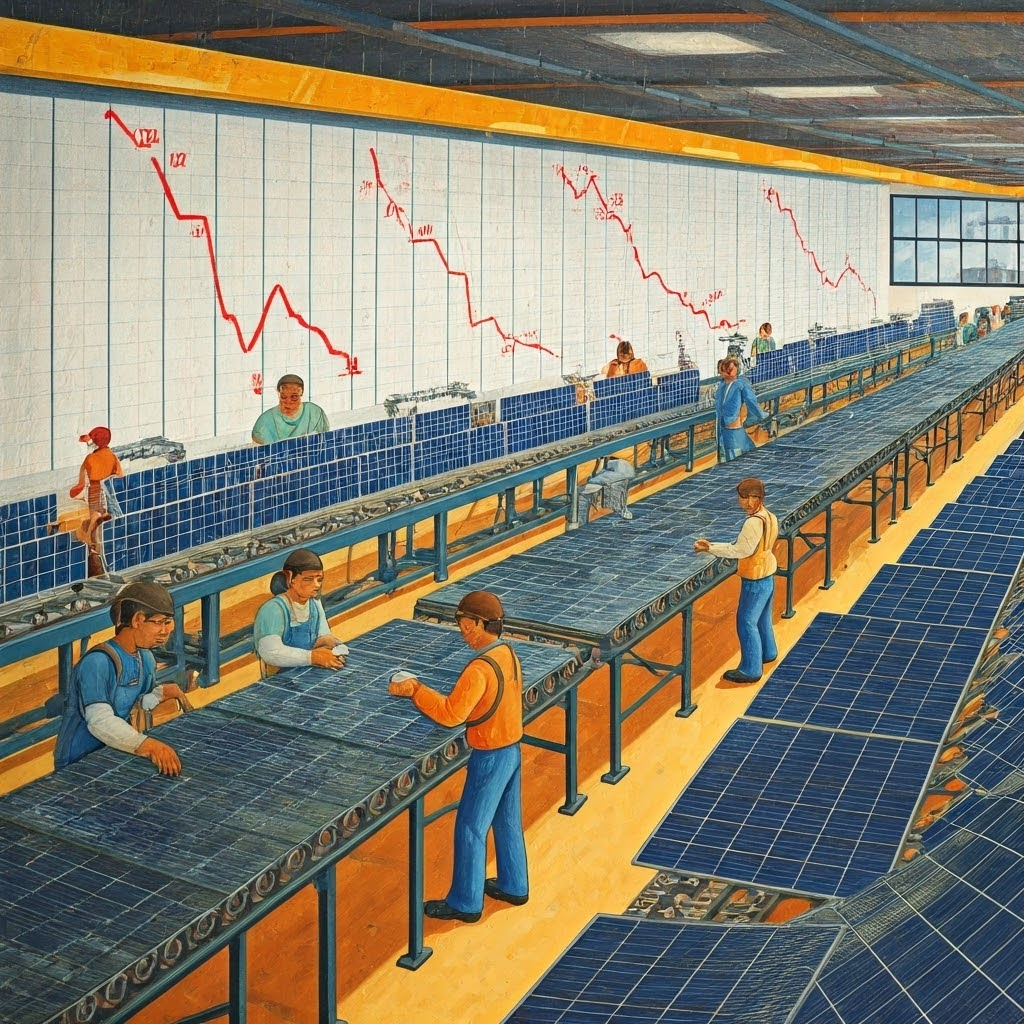
Prices fall when production climbs—a pattern called the learning rate. Each time global solar output doubles, panel prices have dropped roughly 20 percent. Practice improves skill, factories scale up, and buyers flood in.
Imagine a new town bakery. The first loaves cost $10 because ovens are tiny and workers are slow. Bakers gain experience, upgrade equipment, and prices slide to $8, then $6. Practice lowers the bill for everyone.
Solar shows this vividly: from about $100 per watt in the 1970s to under $0.30 today. Wind turbines display a 10–15 percent drop per doubling. Progress can turn today’s pricey tech into tomorrow’s bargain.
Governments and firms watch learning curves closely. Support today can unlock steep price cuts later, spreading clean power faster. Policy that seeds growth often reaps lasting savings.

Subsidies: Who Gets Help and Why
Governments steer markets with financial help called subsidies. Fossil fuels have long enjoyed the biggest slice, receiving roughly $7 trillion worldwide in 2022. That figure covers direct payments and hidden breaks, like ignoring pollution costs.
Renewables also get support, but far less—under $300 billion that same year. Imbalance means fossil energy still benefits over clean options despite climate goals.
2022 Global Energy Subsidies
------------------------------------------
Fossil Fuels   |  $7,000,000,000,000
Renewables     |    $300,000,000,000
Shift the coupons and you shift the market. Cutting fossil aid or boosting clean incentives can speed the energy transition. Politics complicates change because fossil industries employ millions and lobby hard to keep support.

The Real Impact: Why These Numbers Matter
Metrics decide what gets built, shut down, or subsidized. LCOE, learning rates, and subsidies are not abstract—they steer trillions of dollars. Insight into these numbers explains why solar blooms in one town while coal plants retire in another.
Cost is not everything, yet it starts every conversation. When money and math line up, technology can transform the world—with astonishing speed.
