
Finding Our Place: The Milky Way’s Map
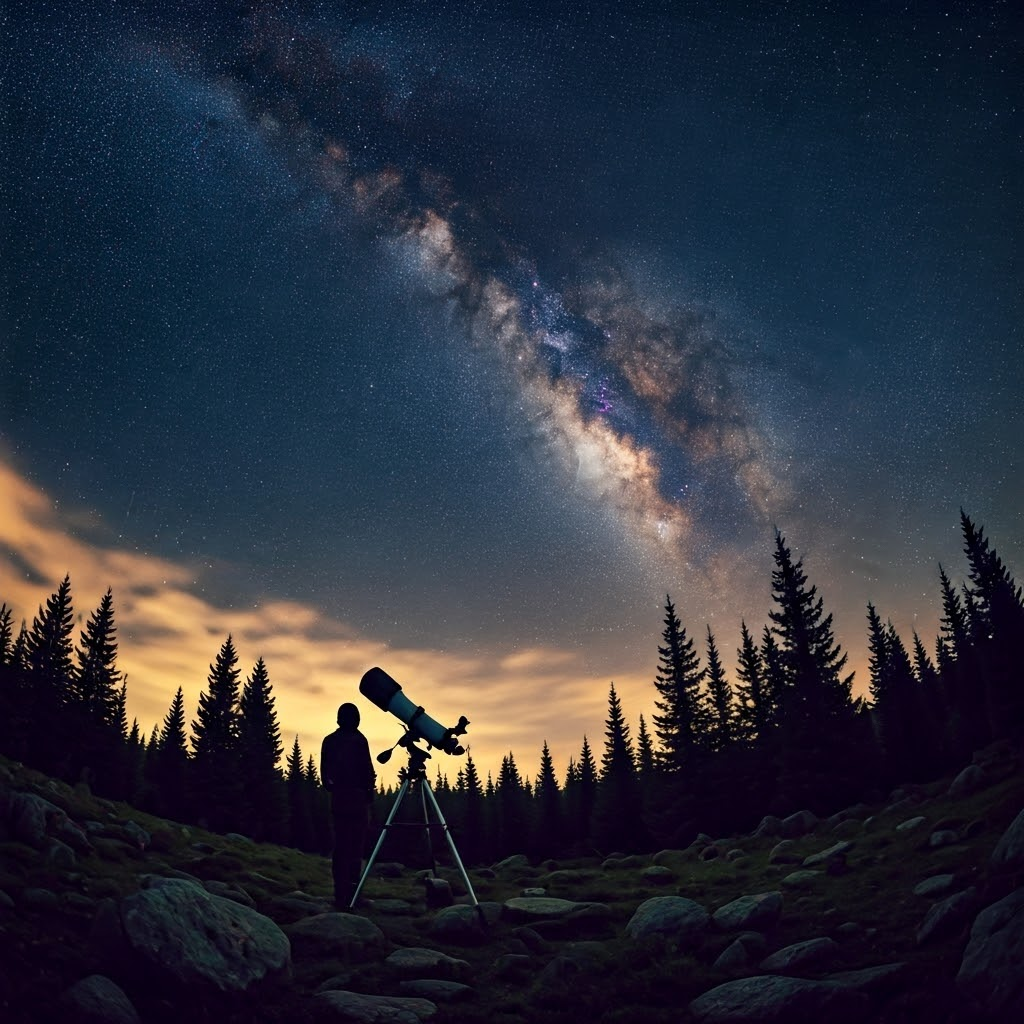
Look up on a clear, dark night and you might notice a pale band of light arcing overhead. That gentle glow is the Milky Way—our home galaxy—and we view it edge-on from inside its wide disk.
The Big Picture: What Is the Milky Way?
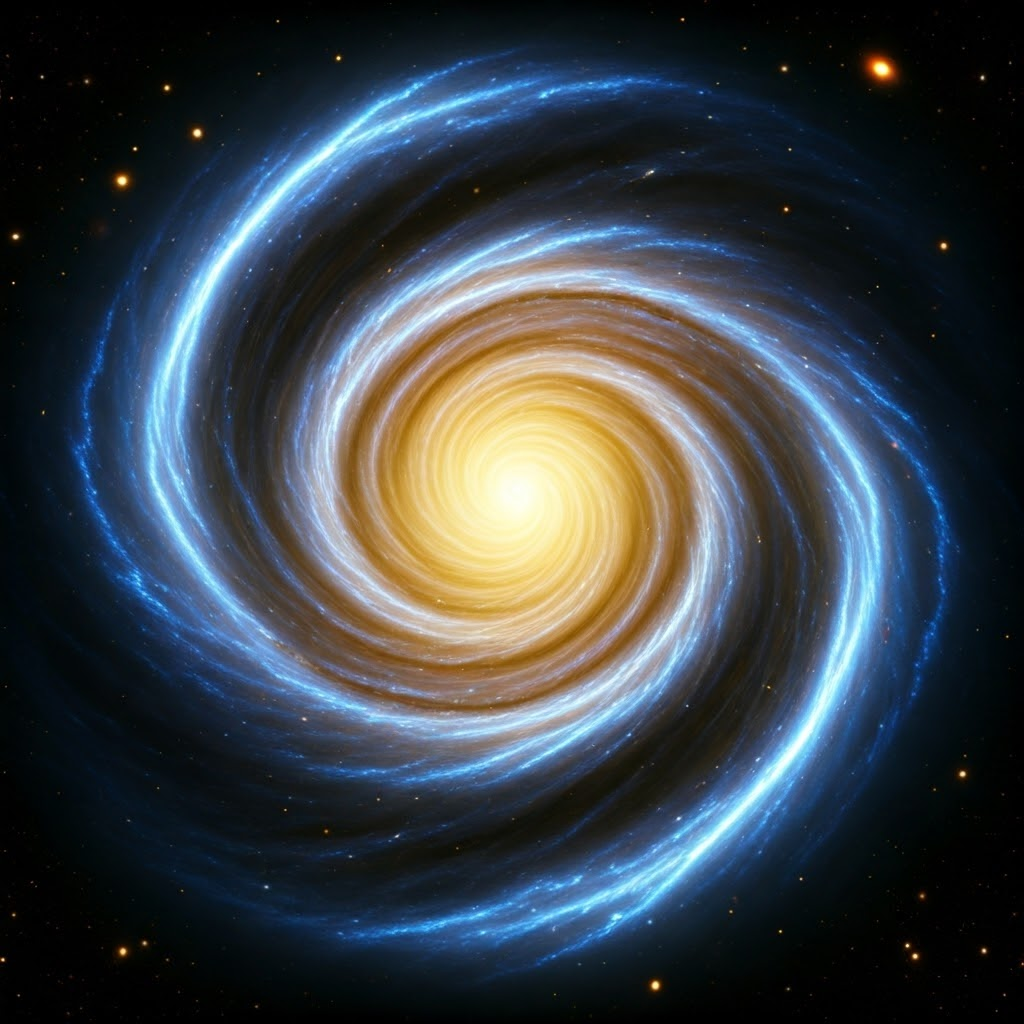
Step outside the galaxy—if we could—and you’d see a spiral about 100,000 light-years across and roughly 1,000 light-years thick. Picture the United States shrunk to a map; on that scale our entire solar system is only a coffee-cup across. The Milky Way’s arms twist like pinwheel blades, but from our seat inside the disk we only catch their blended glow.
The Big Picture: What Is the Milky Way?

Our galaxy shelters hundreds of billions of stars. When their distant light mixes with clouds of dust, it forms the milky streak we see. The Sun is just one star among many, orbiting calmly inside this vast structure.
Building Blocks: Bulge, Disk, and Halo

Think of a fried egg. The yolk represents the bulge—a dense ball of older stars near the center. The white matches the disk, a thin plane crowded with gas, dust, and younger stars. Surrounding both is the faint halo, a giant sphere holding ancient stars and elusive dark matter.
| Component | Shape | Contents | Typical Star Age |
|---|---|---|---|
| Bulge | Round | Dense stars and dust | Mostly old |
| Disk | Flat | Stars (including Sun), gas, dust, spiral arms | Mixed, many young |
| Halo | Spherical | Sparse stars, globular clusters, dark matter | Oldest |
Spiral Arms: The Galaxy’s Highways
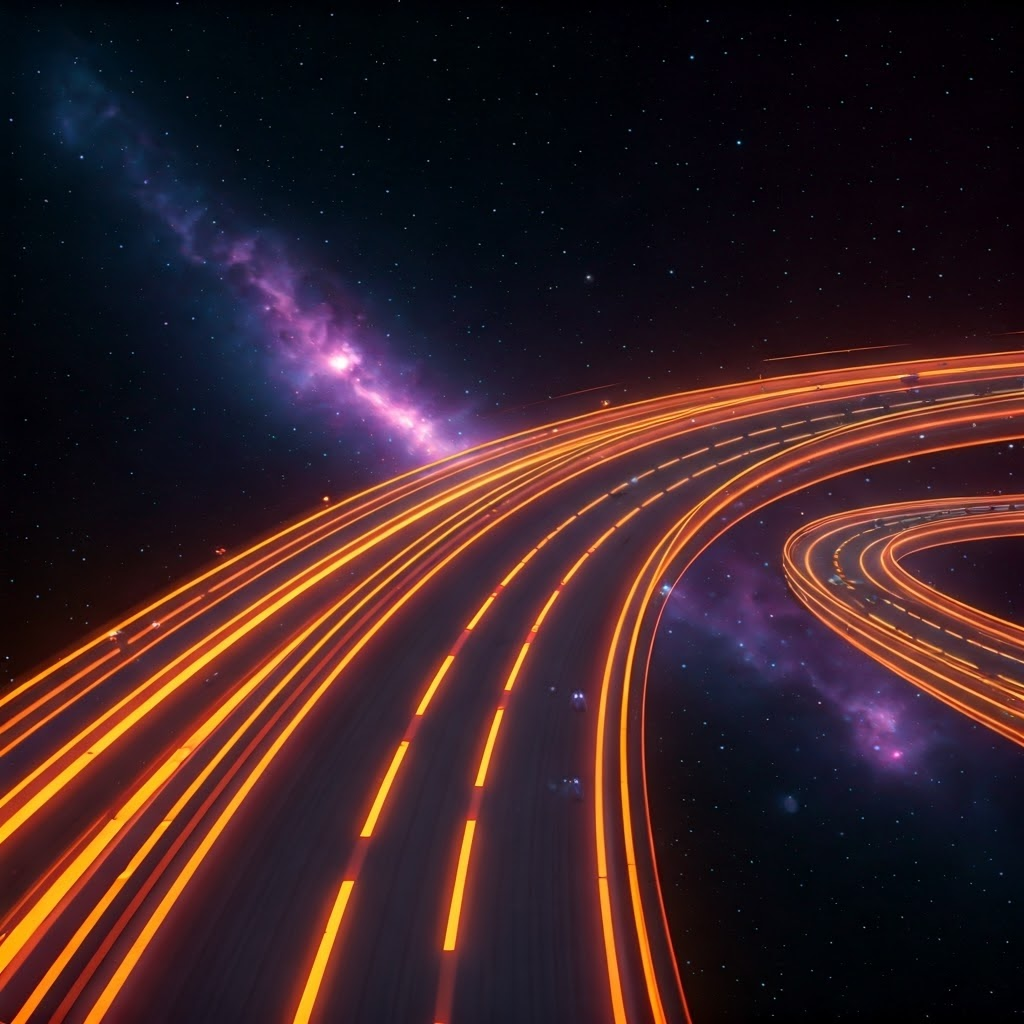
Spiral arms act like moving traffic-jams. Gas and dust crowd together, get squeezed, and ignite bursts of new stars. The arms are regions of higher density that sweep around the galaxy; individual stars drift in and out as they orbit the center.

The Sun sits about 27,000 light-years from the core in the quiet Orion Arm. We live in the galactic suburbs—close enough to see action, far enough to avoid the bustle at the center.
How Do We Know? Mapping from the Inside

Early astronomers counted stars and noticed the sky’s milky band was richer than other regions. Dust blocked many views, so their maps were limited.

Radio telescopes later pierced that dust, tracing hydrogen gas to reveal spiral arms. Today, the Gaia spacecraft charts over a billion stars in 3-D. Its data show the Sun racing around the center at about (≈500,000 mph) and help us watch the galaxy’s arms twist while nearby galaxies tug at its edges.
Astronomers combine star counts, gas maps, motion studies, and sky surveys to refine the Milky Way’s portrait. Each discovery adds a landmark to our cosmic city—and the view from inside grows sharper every year.
