
The Building Blocks: Forces, Materials, and Connections
What Makes Things Move: Force, Torque, and Moment Arms
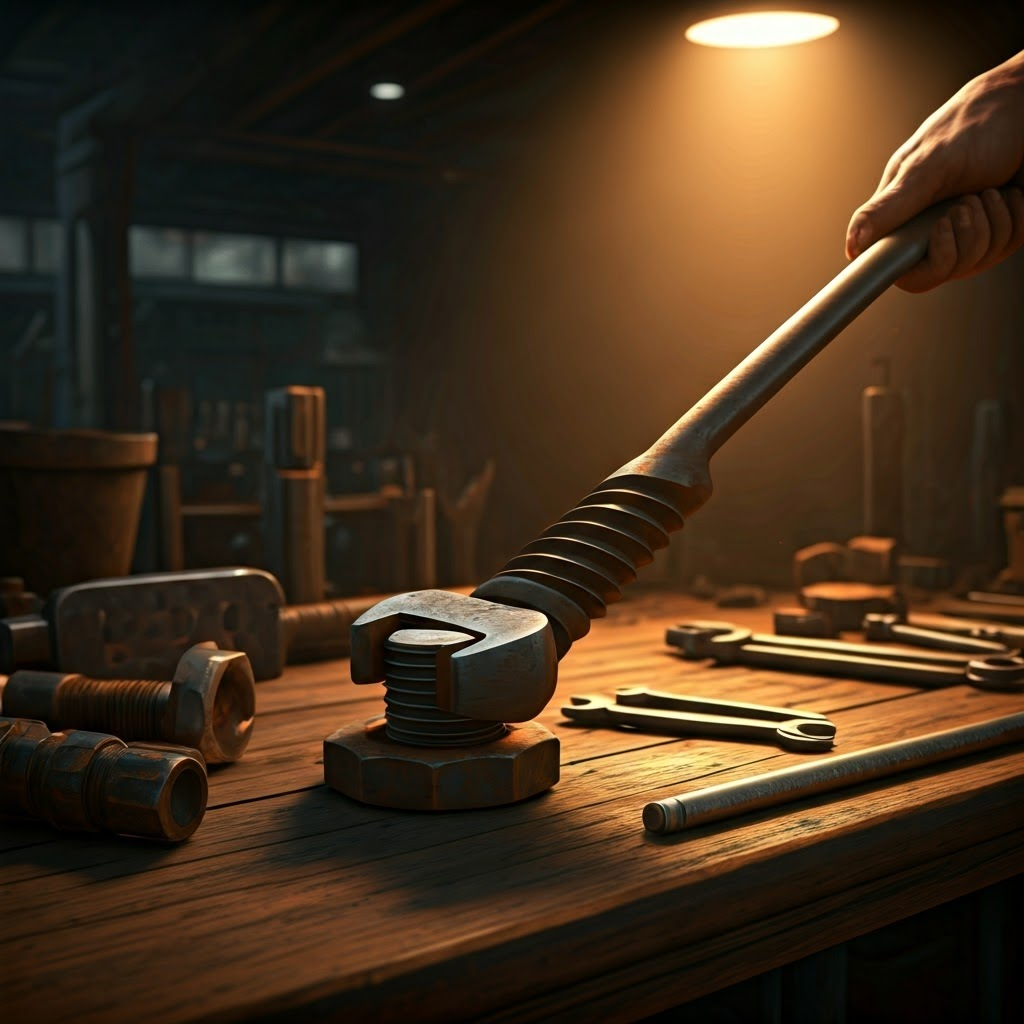
Force is a push or pull. Torque is that push turned into a twist. When you lean on a long wrench to free a rusty bolt, you feel how rotation demands something extra. That extra effect—the twist—is torque.
The farther your hand is from the bolt, the stronger the twist feels. That distance is the moment arm. Push close to the axis and nothing budges; push far and the same effort works. A door proves it: press near the hinge and it barely moves, press at the knob and it swings.
Robots use this principle every day. A longer arm lifts more with the same motor. Move the load closer to the pivot, and the arm needs less power. By juggling force, torque, and moment arms, engineers design robot joints that feel light yet move heavy parts.

Solid or Squishy: Rigid vs. Compliant Structures
Dry spaghetti holds its shape but snaps without warning. It is a rigid structure. Cooked noodles bend and absorb energy yet flop under weight. They are compliant. Each style carries trade-offs between strength and flexibility.
Robots need both qualities. Aluminum frames or steel “bones” give precise, stable motion. Soft grippers or shock-absorbing feet cushion impacts and grip fragile objects. Mixing stiffness and give lets machines handle rocky trails or delicate glassware alike.
Smart builders fine-tune that mix. Mars rovers rely on stiff bodies for stability, yet their wheels deform to hug sharp rocks. Home vacuums protect furniture with compliant bumpers while their sturdy shells guard electronics inside.
Picking Your Parts: Materials Matter
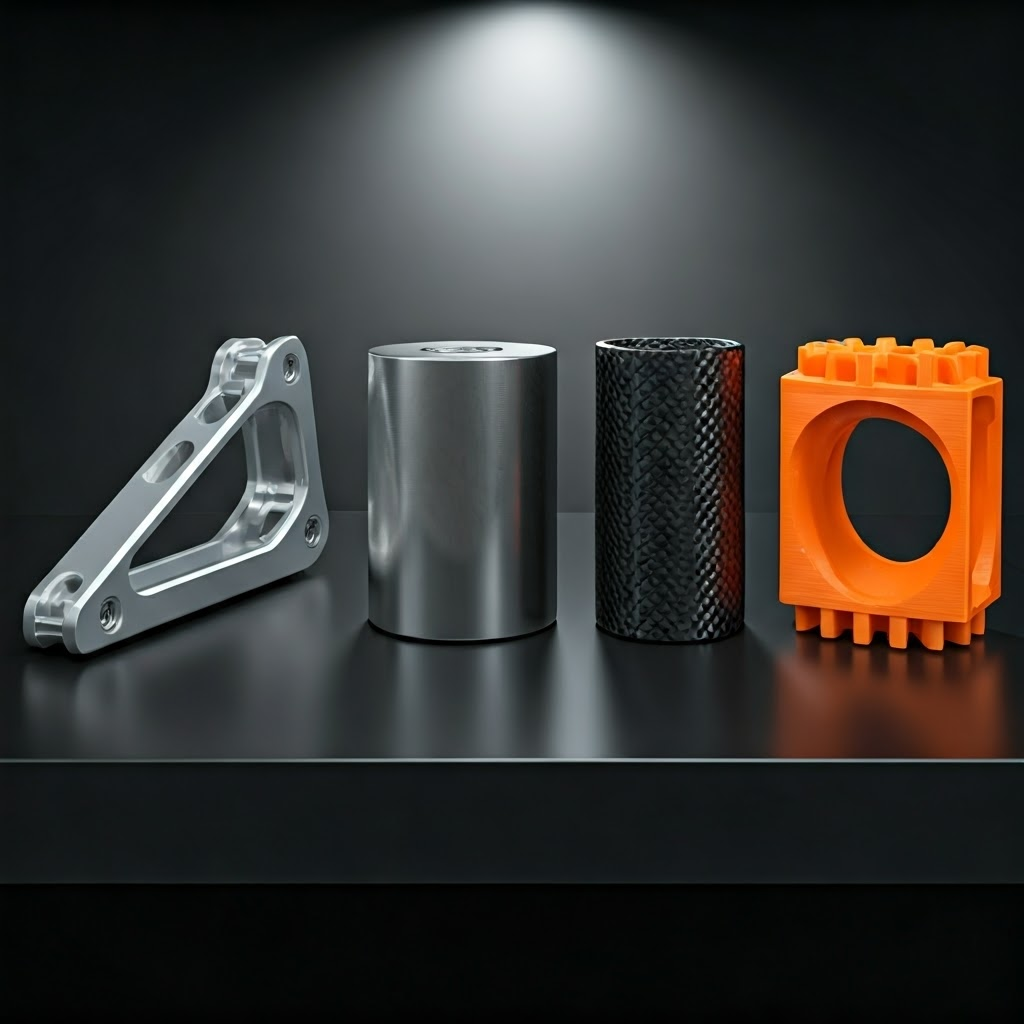
Choosing a material feels like picking ingredients for dinner. Aluminum is light, easy to machine, and rust-free, making it a versatile favorite in hobby robots. Too much load, though, can bend it.
Steel laughs at heavy loads and costs less than aluminum, yet its weight slows mobile robots. Carbon fiber delivers extreme strength without mass, but high price and tricky fabrication keep it for premium builds.
3D-printed polymers shape wild, custom parts fast and cheap. They shine in low-stress brackets or covers but crack when overstressed. Builders often combine these materials—aluminum frames, plastic mounts, steel bolts—to balance strength, weight, and cost.
Holding It All Together: Fasteners, Bearings, and Shafts
Fasteners—screws, nuts, and bolts—let you assemble, adjust, and repair. Pick a bolt that matches the host material, or the joint will tear apart. A well-chosen fastener turns chaos into reliable structure.
Bearings hide inside joints to slash friction. They make wheels spin freely and arms pivot smoothly. When space or budget runs tight, bushings step in as simpler, low-cost sleeves, though they wear faster under heavy load.
Shafts transmit rotation from motors to wheels or gears. Each shaft must resist bending and twisting, often riding inside bearings for smooth, long-lasting motion.
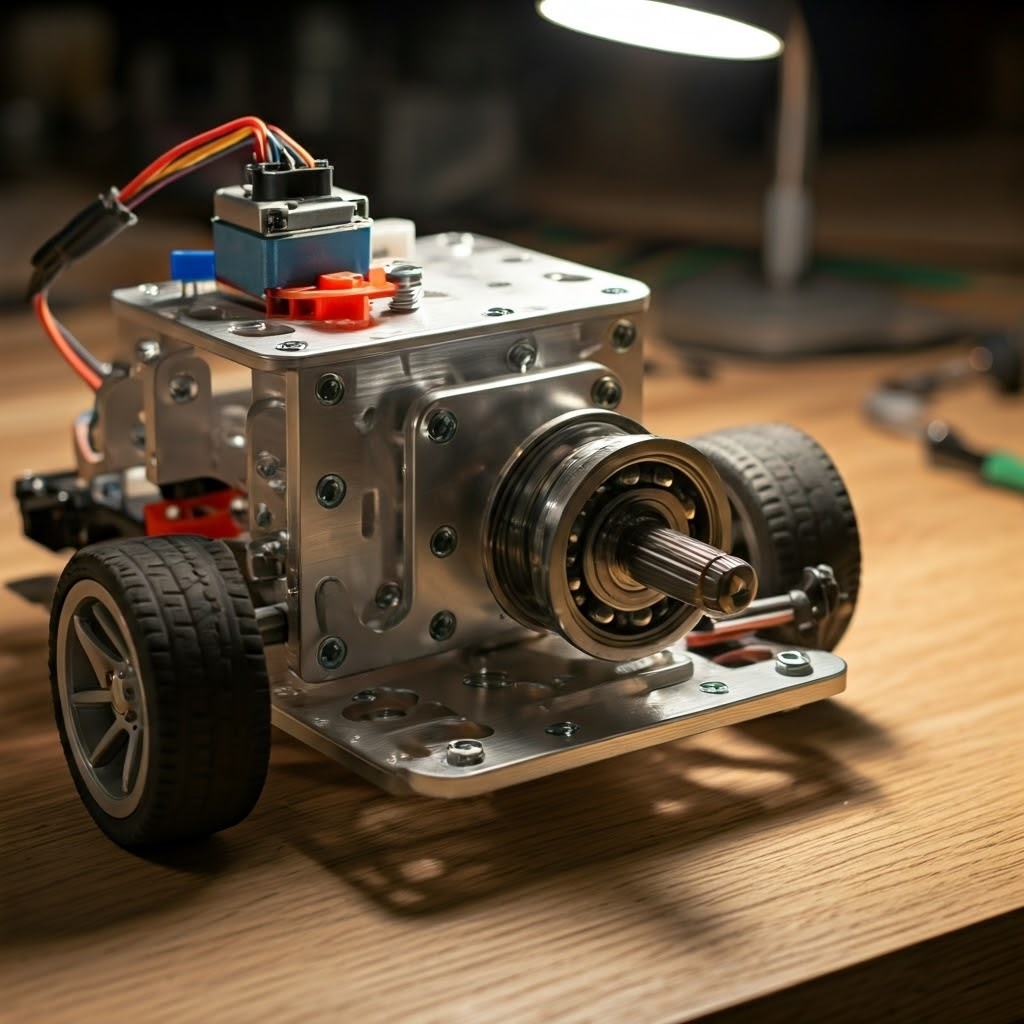
Picture a robot car: aluminum plates form the chassis, steel shafts carry the wheels, plastic wheels grip the floor, and ball bearings keep everything rolling. Bolts hold plates and shafts together, while a 3D-printed bracket secures the motor. Each part supports the next, ensuring the car survives bumps and keeps moving.

Why the Details Make the Difference
Every choice—material, fastener, or bearing—affects performance. Get them right and your robot glides, grips, and survives surprises. Skimp and something bends, jams, or breaks. The quiet logic behind each bolt, beam, and bearing turns loose parts into a reliable machine that walks, rolls, or rescues with confidence.
