
Getting Your Bearings: The Brain’s Big Landmarks

Imagine the brain as a city with three main districts. The cerebrum sprawls on top, the cerebellum sits below the back, and the brainstem forms the stalk that connects to your spinal cord.

Think of the cerebellum as a compact traffic manager. It balances and fine-tunes your moves before you stumble. The brainstem, though smaller, runs vital services—heartbeat, breathing, and emergency responses. Remember the top-to-bottom order: Cerebrum, Cerebellum, Brainstem—three stacked C’s.
Lobes and Borders: The Brain’s Neighborhoods
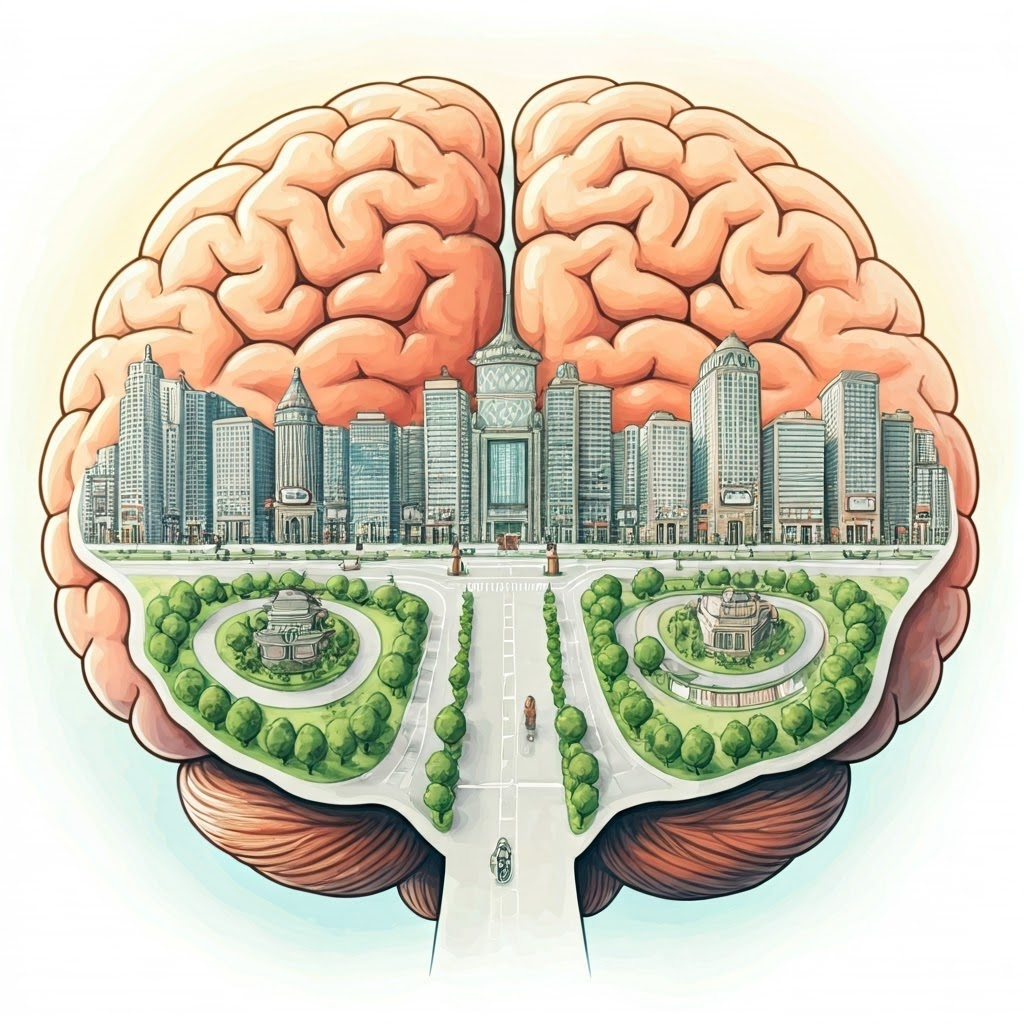
The cerebrum splits into four busy lobes. The frontal lobe under your forehead acts like city hall—planning, deciding, and steering movement.

Just behind lies the parietal lobe, a sensory logistics hub that tracks touch, pain, and body position. Below your temples sits the temporal lobe, the media center for sound, language, and some memory tasks.

At the very back, the occipital lobe runs your visual theater. To recall the front-to-back order, use F-POT—Frontal, Parietal, Occipital, Temporal.
Wrinkles with a Purpose: Gyri and Sulci

The brain’s folds pack more surface into a tight space. Raised ridges are gyri; sinking grooves are sulci. A gyrus rises while a sulcus sinks. Large landmarks, like the central and lateral sulci, help chart lobe borders.
Finding Your Way: Orientation Terms Made Easy
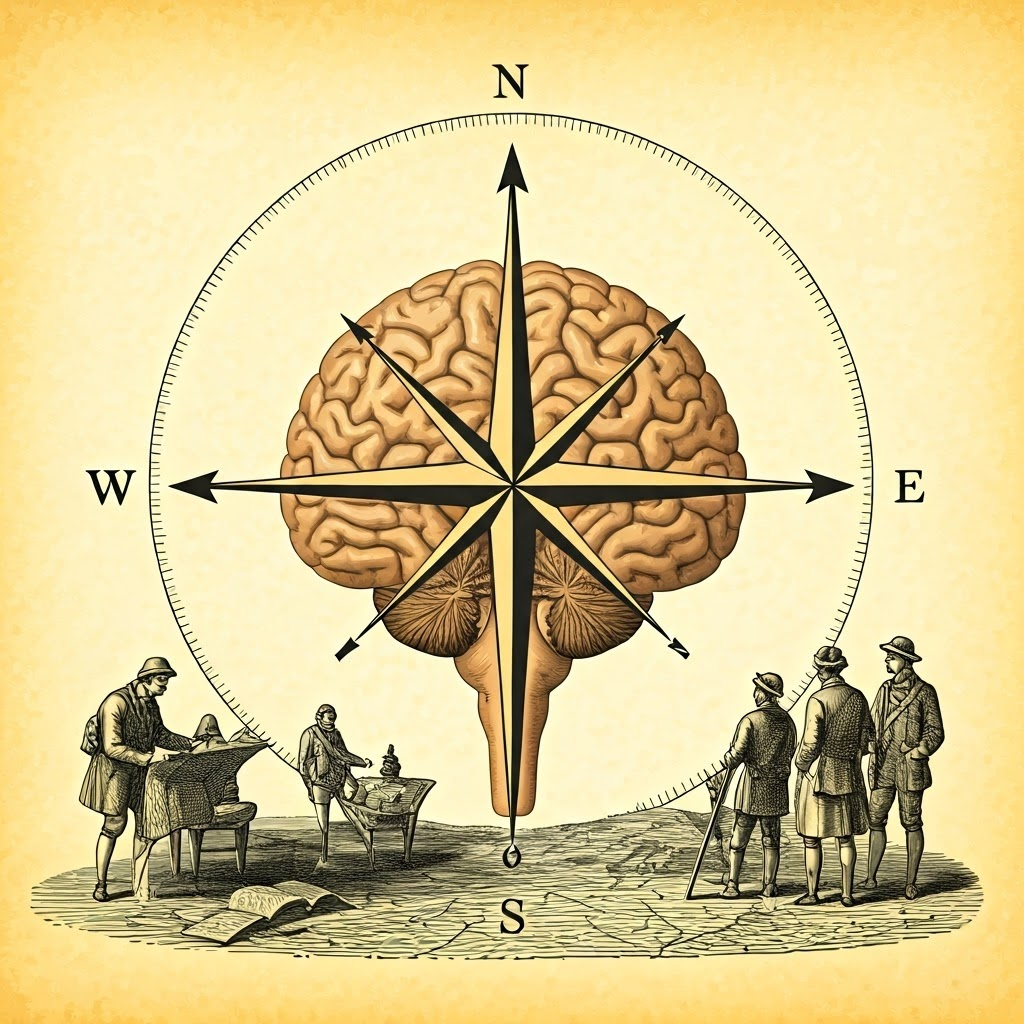
Brain maps use six direction words. Rostral points toward the nose, caudal toward the back, dorsal up, ventral down, medial inward, and lateral outward. Keep this mini-compass handy, and brain diagrams soon feel like familiar street maps.
