
Sunlight, Batteries, and the Power Puzzle
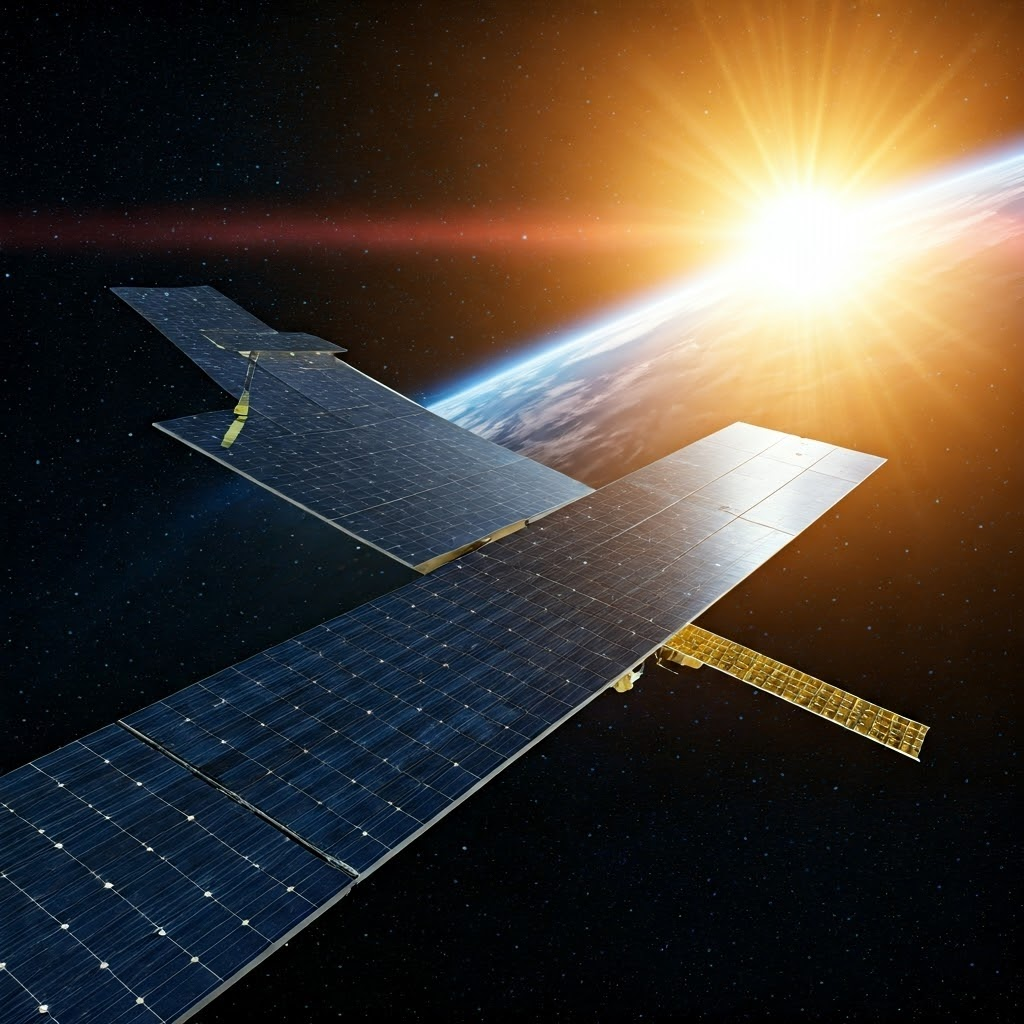
Satellites depend on the sun for power. They unfold thin, shiny solar panels that must face the light at the perfect angle. One small tilt cuts their harvest. In orbit, a wrong calculation offers no second chance, so engineers treat every watt as precious.
Catching Rays: How Satellites Collect Sunlight
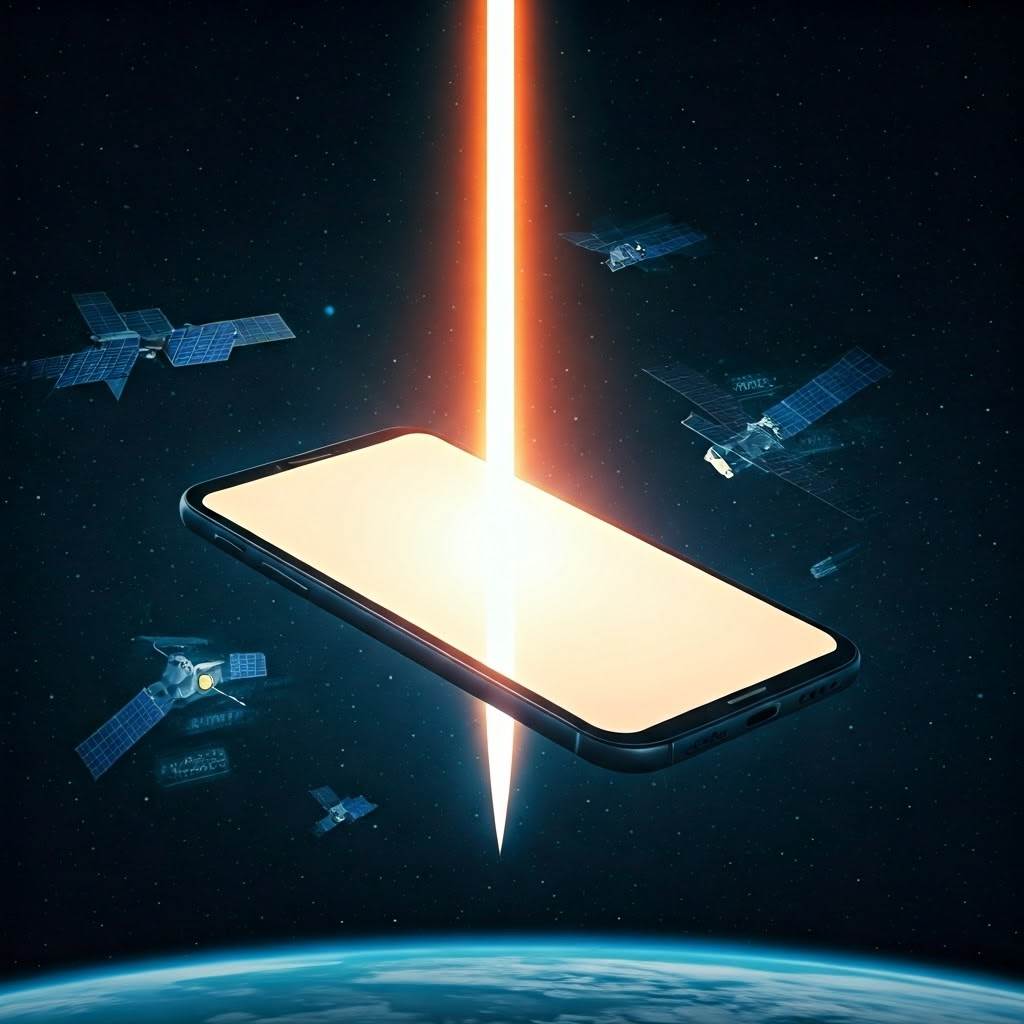
Imagine charging your phone only while standing in a sunbeam—miss it, and the battery dies until the next pass. That is a satellite’s daily challenge. Space offers stronger sunlight than Earth, roughly 1,366 W/m², yet the panel’s size and aim still decide how much energy arrives.
Engineers total every electrical load, then match it to real sunlight. They use a clear formula:
One misstep in that equation can doom a mission.
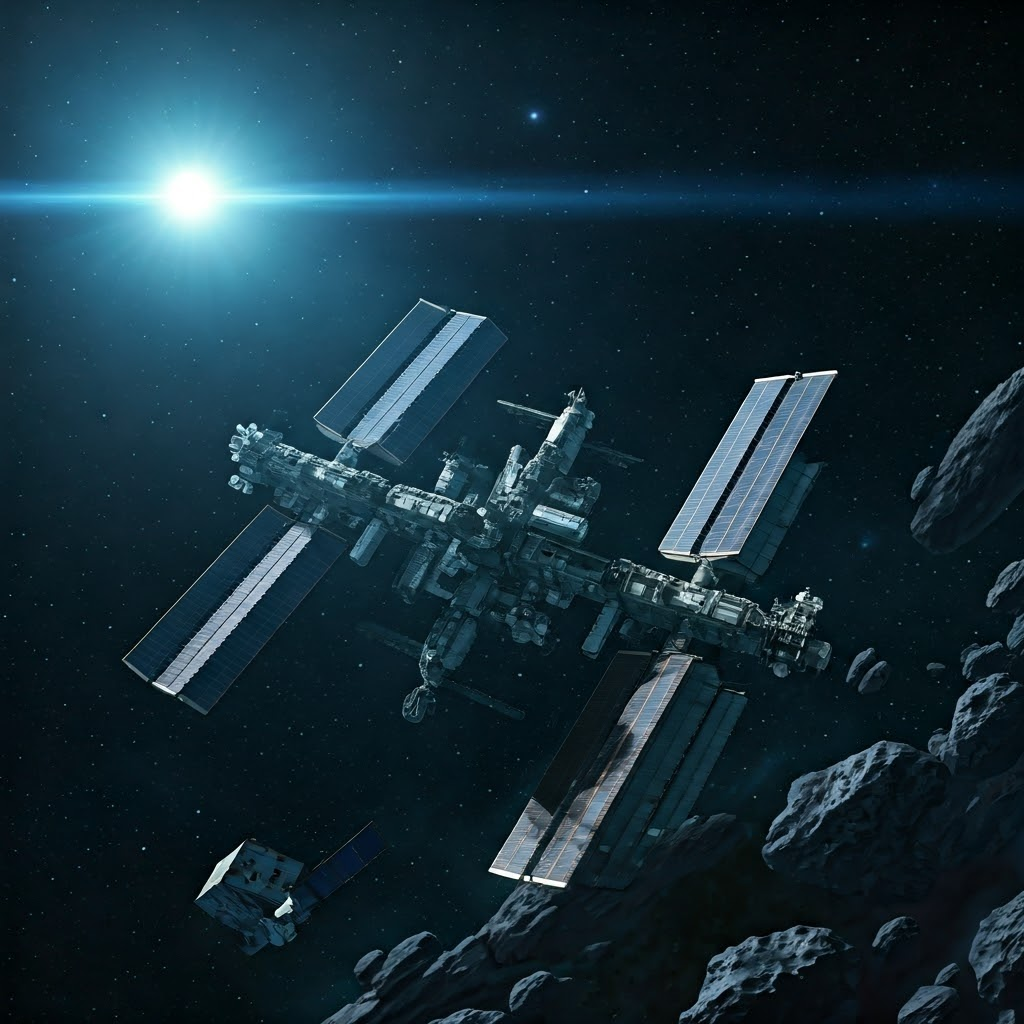
Some craft, like the ISS, rotate huge arrays to track the sun. Smaller satellites keep simple fixed panels and accept lower efficiency for less weight. Designers also budget for wear—radiation and micrometeoroids slowly reduce output—so they launch with extra capacity.
Storing Juice: Batteries and Beyond
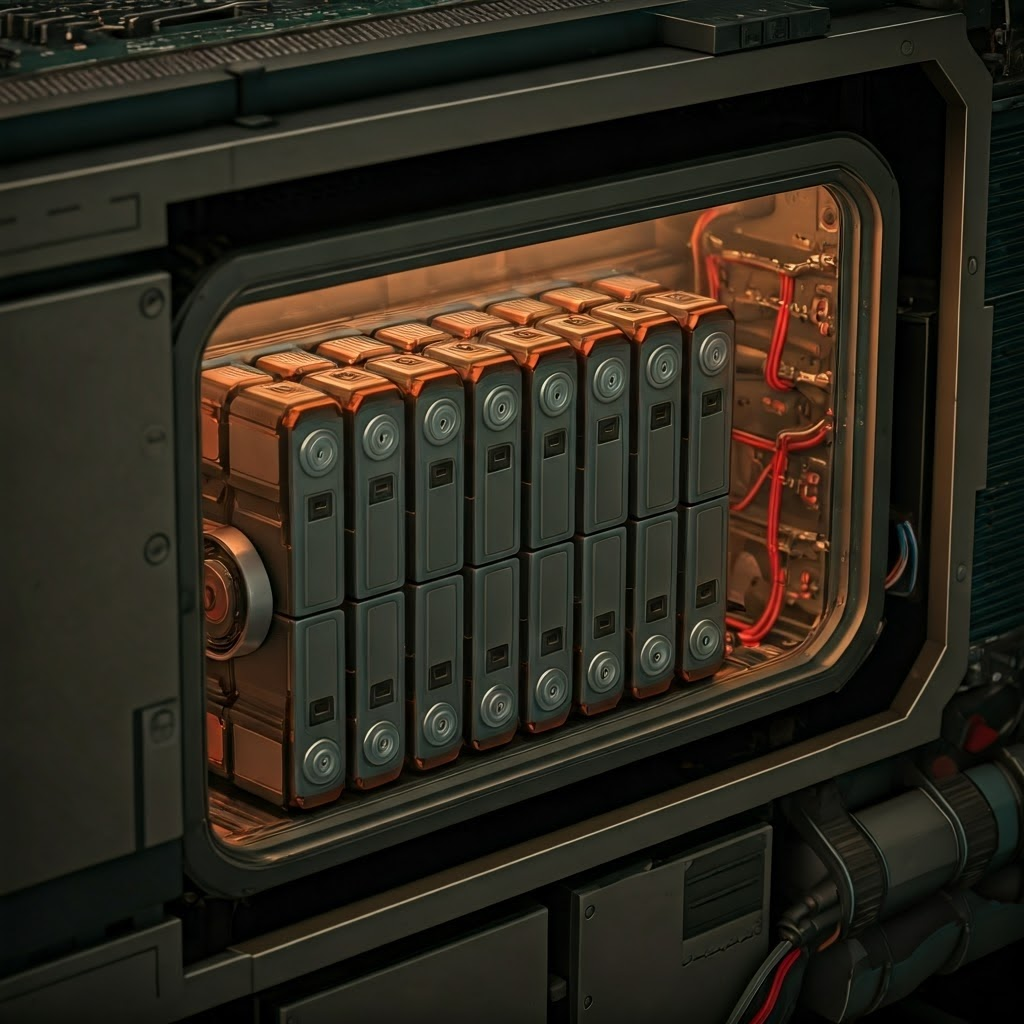
Even big arrays face darkness when Earth blocks the sun. Satellites survive these eclipses with batteries sized for the longest expected shadow plus a safety margin. Nickel-hydrogen packs once ruled, yet modern craft often favor lighter lithium-ion cells managed with strict charge limits.
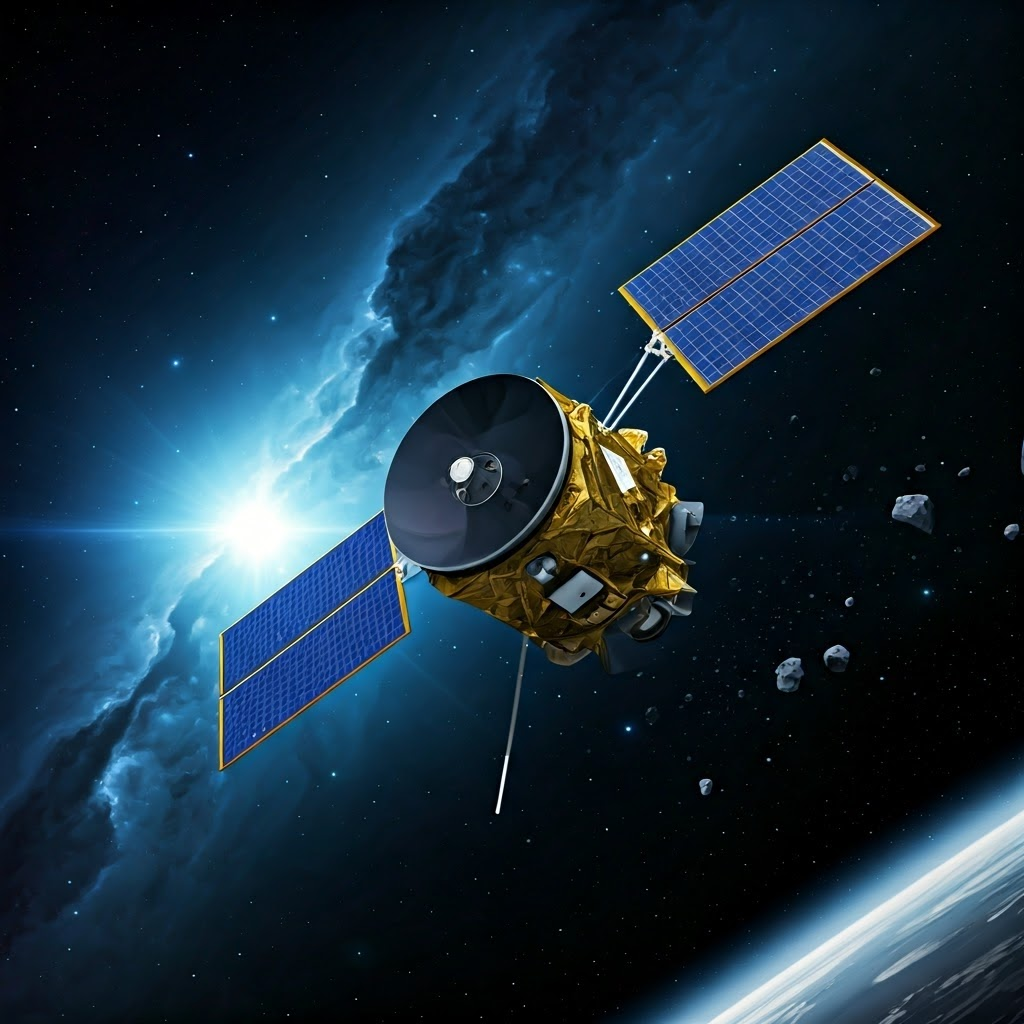
Space is harsh—vacuum, wild temperatures, and cosmic rays batter hardware daily. Past Mars, sunlight fades, so missions rely on radioisotope thermoelectric generators. RTGs convert the steady heat of radioactive decay into continuous electricity and warmth, keeping instruments alive for years.
Balancing the Budget: Power Management in Orbit
Even with ample generation and storage, satellites juggle a tight power budget. During sunlight, they run science gear, radios, and heaters. Entering shadow, they switch to battery mode and may shed non-essential loads. This careful scheduling keeps vital systems alive until dawn.

Controllers predict each orbit’s charge and discharge cycle, adjusting for eclipses, aging batteries, or stuck panels. On the ISS, an automated network handles this complex dance—every orbit brings a fresh calculation, and every eclipse proves the plan.
