14 min read  •  11 min listen

Iron & Steel

How Fire, Coal, and Clever Ideas Forged the Modern World

Iron & Steel

AI-Generated

April 29, 2025

What if the world you know was built on fire, sweat, and a few clever ideas? Discover how the secrets of iron and steel shaped everything from bridges to cities, and why a handful of breakthroughs changed the way we live, work, and dream.


From Wood to Coke: The First Sparks of Change
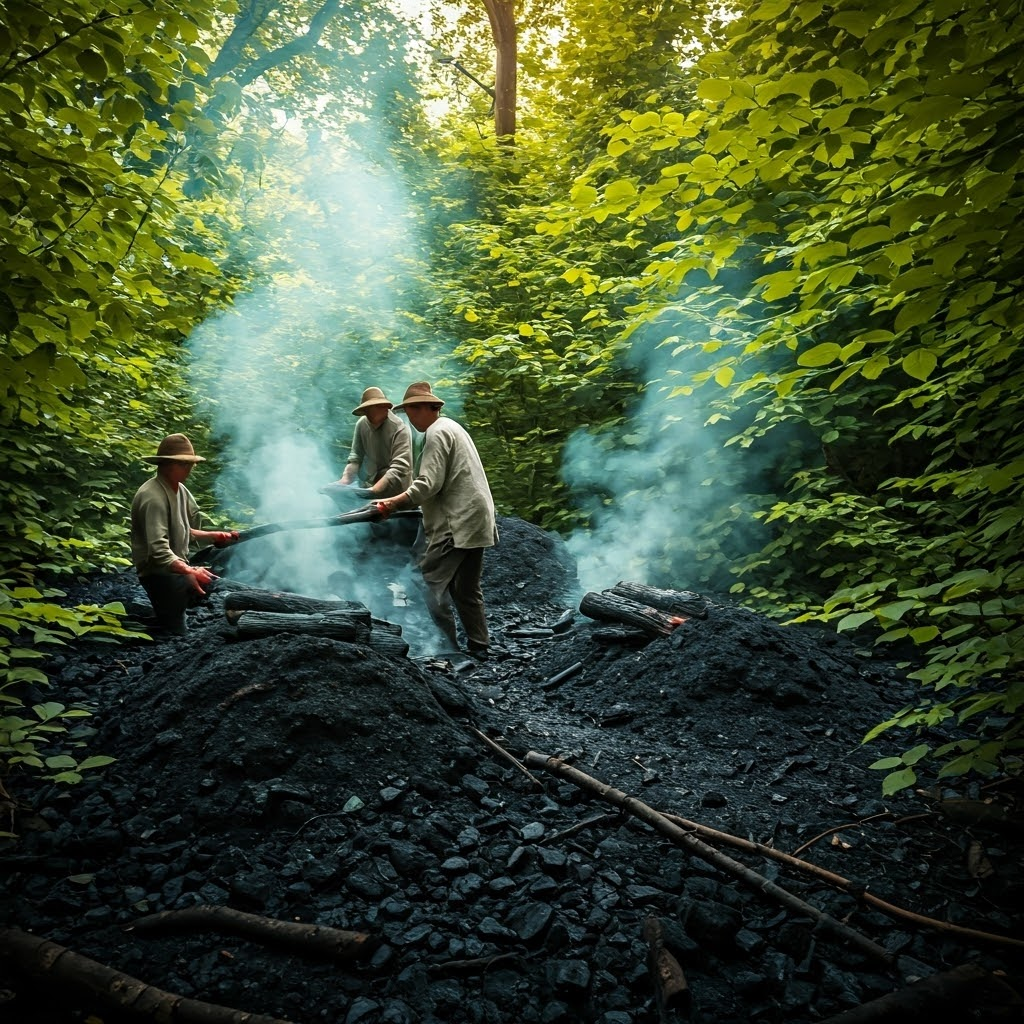
Charcoal burners stack logs on smoking earth kilns in a dense British forest, showing how early ironmaking relied on woodland fuel.

Charcoal, Forests, and the Old Way

If you wanted to make iron in Britain three hundred years ago you needed more than rocks and fire. You needed wood—and mountains of it.

Charcoal came from slowly roasting timber in low-oxygen pits. Small teams cut trees stacked logs and watched smoky mounds for days to yield brittle black fuel.

Panoramic scene of felled trees and workers hauling logs through a misty forest, capturing the scale of timber demand for early ironmaking.

Early ironmakers built furnaces near woods because hauling wood was simpler than moving heavy ore. Each ton of metal devoured about an acre of forest so landscapes soon showed scars.

By the late 1600s some regions were nearly stripped bare and wood prices soared.

Crumbling 17th-century furnace littered with charcoal fragments, hinting at the fragile limits of old technology.

Charcoal furnaces stayed small because the fuel shattered under weight. Output was capped and the iron often turned brittle or impure. Nature set a hard ceiling.
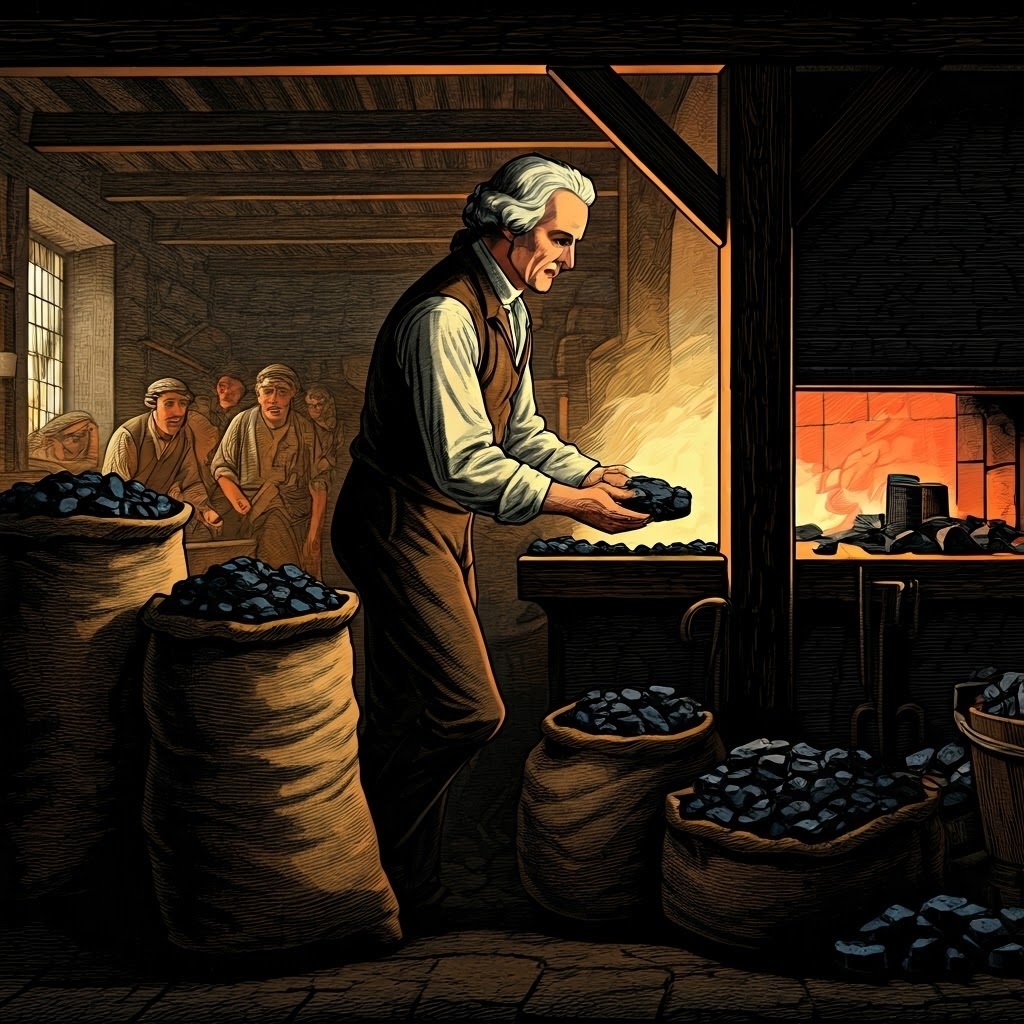
Abraham Darby studies clean grey coke beside coal sacks inside a warm forge, marking a turning point in fuel choice.

Abraham Darby and the Coke Revolution

Quaker ironmaster Abraham Darby asked a bold question—could plentiful coal replace scarce wood?

Raw coal smoked and added sulfur but heating it without air made coke. Coke burned hot stayed strong and acted much like charcoal yet came from rock not trees.
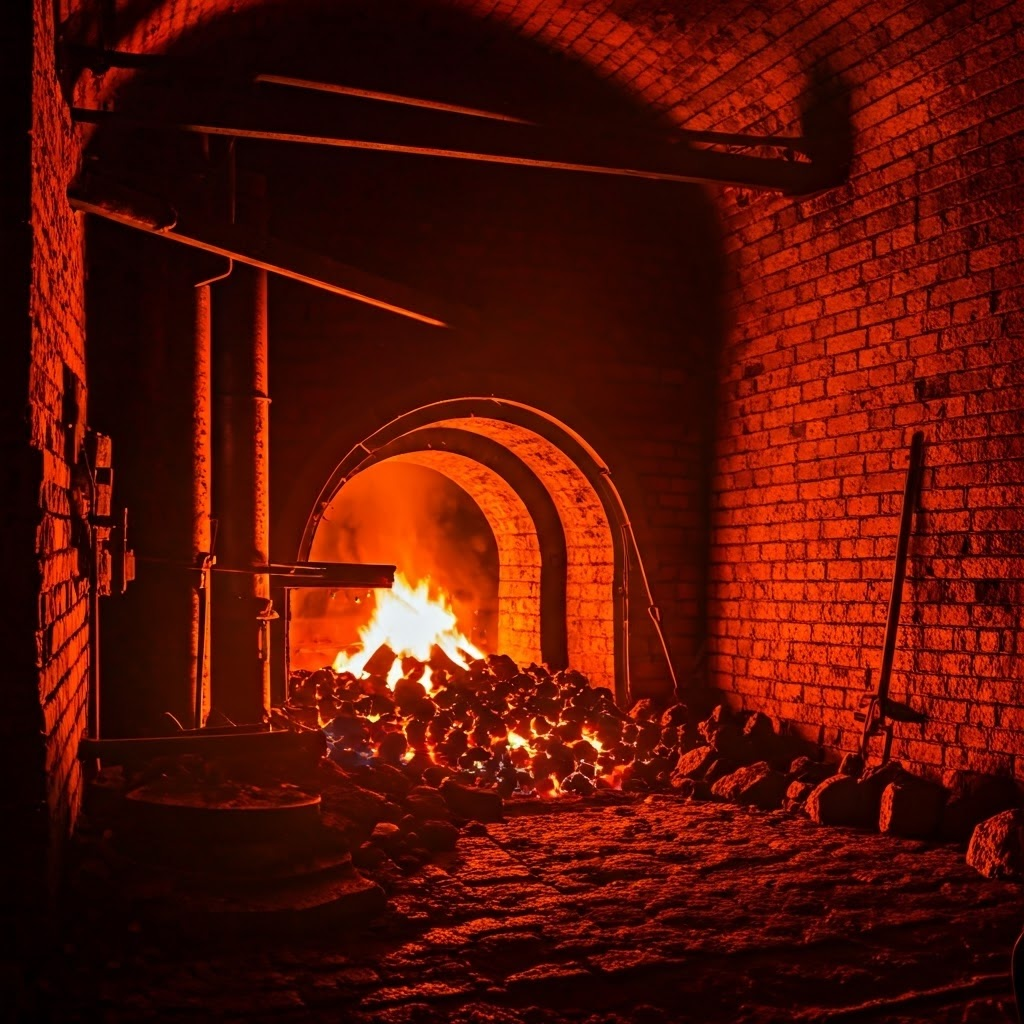
Early 18th-century blast furnace blazing with iron ore limestone and coke, showing risky experimentation that paid off.

In 1709 at Coalbrookdale Darby filled his blast furnace with ore limestone and coke. The iron emerged sound. His foundry soon cast pots then larger machines all fired by coke.

Coke was cheap and abundant so other ironmasters quickly copied the method.
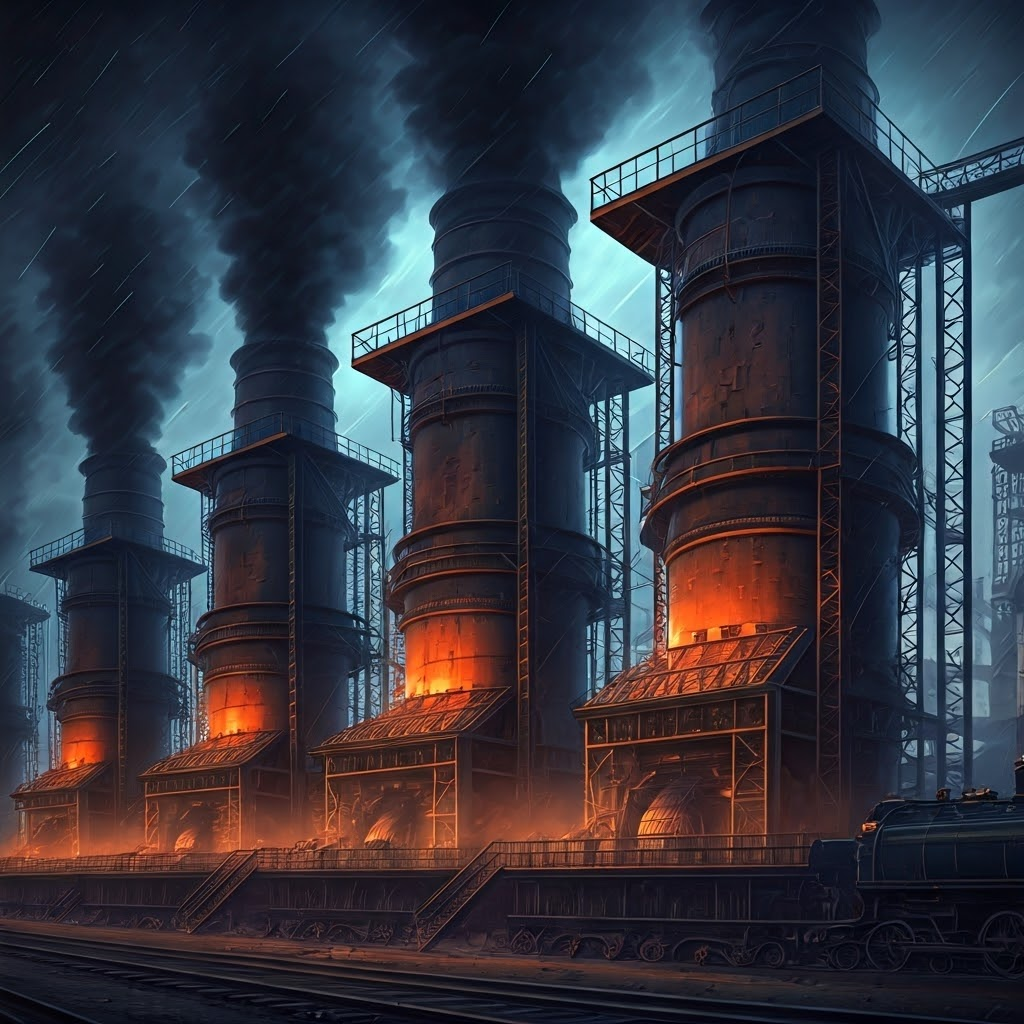
Row of massive industrial furnaces under a smoky sky, symbolizing the rapid growth of coke-fired ironmaking during the Industrial Revolution.

Within decades coke furnaces grew huge. As the Industrial Revolution advanced coke-fired iron filled wheels engines and railway frames. Forests breathed easier even as coal smoke thickened the sky.

Production soared and costs fell paving the way for modern industry.

Isometric valley map showing close seams of iron ore limestone and coal beside the River Severn, underlining Ironbridge’s natural advantages.

Ironbridge: Where Geography Met Genius

Look at Shropshire’s narrow Severn valley and you find Ironbridge. Iron ore limestone and coal all lie within a few miles. The river carried heavy cargo making large-scale metalwork practical.
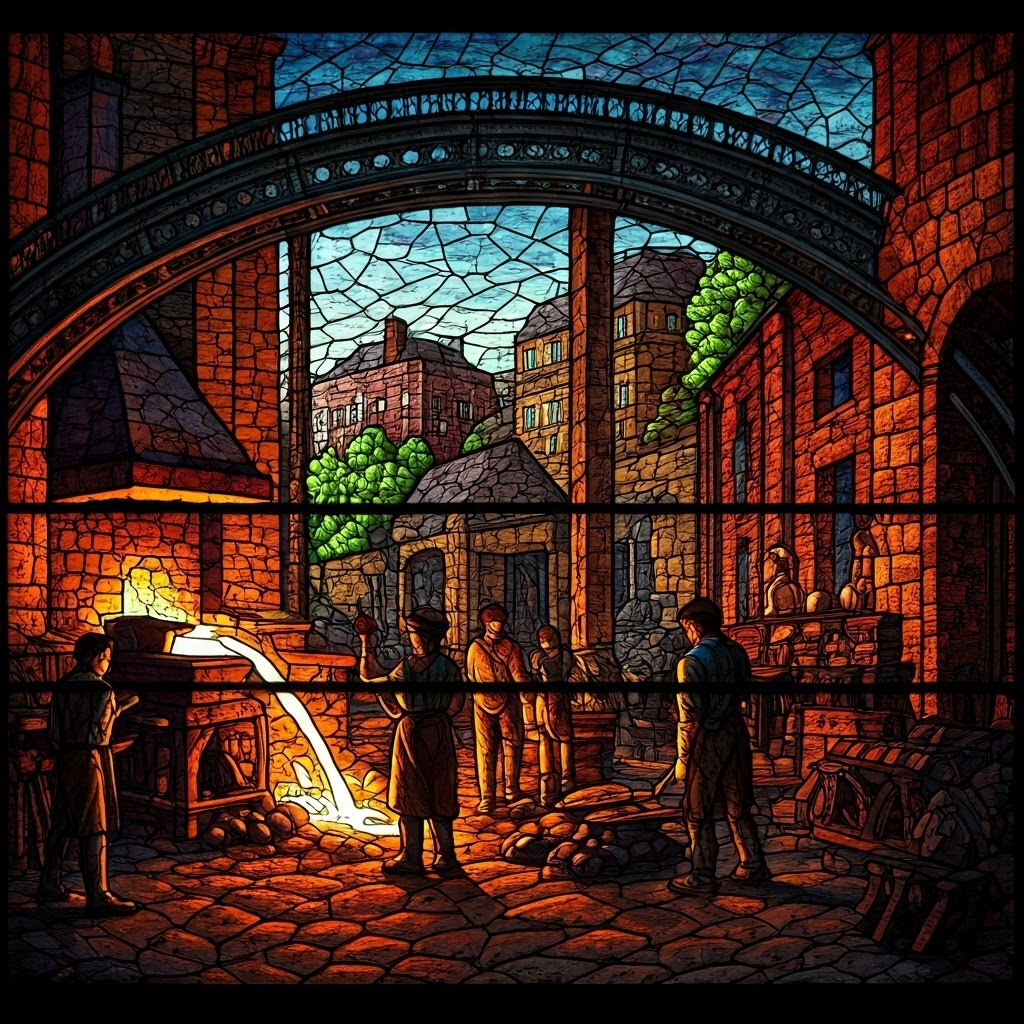
Stained-glass style scene of 18th-century workers pouring molten iron with the iconic Iron Bridge arching behind them, celebrating industrial progress.

Darby’s Coalbrookdale works stood here beside many other foundries. In 1779 locals cast the world’s first iron bridge—an elegant arch that showed iron could now span rivers.
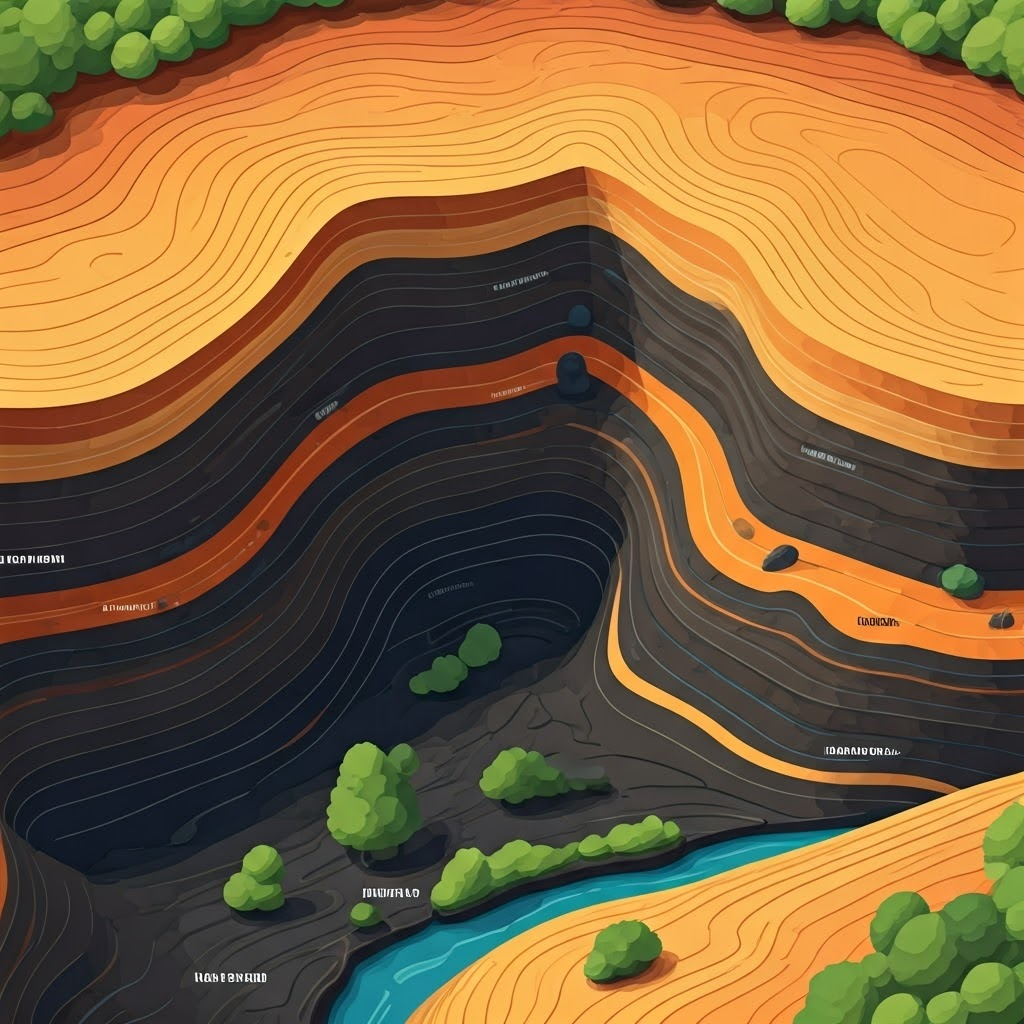
Topographic vector graphic of terrain layers under Ironbridge, visualizing how resource proximity drove innovation.

Ironbridge proves that resources shape ideas. Coal ore and a navigable river let experiments succeed and changed Britain’s future.

Surreal collage merging smoky forests glowing furnaces gears and soaring iron bridges, illustrating the transformative journey from wood to coke.

The switch from wood to coke broke old limits. Forest mounds became roaring furnaces and iron leapt from kitchenware to bridges. Those first sparks lit a path the modern world still follows.


Tome Genius

Industrial Revolution: Technology & Society

Part 3

Tome Genius

Cookie Consent Preference Center

When you visit any of our websites, it may store or retrieve information on your browser, mostly in the form of cookies. This information might be about you, your preferences, or your device and is mostly used to make the site work as you expect it to. The information does not usually directly identify you, but it can give you a more personalized experience. Because we respect your right to privacy, you can choose not to allow some types of cookies. Click on the different category headings to find out more and manage your preferences. Please note, blocking some types of cookies may impact your experience of the site and the services we are able to offer. Privacy Policy.
Manage consent preferences
Strictly necessary cookies
Performance cookies
Functional cookies
Targeting cookies

By clicking “Accept all cookies”, you agree Tome Genius can store cookies on your device and disclose information in accordance with our Privacy Policy.

00:00