Why We Care: The Stakes of Space Contamination
The Invisible Travelers: Microbes on the Move
Microbes travel quietly. They cling to door handles, phones, even the seams of a spacesuit. Engineers can scrub a craft for weeks, yet one stubborn spore may hide inside a screw or beneath a sticker.
Think of airport customs. A single fruit fly in a suitcase can threaten an ecosystem. Space is the ultimate checkpoint, because Earth bursts with life. No probe we launch is ever fully sterile, and nature always finds a gap.
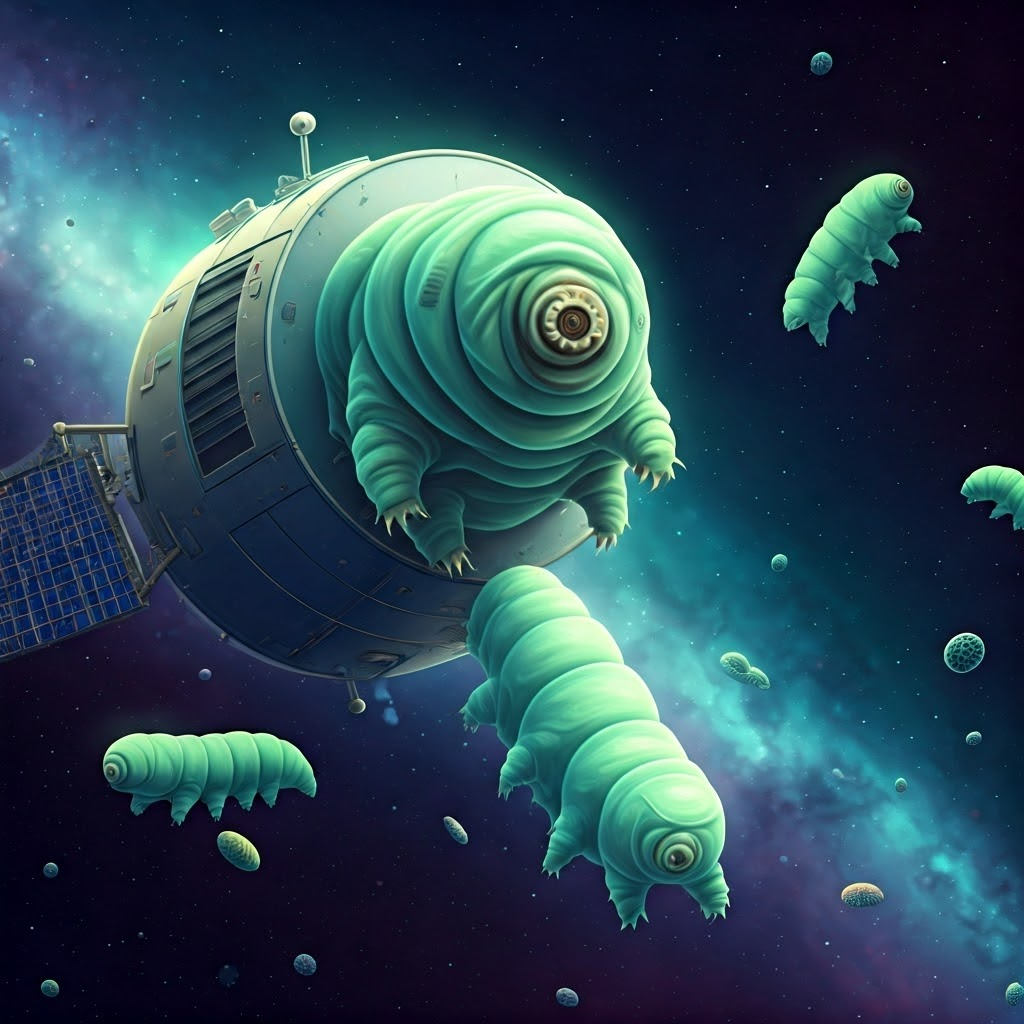
You may know tardigrades—the tiny “water bears” that rode a satellite in 2007 and survived open space. They are famous, but many bacteria endure the same ordeal by hiding in metal or plastic cracks.
This resilience worries mission planners. If a microbe reaches a place with water or warmth on another planet, little stops it from multiplying.
Forward and Backward: Two Directions, Two Dangers
Scientists call the guard against space germs planetary protection. It covers two hazards: forward contamination and backward contamination. Picture visiting a distant land—you may spread your germs there or bring new ones home.
Forward contamination happens when Earth life rides with our robots or future astronauts. It could ruin the search for alien organisms. Imagine detecting Martian bacteria that match strains from a rover’s wheel.
The Viking landers in the 1970s faced this risk. NASA baked them in huge ovens to kill microbes, yet a few survived.
Backward contamination flips the worry. Samples returning from the Moon, Mars, or asteroids might carry chemistry or organisms we do not understand. They stay sealed like Pandora’s box until labs confirm they are safe.

Why It Matters: Science, Ethics, and Survival
Clean experiments power science. If we seed Mars, Europa, or Enceladus with our own bugs, we might never know whether life emerged there naturally.
Carl Sagan warned that careless explorers might discover only the life they brought themselves. Dropping plastic bones on a fossil dig makes the find meaningless—and the same logic applies on other worlds.
Ethically, we owe distant ecosystems respect. Even simple alien life deserves a chance to evolve without our interference. Some say every world should stay untouched until we can guarantee no harm.
The COVID-19 pandemic reminds us how fast unfamiliar microbes spread. If we return a Martian sample holding ancient or novel biology, strict quarantine and containment labs stand as our first defense.
Planetary protection joins discovery, safety, stewardship, and awe into one promise—care for all life, known or unknown. It is not mere bureaucracy; it is responsible exploration.