
The Building Blocks: Gels, Starches, and Gums
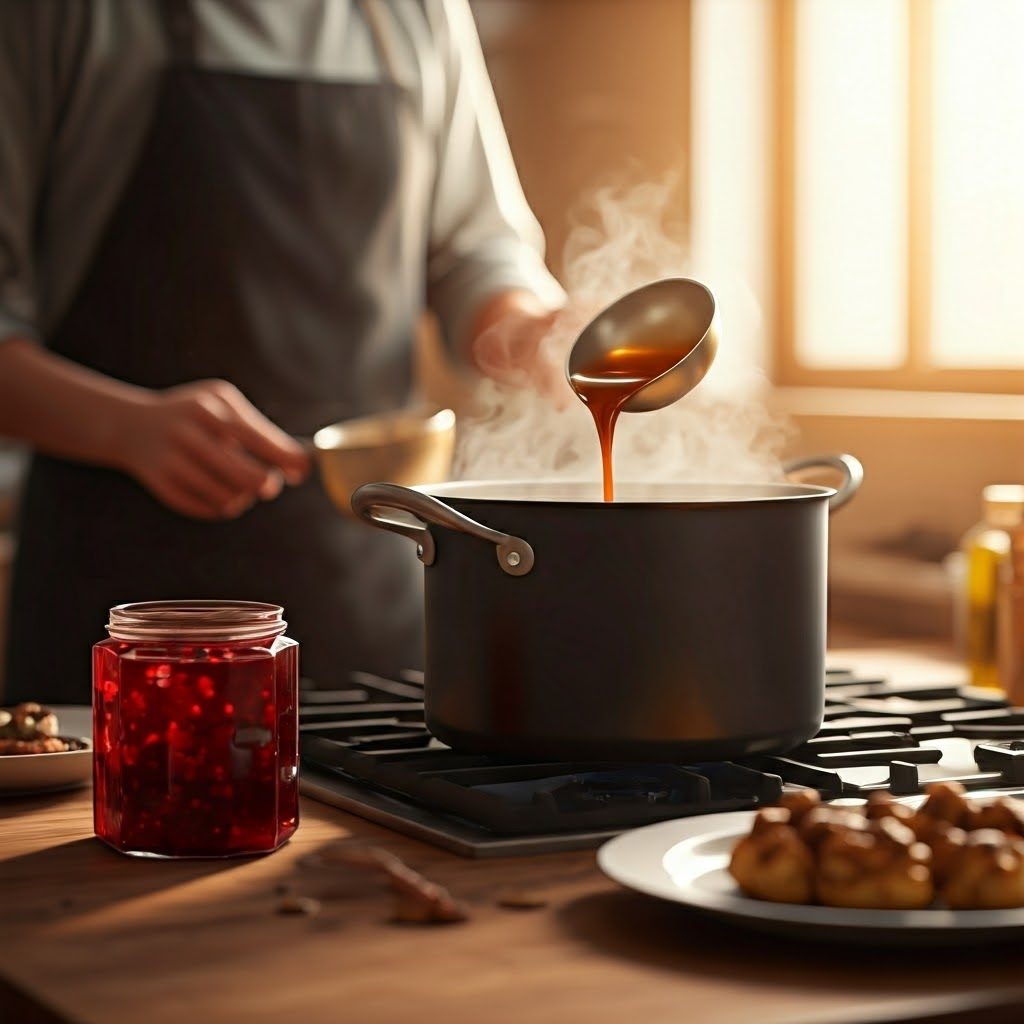 If you have wondered why jelly jiggles while gravy pours, you are already thinking like a kitchen scientist. Gels turn liquid into a soft solid, while thickeners add body yet stay pourable. Texture shapes how food feels— a silky soup comforts more than a watery one, and a perfectly set jam beats any runny syrup.
 The secret tools are hydrocolloids. They grab water in two ways: starches swell, while gels like gelatin or agar build tangled nets. Heat starch in soup and it swells. Cool gelatin and it sets. Each step is everyday chemistry that turns thin liquids into comforting foods.
Meet the Hydrocolloids: Gelatin, Agar, and Pectin
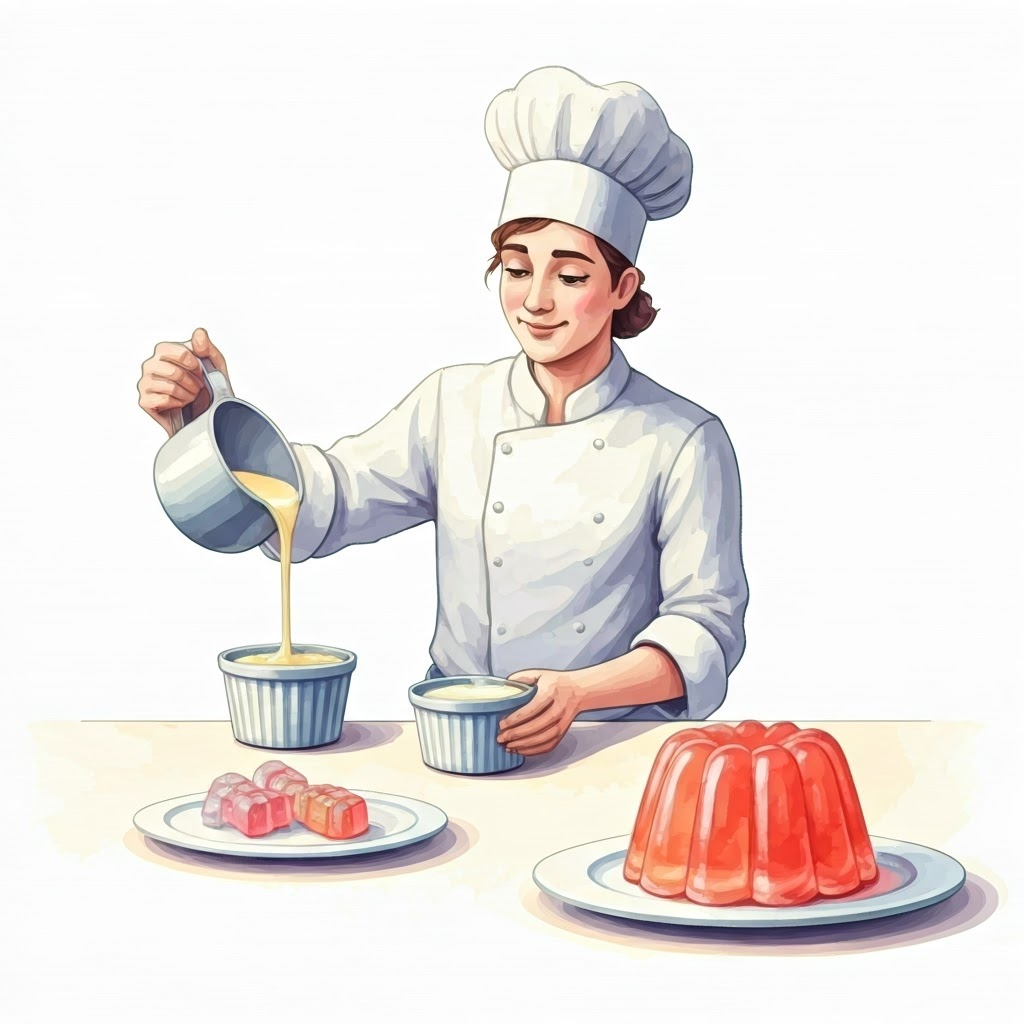
Gelatin comes from collagen. It dissolves hot, sets cold, and melts at body temperature, so gummies and panna cotta feel silky as they warm on your tongue.
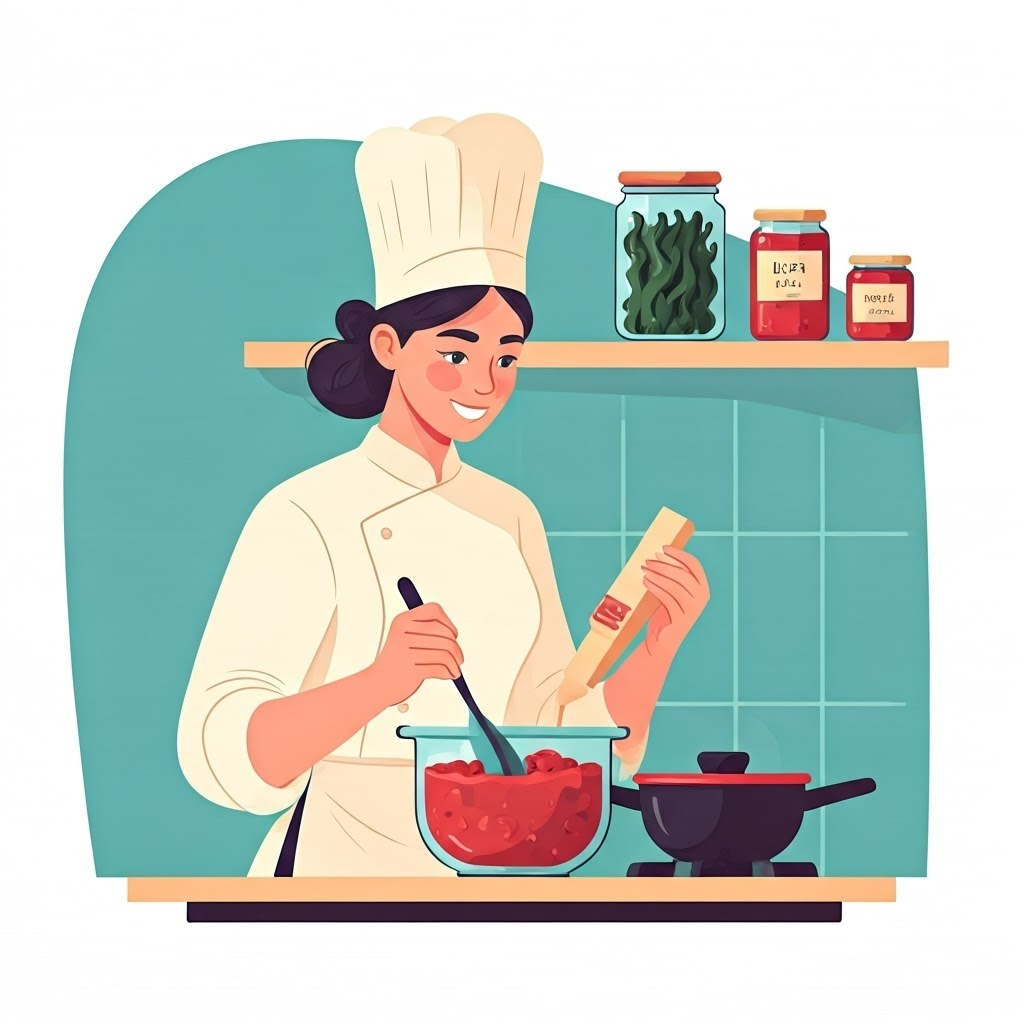 Agar is seaweed-based. It firms at room temperature, holds on hot days, and snaps cleanly instead of melting.
Pectin lives in fruit walls. With enough sugar and acid, it locks jam into that familiar spreadable set.
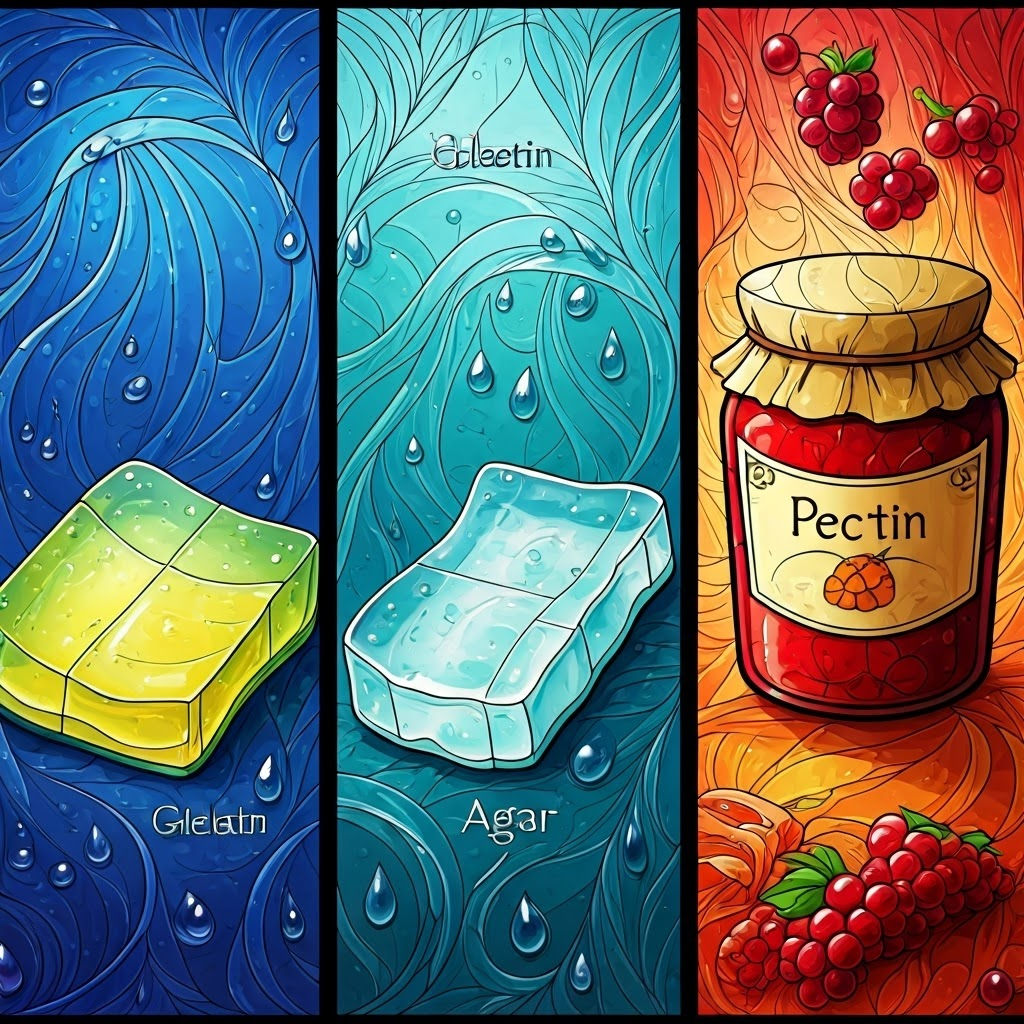 Line them up and choose: gelatin for a soft melt, agar for a sliceable bite, pectin for classic jam. Swap carefully—each behaves its own way.
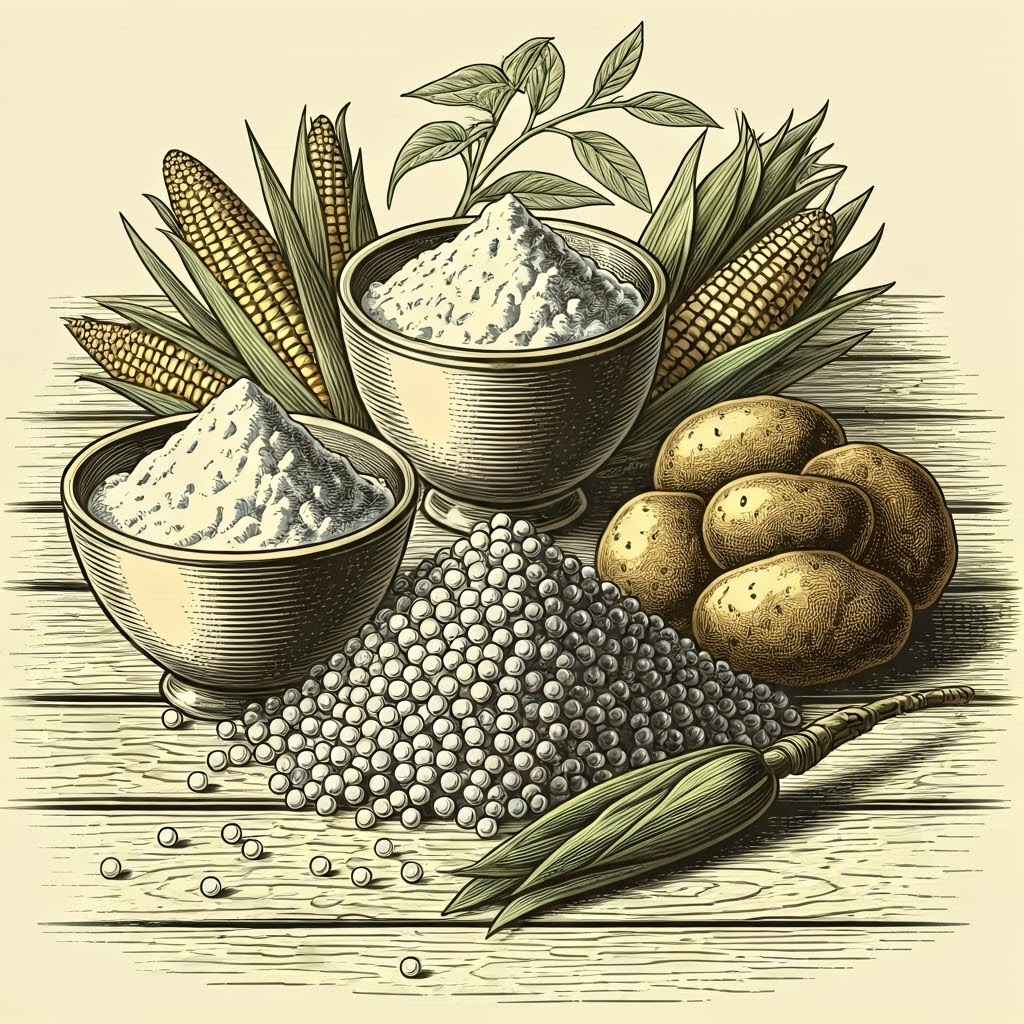
Starches: Amylose, Amylopectin, and the Magic of Gelatinization
A starch granule holds two chains. Amylose is straight and great at gelling. Amylopectin branches and thickens smoothly. That is why cornstarch pudding sets firm, yet potato soup stays velvety.
 Heat triggers gelatinization. Around –72\,^{\circ}\text{C} granules swell, burst, and release those chains. Stop too cool and sauce stays thin; boil too hard and it may thin again.
 Avoid lumps with a slurry or a roux. Different starches behave uniquely— waxy cornstarch hardly gels, tapioca gives shine, and potato thickens at lower heat. Test and find your favorite.
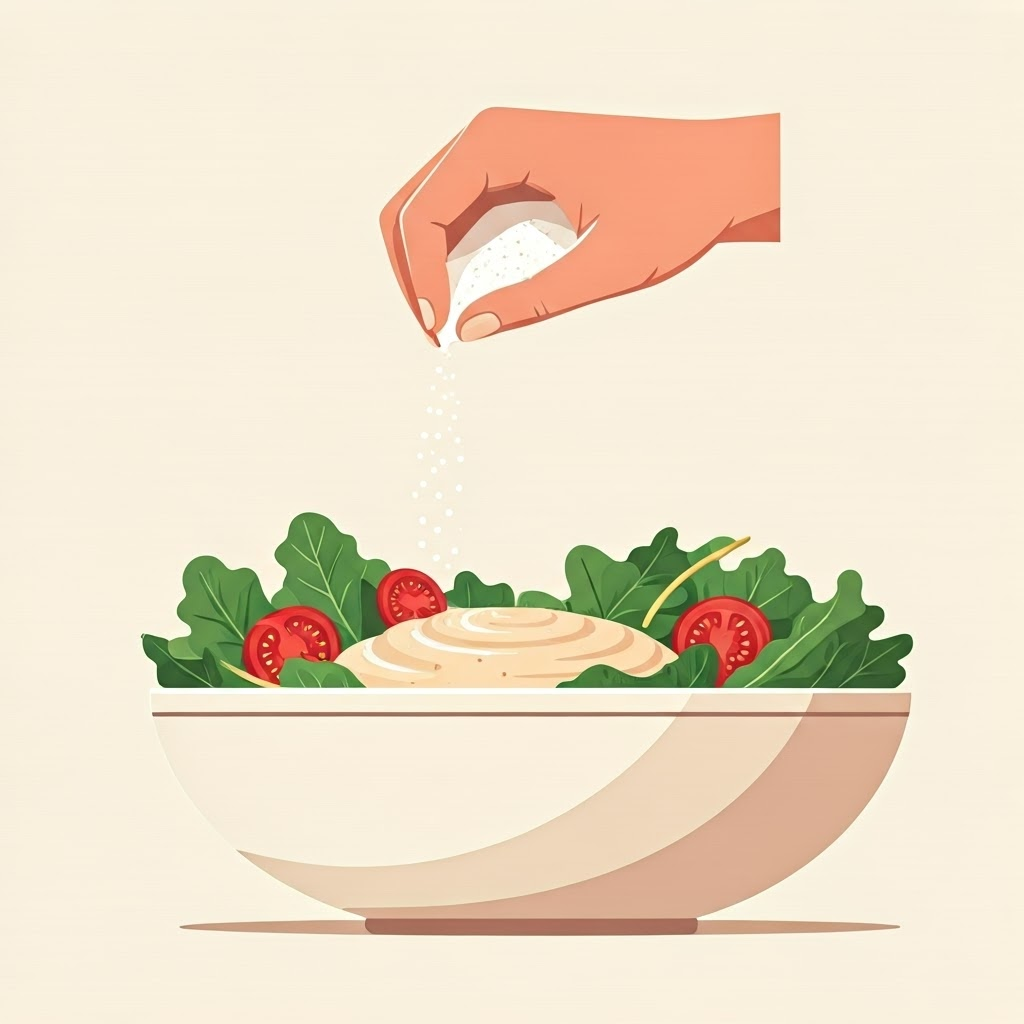
Gums: Xanthan and Guar for the Curious Cook
Need thickness without taste? A pinch of xanthan or guar does wonders. Whisked into dressings or soups, it stops separation and adds body with almost no weight.
 Start tiny— about 0.2–0.5 % by weight. Blend with sugar or oil first, then whisk in. Too much feels slimy, so increase slowly until the spoon coats nicely.

Why It All Matters
Mastering these building blocks lets you rescue a runny sauce, craft heat-proof jelly, or keep ice cream smooth for days. Notice the science each time you cook, and watch your everyday meals become quietly extraordinary.
