
The Blueprint: How DNA Holds the Instructions
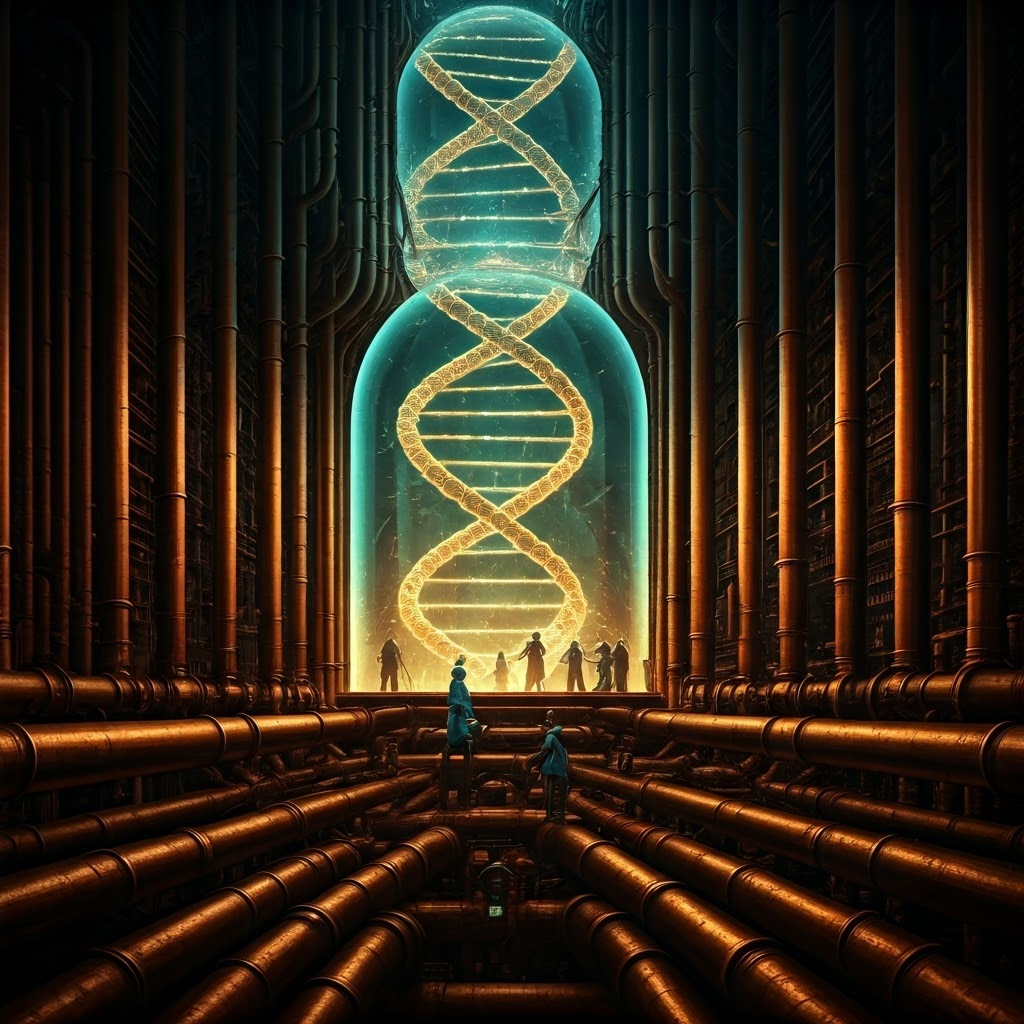
DNA organizes life with precision much like a city’s power grid. Its iconic double-helix twists two strands into a compact, information-rich shape. Four nucleotides—A, T, C, and G—form the entire genetic language.
Picture DNA as your grandmother’s oldest cookbook. Every recipe appears in those four letters. Two meters of this code fold neatly inside a nucleus far smaller than a pencil tip.
When a cell needs a protein, it opens the right recipe—or gene—and starts reading. The nucleotide sequence becomes an active blueprint instead of silent text.
DNA: The Original Instruction Manual
A gene works like a sentence in that vast cookbook. Clear start and stop markers help the cell find the correct line of instructions.
Not every stretch of DNA holds a recipe. Non-coding regions act as margins, footnotes, or mysterious notes. Some guide regulation; others remain puzzling.
Zoom in on a gene and you see exons and introns. Exons carry the usable steps, while introns get cut before the final draft. Editing turns the raw draft into a polished message.
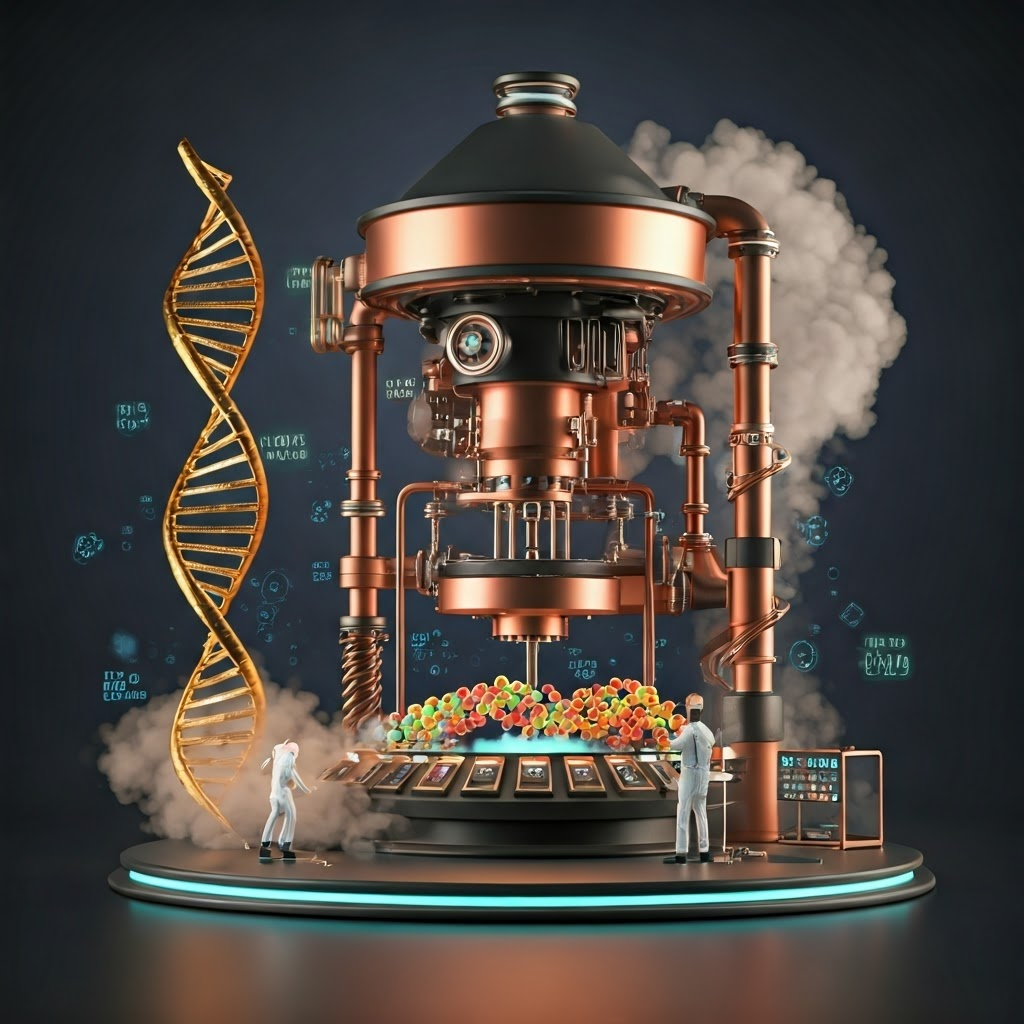
Genes: The Sentences in the Manual
Cells follow a guiding rule—information flows from DNA to RNA to protein. This path is the central dogma of biology.
First, transcription copies a gene into messenger RNA, keeping the master DNA safe. The mRNA leaves the nucleus and heads to a ribosome, the cell’s protein workshop.
The ribosome reads mRNA in three-letter codons. Each codon calls for one amino acid. Translation strings these amino acids into a protein, bead by bead.
Proteins run nearly everything: building muscle, carrying oxygen, and fighting germs. Without this steady flow, life would stall.
The Central Dogma: DNA to RNA to Protein
Classic experiments confirmed this pathway. In the 1940s, Beadle and Tatum showed one gene makes one enzyme by mutating bread mold and watching growth fail without specific nutrients.
In the 1960s, Nirenberg and Matthaei synthesized RNA strings of repeating letters. Each string produced a single amino acid, cracking the genetic code and mapping codons to amino acids.
These studies drew a straight line from genes to proteins—a framework modern science still builds upon.
Classic Experiments: Proving the Pathway
Each time you heal a cut, digest cereal, or ponder pizza, your cells follow this genetic script. Your resemblance to family and inherited conditions live in these DNA sentences.
By understanding the flow from DNA to protein, we not only grasp our origins but also learn how to repair mistakes and even redesign life itself.
Keep turning the pages of this ancient cookbook, and you’ll uncover how cells read, edit, and translate the messages that make you, you.
