14 min read  •  11 min listen

Fire Mountains

Why Volcanoes Matter More Than You Think

Fire Mountains

AI-Generated

April 25, 2025

Ever wondered what makes volcanoes tick, or why some eruptions change the world? Get ready to explore the fiery forces that shape our planet, from explosive blasts to the quiet power beneath your feet. This tome will take you from the basics to the wildest stories, all in plain language.


Where Fire Meets Stone: The Basics of Volcanoes

Digital art shows Earth’s crust as glowing puzzle pieces drifting above a molten mantle, highlighting plate movement and heat.

The Earth’s surface acts like a puzzle of moving plates. Each piece drifts over a hot, flexible mantle, and their slow dance sets the stage for volcanoes.

The Moving Puzzle: Plate Tectonics Made Simple

High-tech scene maps the Pacific Ring of Fire with a neon arc while a scientist interacts, illustrating global volcanic activity.

Tectonic plates move as slowly as your fingernails grow. They collide, pull apart, or slide past one another. Each boundary sparks action—from earthquakes to eruptions.

You can spot this in the Pacific Ring of Fire. Colliding plates fuel magma that rises in Japan and the Andes. In places like Iceland, plates separate, forming cracks where lava slips out. Even sliding boundaries near California shake things enough to let volcanoes form nearby.
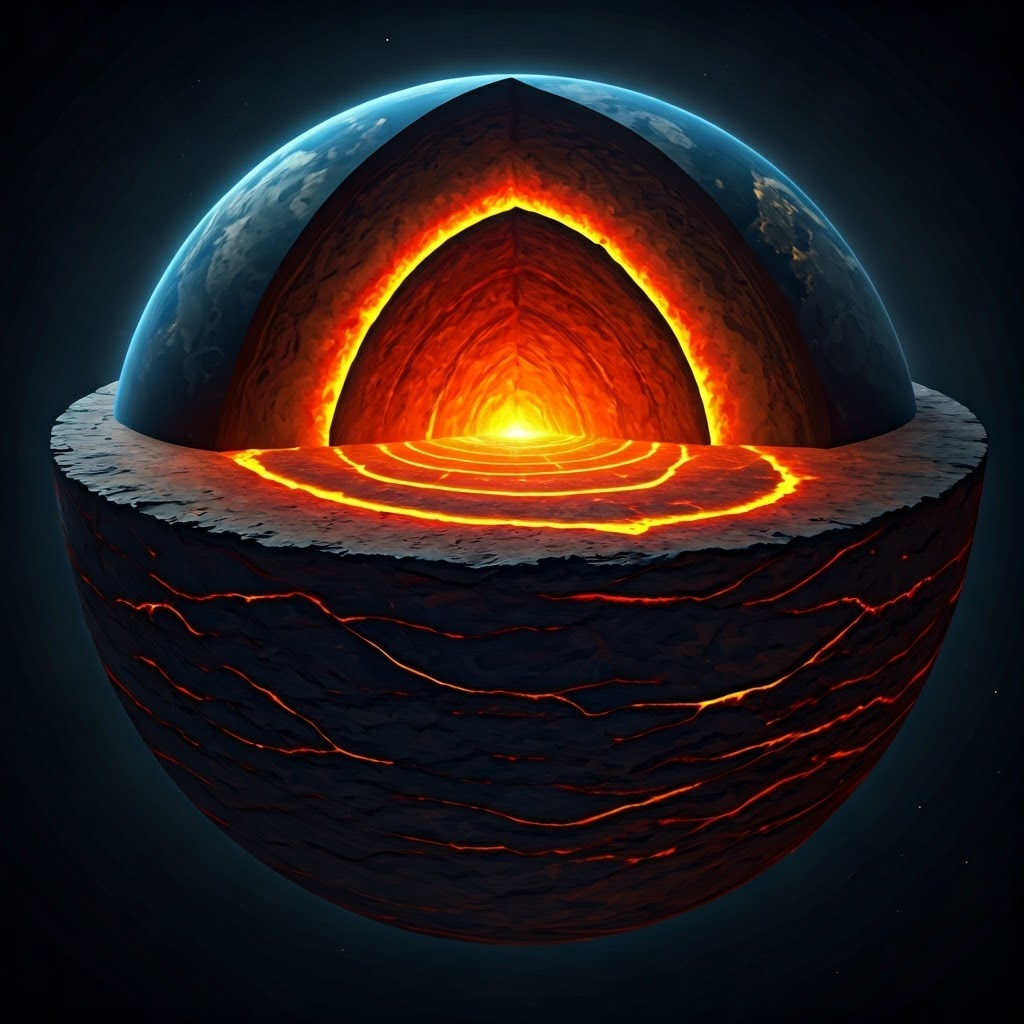
Cutaway render displays Earth’s crust above a glowing mantle with swirling convection currents, emphasizing internal heat flow.

Why Plates Move

Heat left from Earth’s birth, plus heat from radioactive decay, stirs the mantle. Slow convection currents push the plates, reshaping oceans and mountains—and creating prime spots for volcanoes.
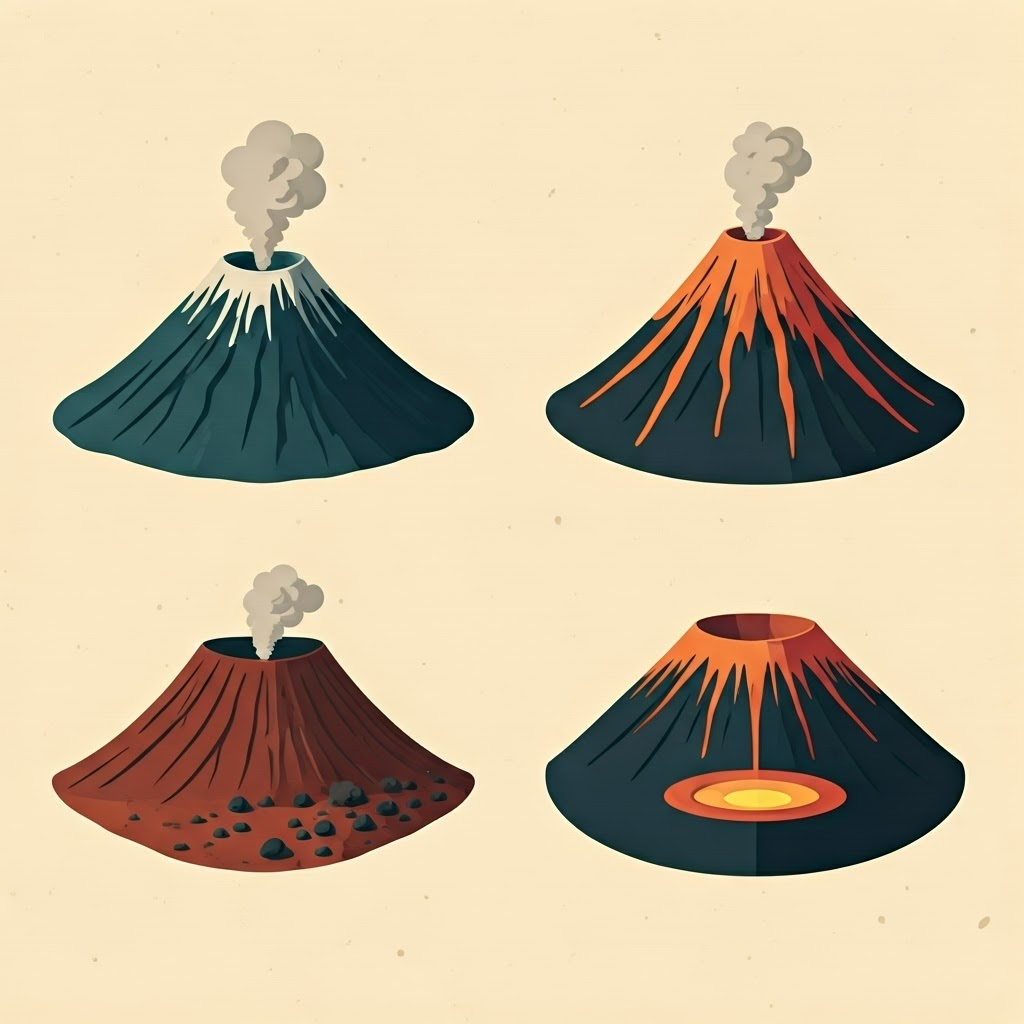
Paper-collage illustration compares shield, stratovolcano, cinder cone, and caldera shapes in warm earth tones.

Volcanoes Come in All Shapes and Sizes

A shield volcano spreads broad, gentle slopes. Thin, runny lava oozes quietly, building giants like Hawaii’s Mauna Loa. The shape reflects calm, steady flows rather than sudden blasts.
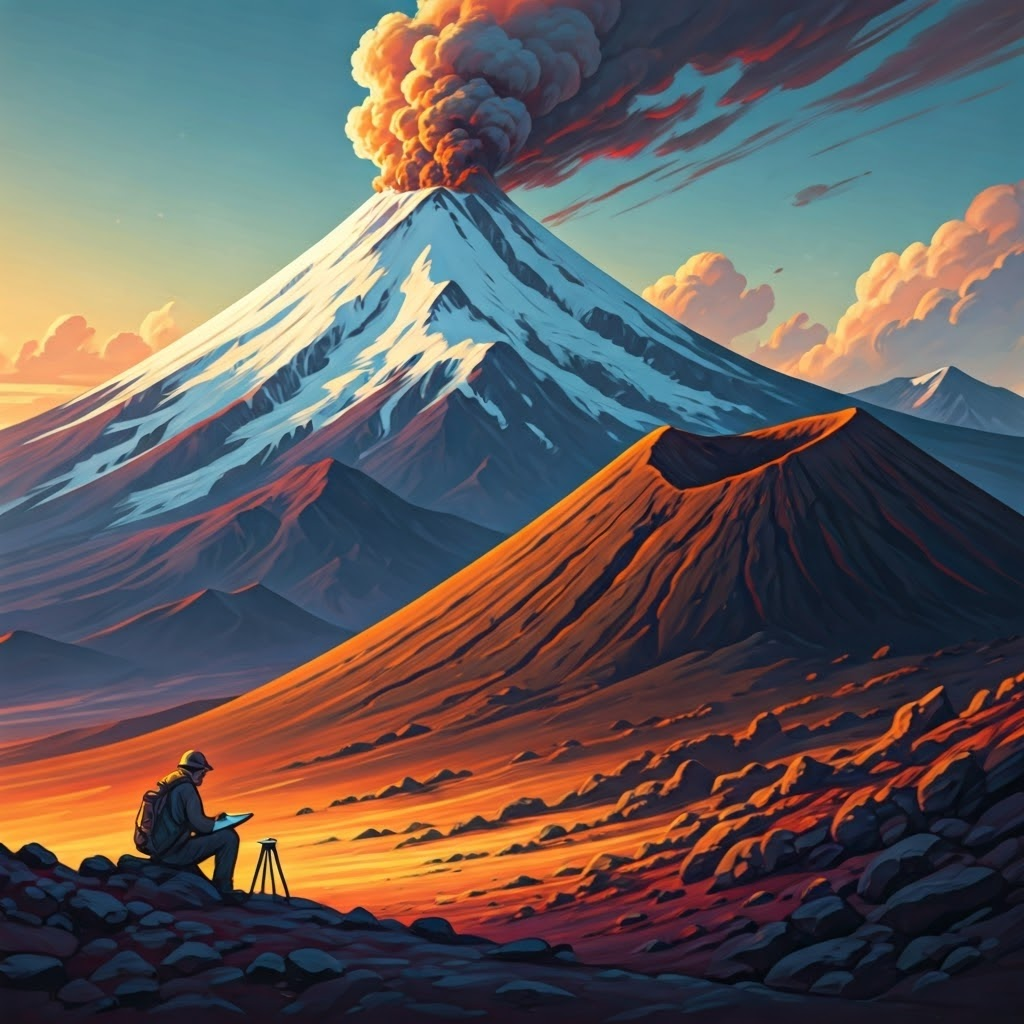
Pastel sketch contrasts a tall stratovolcano with a small cinder cone while a geologist records notes nearby.

Stratovolcanoes rise steep and layered. Mount Fuji and Mount St. Helens stack lava, ash, and rock into towering peaks. Their eruptions swing from gentle to violently explosive, depending on underground pressure.

Cinder cones are short, forming when lava fountains, cools in mid-air, and lands as pebbly cinders. Mexico’s Parícutin grew from a farm field in 1943, proving how fast these cones can appear.
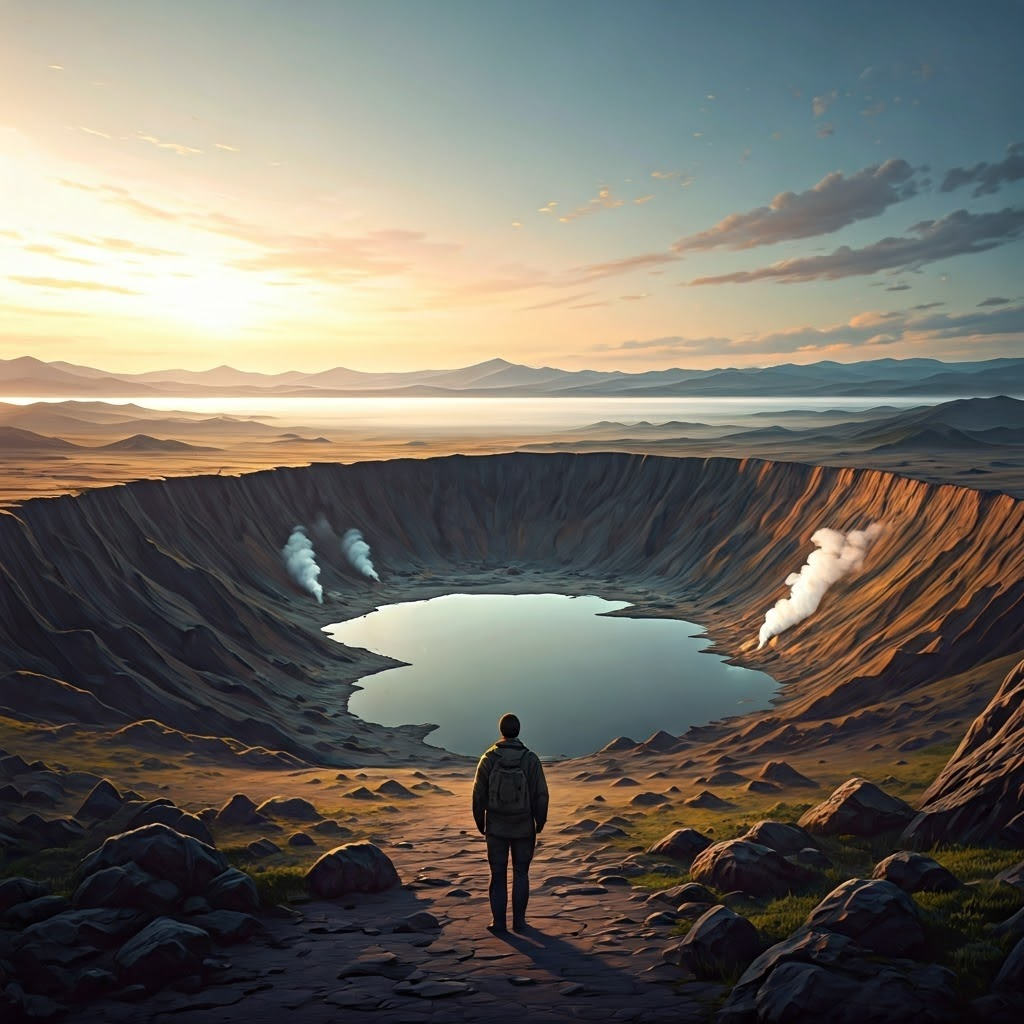
Atmospheric painting shows a vast caldera rim with steam vents and a sunrise over a lake filling the depression.

Supervolcanoes, like Yellowstone, hide as massive calderas. They erupt rarely yet eject so much material they can shift climate worldwide—though on timescales far longer than a human lifespan.
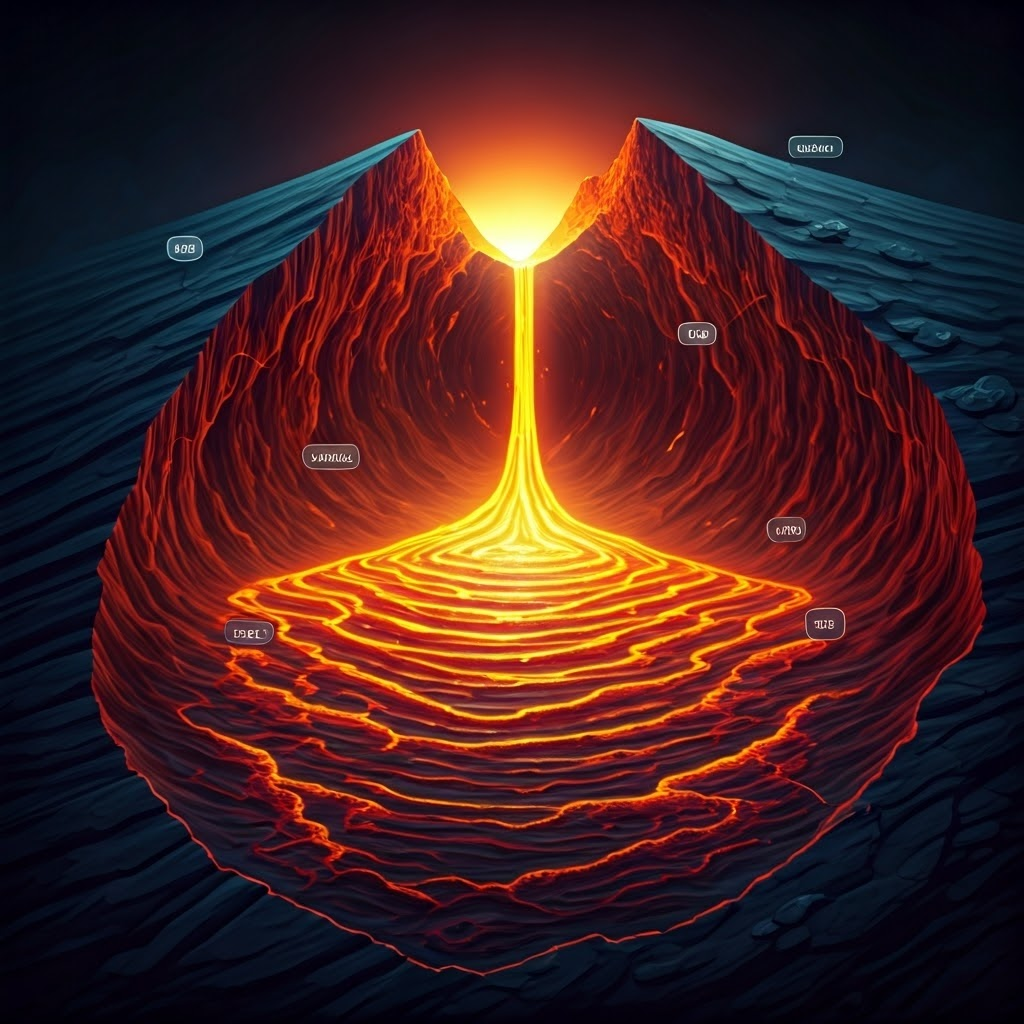
Cross-section illustration highlights a glowing magma chamber with gas bubbles under a volcano.

Magma: The Gooey Stuff That Makes It All Happen

Magma is melted rock mixed with dissolved gases. Once it escapes, we call it lava. Silica content controls how sticky it is: low-silica magma flows easily, while high-silica magma thickens and traps gas.
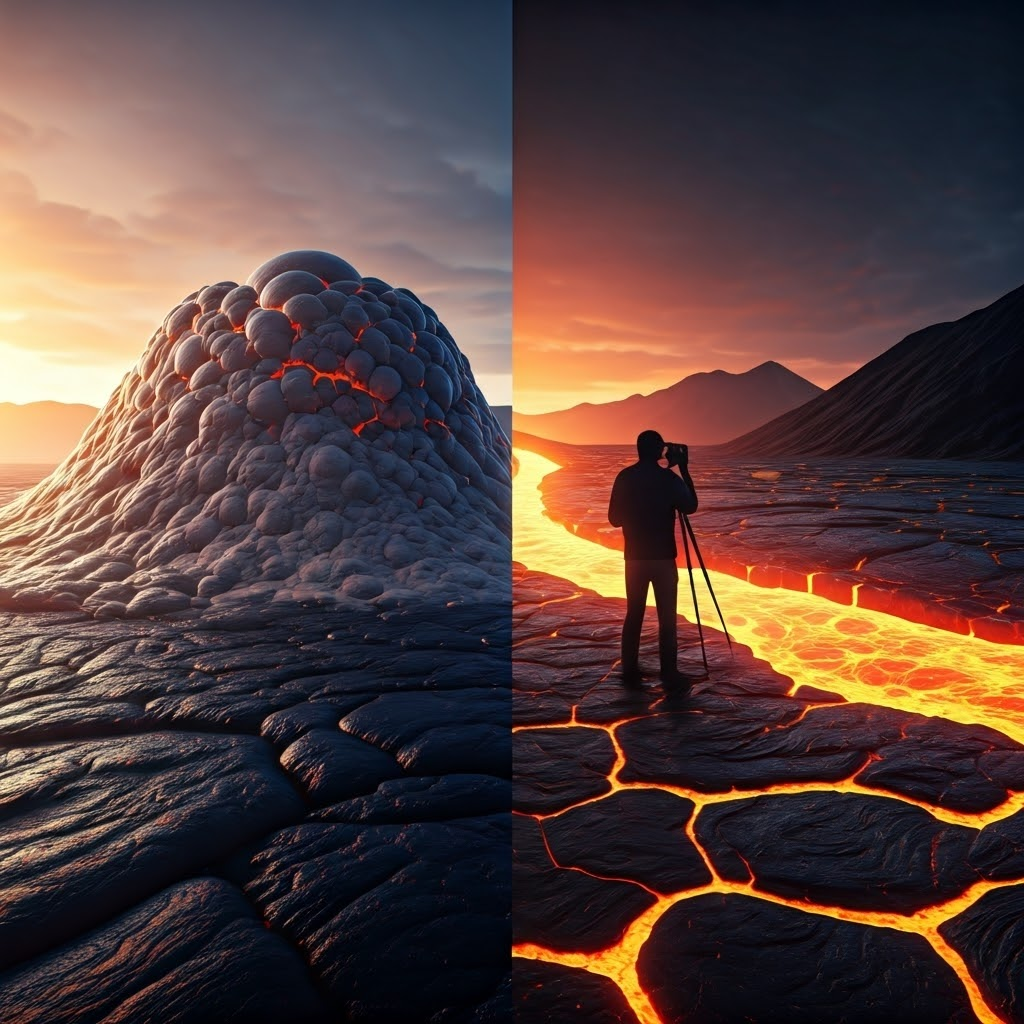
Split-view render shows thick, slow lava beside a fast, glowing river of runny lava under evening light.

Mount St. Helens burst in 1980 because silica-rich magma acted like a shaken soda bottle. In contrast, Hawaiian volcanoes release fluid lava with gentle fountains. Volcanologists link every eruption style to magma chemistry, gas content, and built-up pressure deep below the crust.


Tome Genius

The Wonders of Nature

Part 6

Tome Genius

Cookie Consent Preference Center

When you visit any of our websites, it may store or retrieve information on your browser, mostly in the form of cookies. This information might be about you, your preferences, or your device and is mostly used to make the site work as you expect it to. The information does not usually directly identify you, but it can give you a more personalized experience. Because we respect your right to privacy, you can choose not to allow some types of cookies. Click on the different category headings to find out more and manage your preferences. Please note, blocking some types of cookies may impact your experience of the site and the services we are able to offer. Privacy Policy.
Manage consent preferences
Strictly necessary cookies
Performance cookies
Functional cookies
Targeting cookies

By clicking “Accept all cookies”, you agree Tome Genius can store cookies on your device and disclose information in accordance with our Privacy Policy.

00:00