15 min read  •  10 min listen

Engines of Curiosity

How Ancient Minds Turned Questions into Machines, Maps, and New Worlds

Engines of Curiosity

AI-Generated

April 29, 2025

Step into the wild workshops and libraries of ancient Greece, where inventors and thinkers turned questions into machines, maps, and new ways of seeing the world. Meet the minds who measured the Earth, mapped the stars, and built the first computers—long before the word even existed. Curiosity wasn’t just a feeling; it was a tool, and it changed everything.


The Spark: Alexandria and the Birth of Big Questions
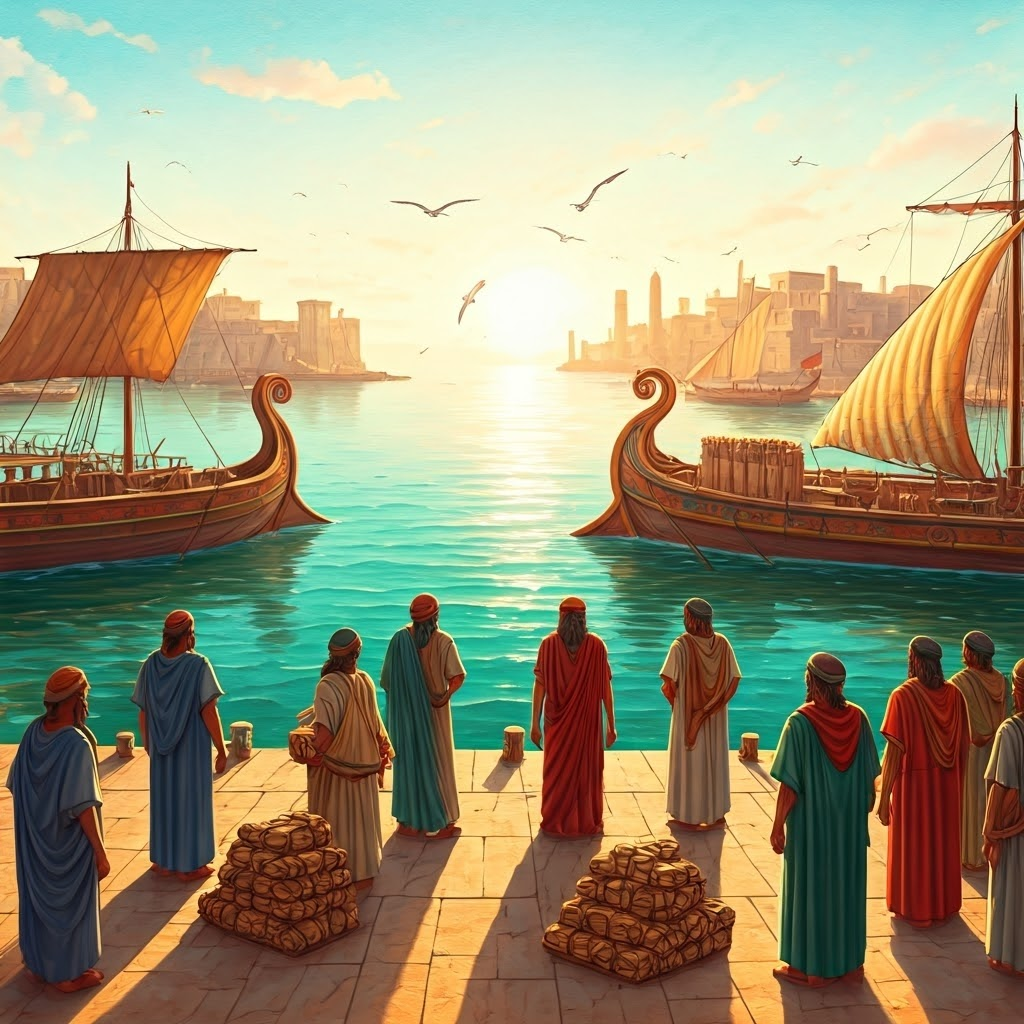
Sunrise over Alexandria harbor with merchants unloading papyrus and scholars debating, illustrating the city’s vibrant cultural exchange.

Picture a city where salty sea air mixes with papyrus dust and warm olive-oil lamps. Voices in many languages chase new ideas through narrow streets. Alexandria was more than a trading port; it was a crossing of minds from Babylon, Athens, Egypt, and Judea.

A City of Questions
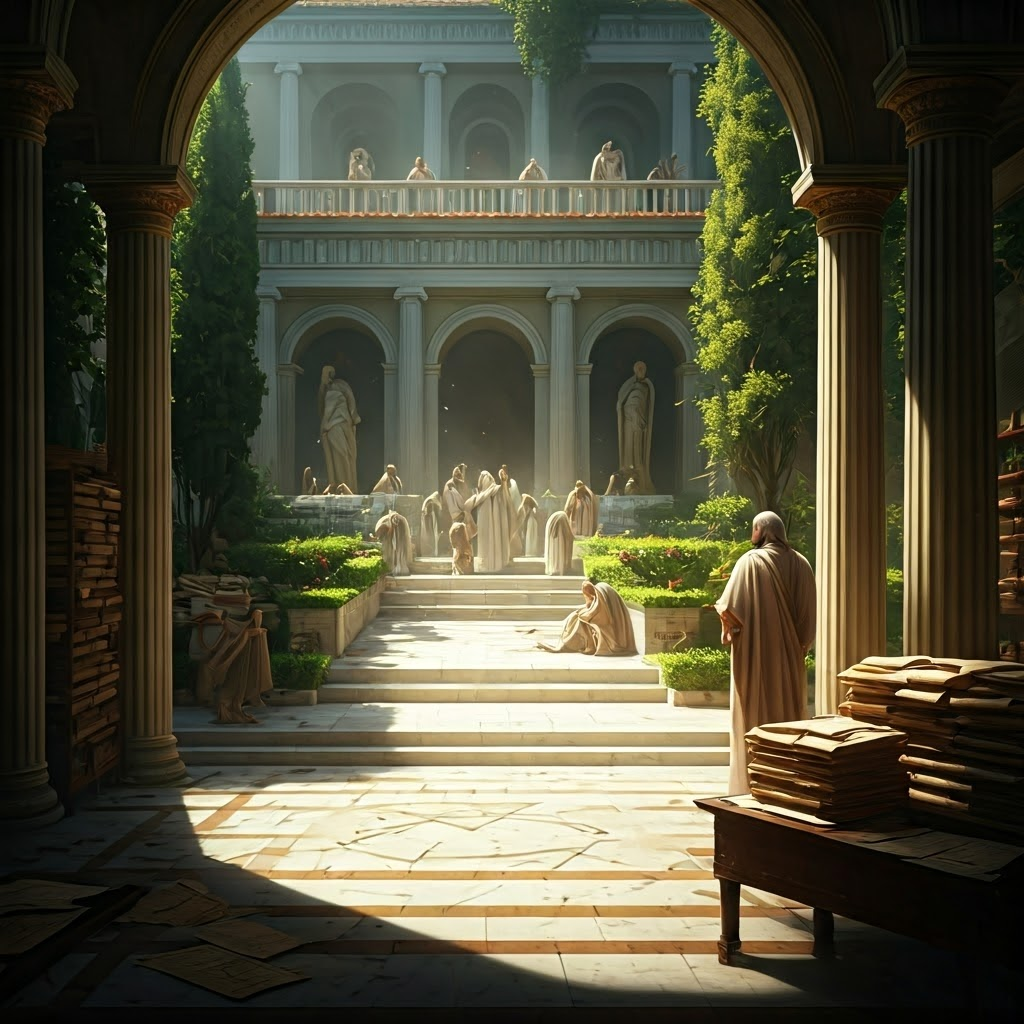
Hellenistic courtyard where scholars debate geometry amid scrolls and gardens, showing Alexandria’s intellectual energy.

Scholars flocked to a grand campus that joined a lush garden with quiet study halls. The Museum offered meals, stipends, and space to wander between fields. Mathematicians strolled past botanists, while playwrights borrowed star charts from astronomers.
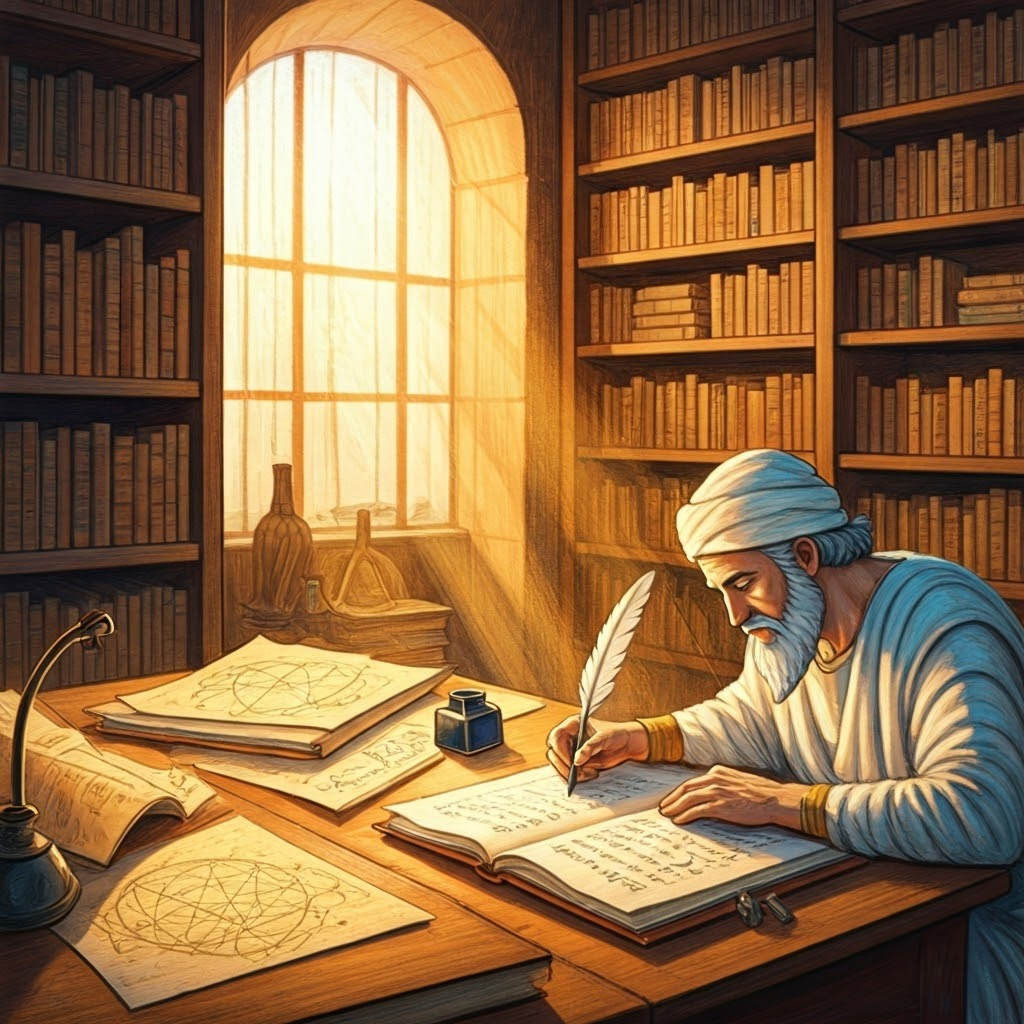
Ancient library scribes copying papyrus scrolls, symbolizing the preservation of world knowledge in Alexandria.

The Library held hundreds of thousands of scrolls. Scribes copied every text they could find, even seizing books from incoming ships. That steady work let visitors explore geometry, geography, medicine, and myths without hitting a wall of missing pages.
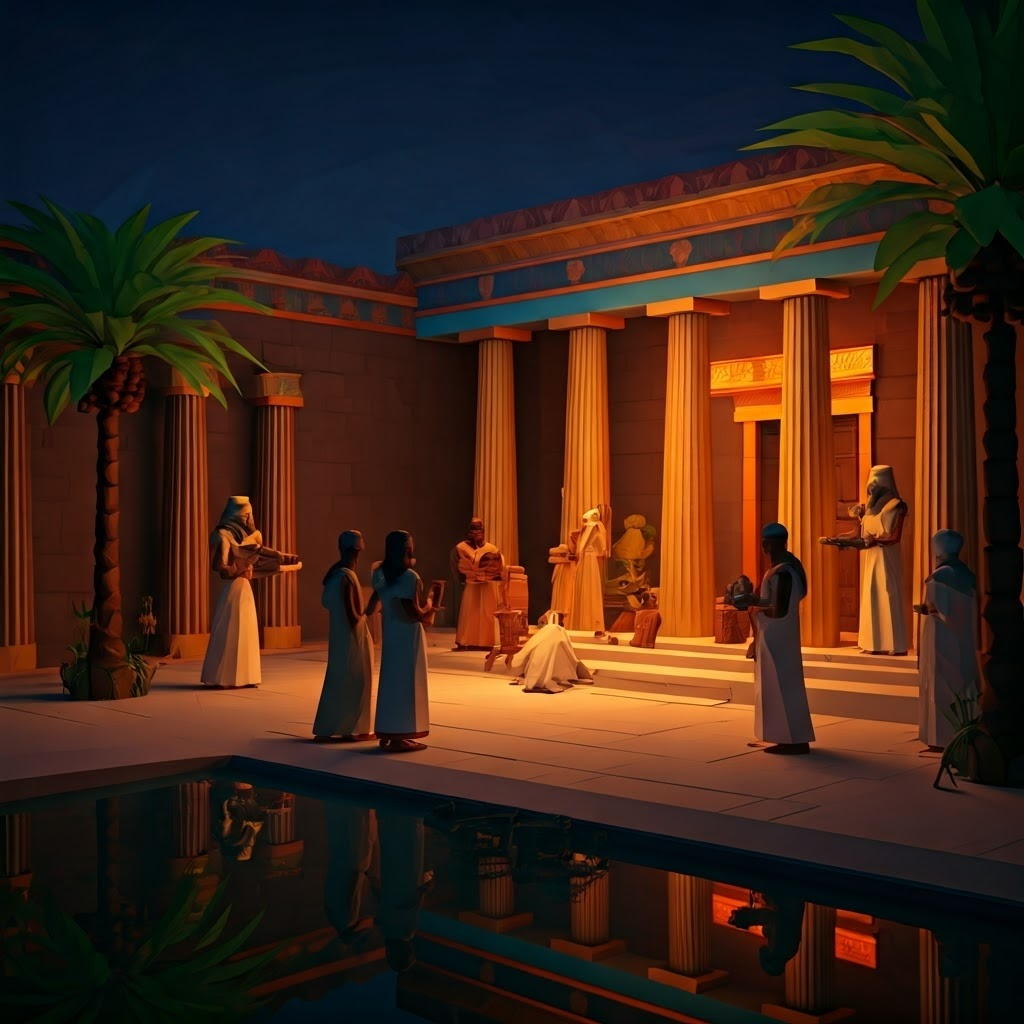
Ptolemaic rulers providing scrolls and resources to visiting scholars, highlighting royal patronage of research.

Patrons, Scholars, and the Art of Asking

Patron kings funded housing, pay, and supplies for curious minds. This generous patronage turned questions into a full-time career. Friendly rivalry soon followed as each thinker tried to pose better problems and craft cleaner proofs.
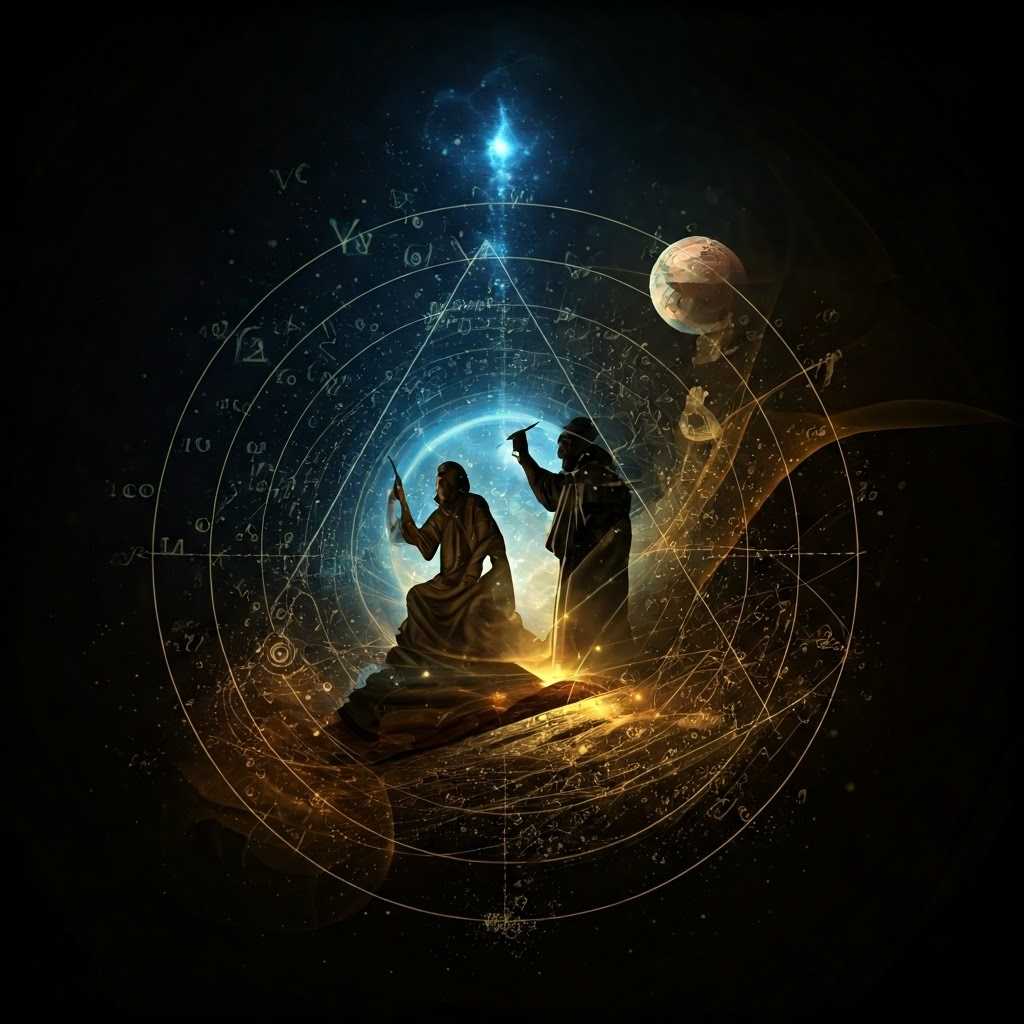
Glowing shapes form a Euclidean theorem, representing the birth of structured mathematics.

Euclid wrote “Elements” here, starting with five simple axioms and building a sturdy framework of geometry. His clear structure urged later mathematicians to sharpen their logic and extend the field.
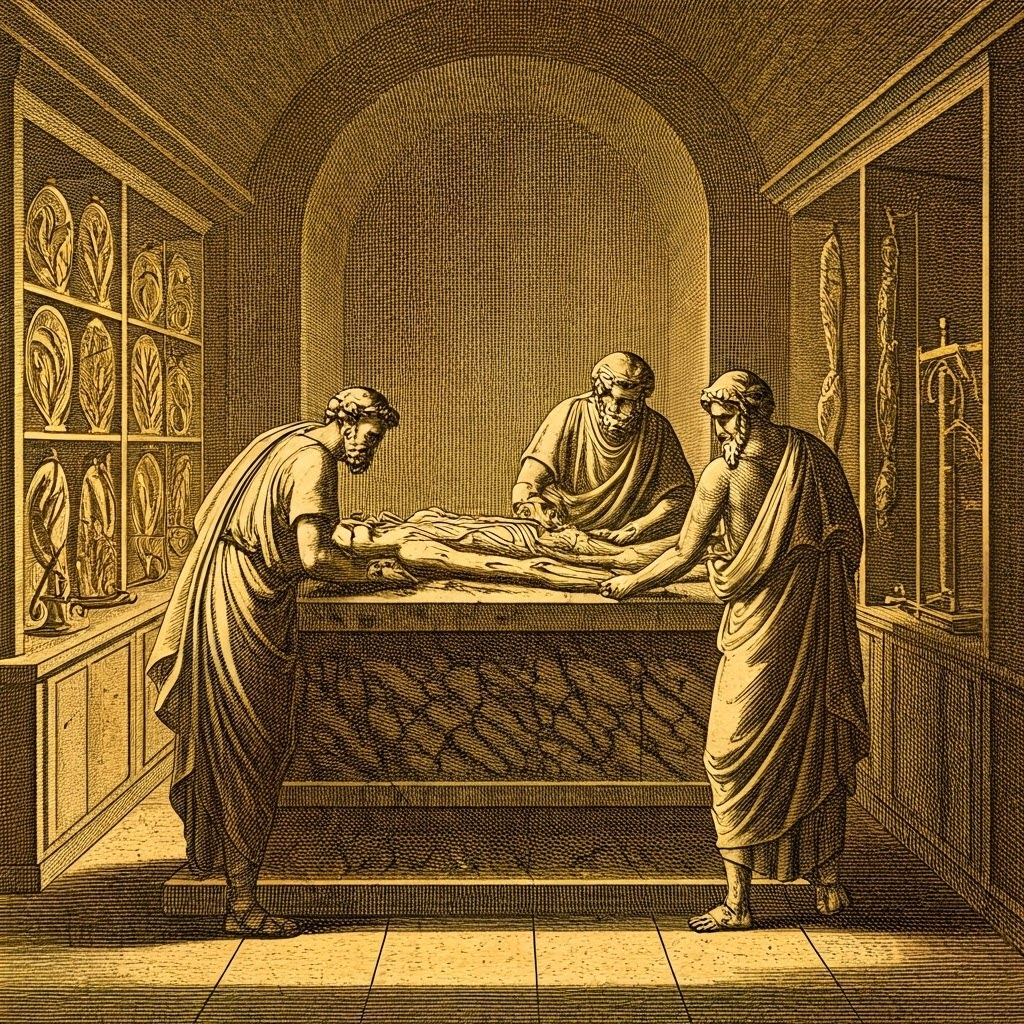
Herophilus and Erasistratus dissecting a cadaver in a classical lab, depicting early scientific medicine.

In medicine, rivals like Herophilus and Erasistratus dissected human bodies to map nerves and vessels. Their bold methods challenged old beliefs. Each critique forced the other to gather stronger evidence, pushing anatomy forward.
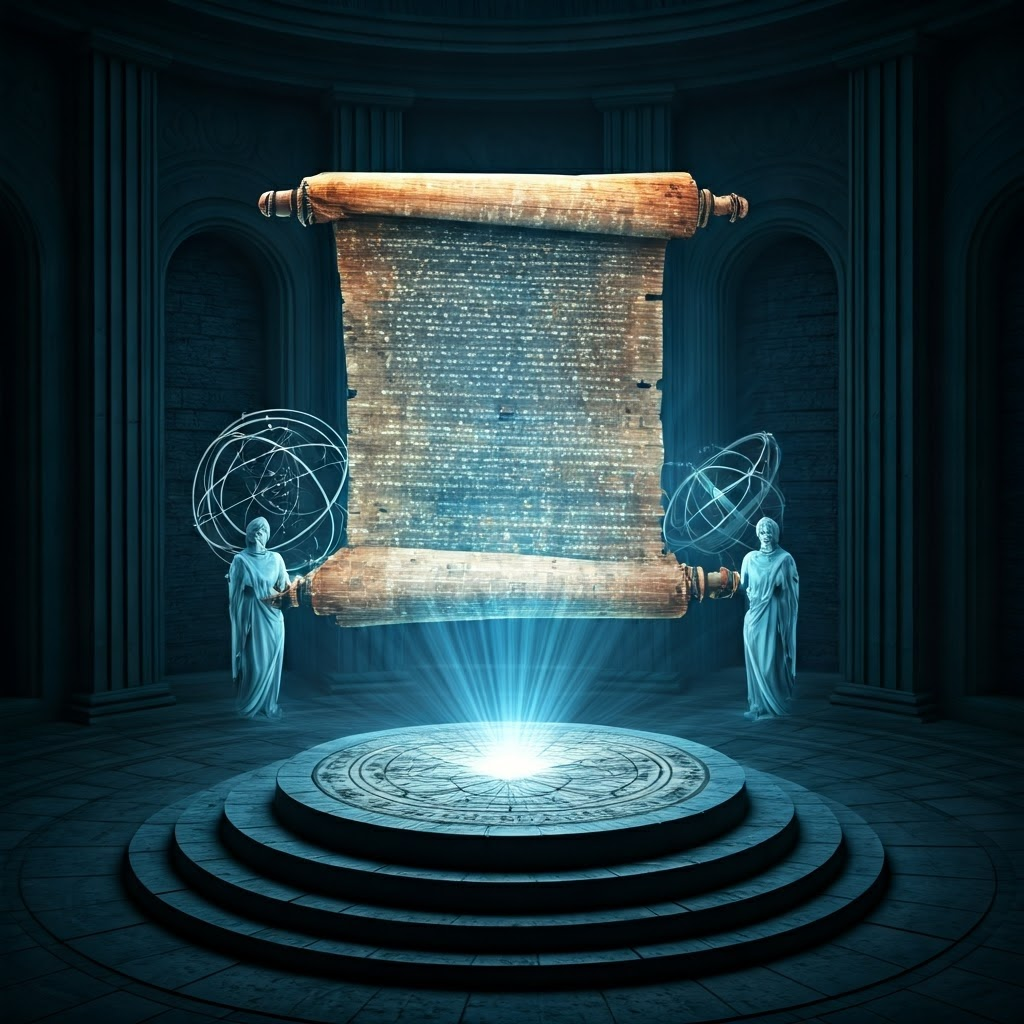
Ancient scroll projected as futuristic hologram, bridging past scholarship with modern science.

From Papyrus to the World

Ideas seldom stayed put. Couriers carried letters and fresh copies of scrolls to distant cities. These documents framed early scientific papers, sharing not just results but the method needed to repeat them.

Primary works like Ptolemy’s “Almagest” or Archimedes’ treatises still guide historians. Even lost writings echo through quotations, hinting at experiments with shadows, levers, and planetary paths.
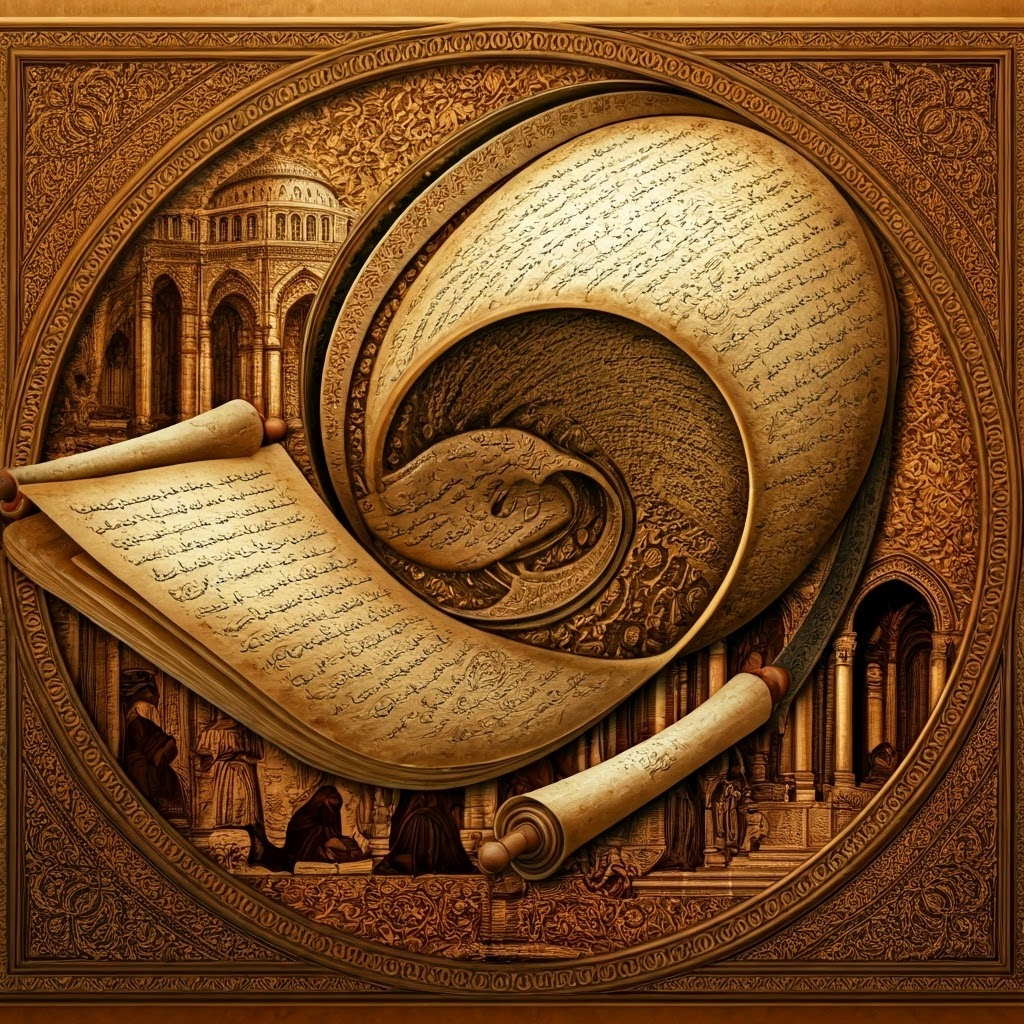
Collage of Greek, Arabic, and Latin manuscripts transforming, illustrating the transmission of knowledge across cultures.

Centuries later, Arabic translators in Baghdad, Córdoba, and Cairo copied and commented on these texts. Their fresh insights merged with the originals, then flowed into Latin during the Renaissance. This relay—copy, translate, question, pass on—kept curiosity alive and set the stage for modern science.


Tome Genius

History of Science & Discovery

Part 2

Tome Genius

Cookie Consent Preference Center

When you visit any of our websites, it may store or retrieve information on your browser, mostly in the form of cookies. This information might be about you, your preferences, or your device and is mostly used to make the site work as you expect it to. The information does not usually directly identify you, but it can give you a more personalized experience. Because we respect your right to privacy, you can choose not to allow some types of cookies. Click on the different category headings to find out more and manage your preferences. Please note, blocking some types of cookies may impact your experience of the site and the services we are able to offer. Privacy Policy.
Manage consent preferences
Strictly necessary cookies
Performance cookies
Functional cookies
Targeting cookies

By clicking “Accept all cookies”, you agree Tome Genius can store cookies on your device and disclose information in accordance with our Privacy Policy.

00:00