
The Spark: Why It All Began
A World on the Edge of Change
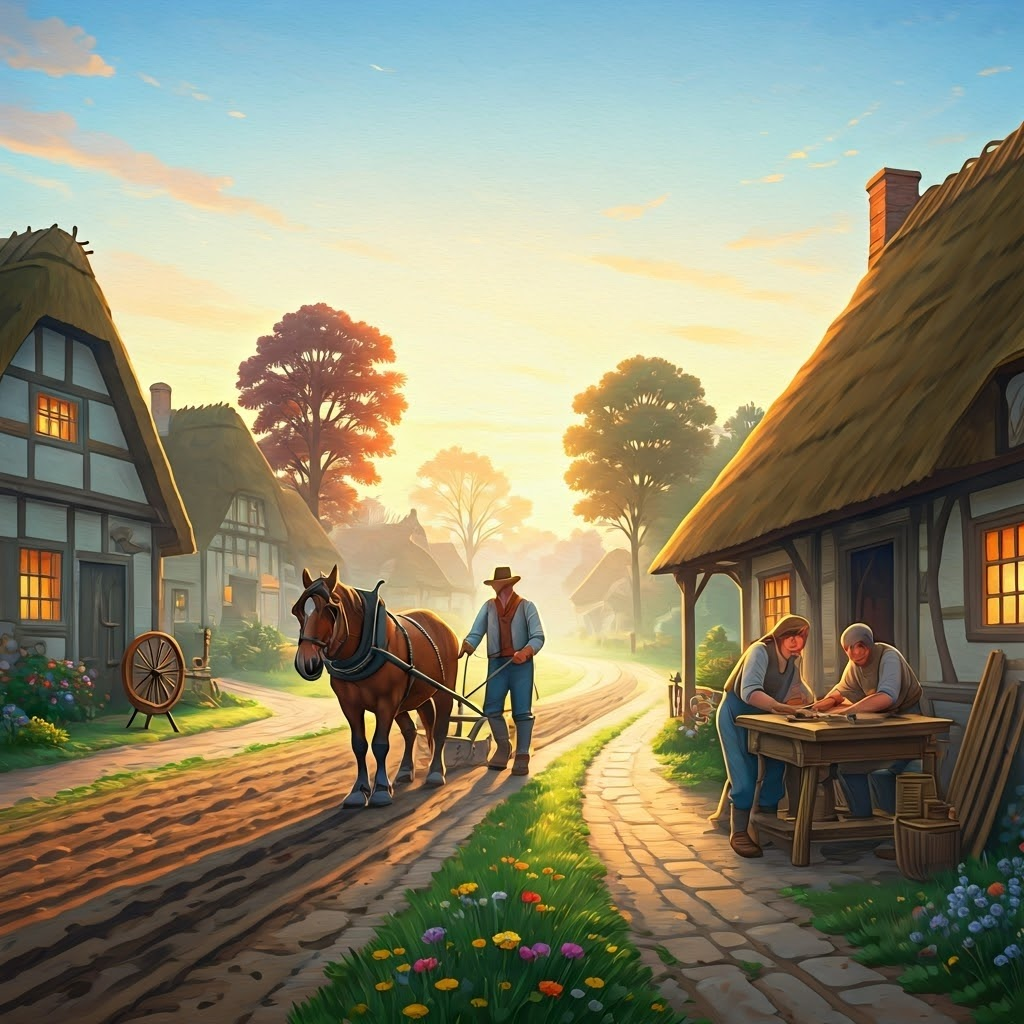
Picture a small village before factories. Almost everyone grows food or keeps animals. Work happens at home or in tiny shops. The farmers follow the seasons, not a clock.
Tools stay simple. Animals pull wooden plows. Hands spin wool on basic wheels. Looms stand in spare rooms. Need a table? The village carpenter shapes local wood.
Travel crawls along dusty roads. People walk, ride horses, or bounce in rough carts. Covering ten miles feels like an adventure.
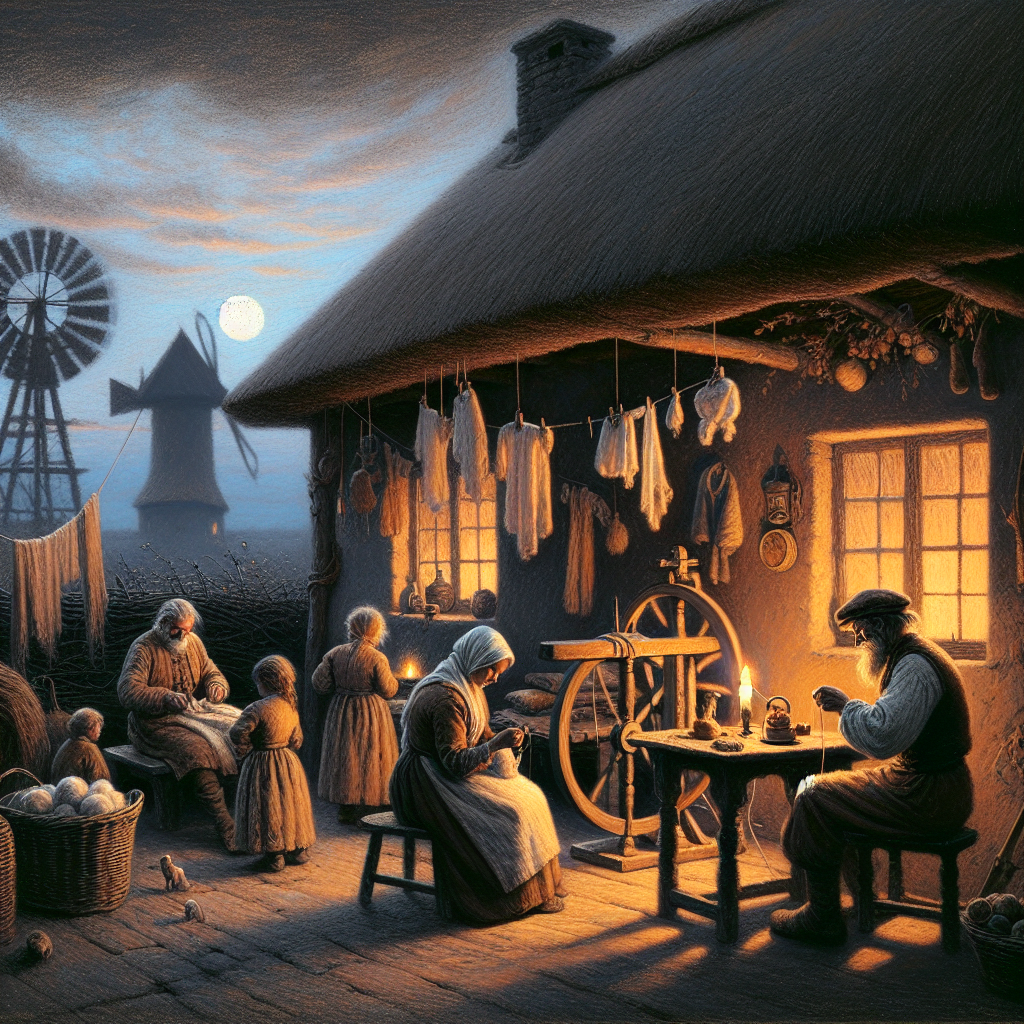
Life moves at a steady pace. Harvests decide if families eat well or go hungry. Clothes are patched again and again. News arrives slowly, if at all.
Everyone chips in—parents and children plant, weed, and tend animals. Most goods come from the village itself. Energy comes from muscle, wind, or water.
The Ingredients: Surplus, Money, and Coal
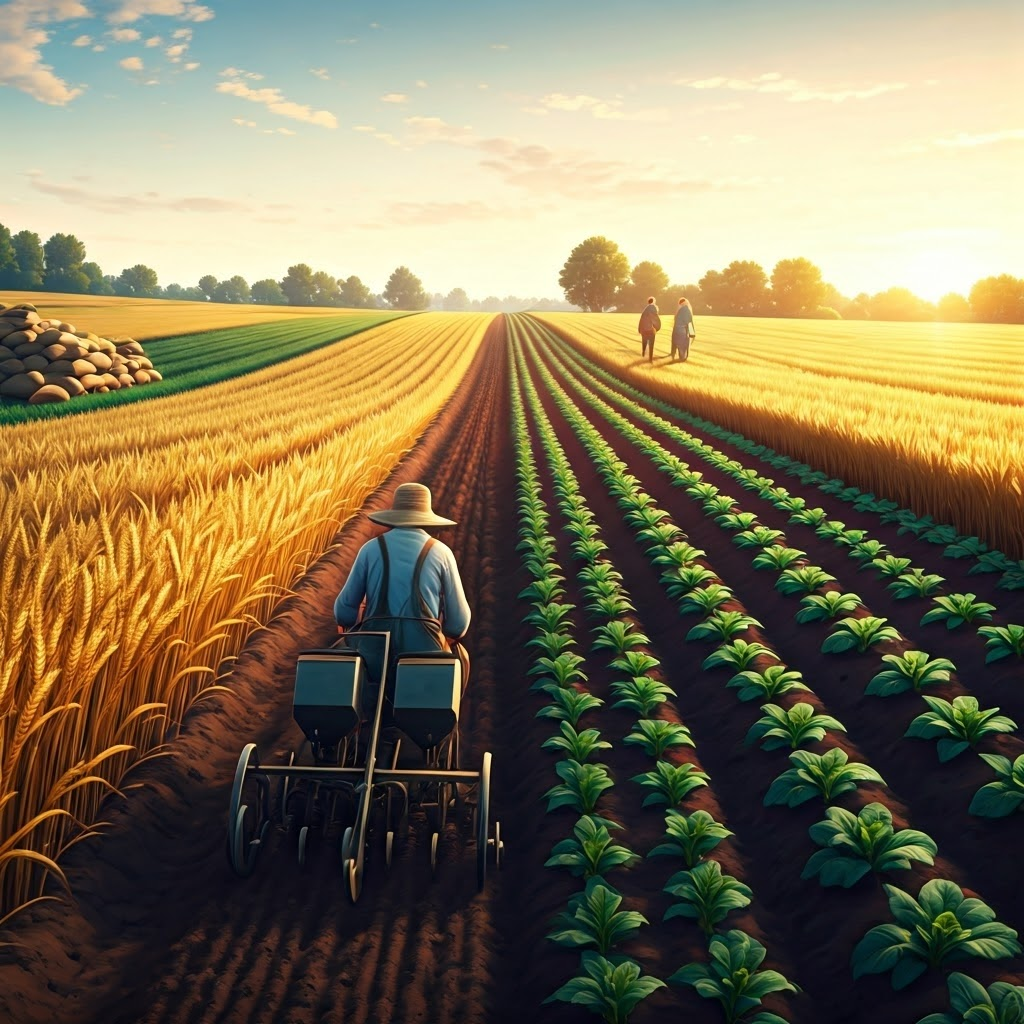
Better farming methods change everything. Crop rotation and new tools like the seed drill boost harvests. This surplus lets some people leave the land and seek new kinds of work.
Extra food creates extra wealth. Landowners and traders invest spare coins into new ventures. Their capital builds machines, workshops, and, soon, factories.
Machines need power. Britain’s shallow coal seams offer a hot, long-burning fuel. People nickname coal “black gold.” Mines draw workers, and railways haul the fuel to growing towns.
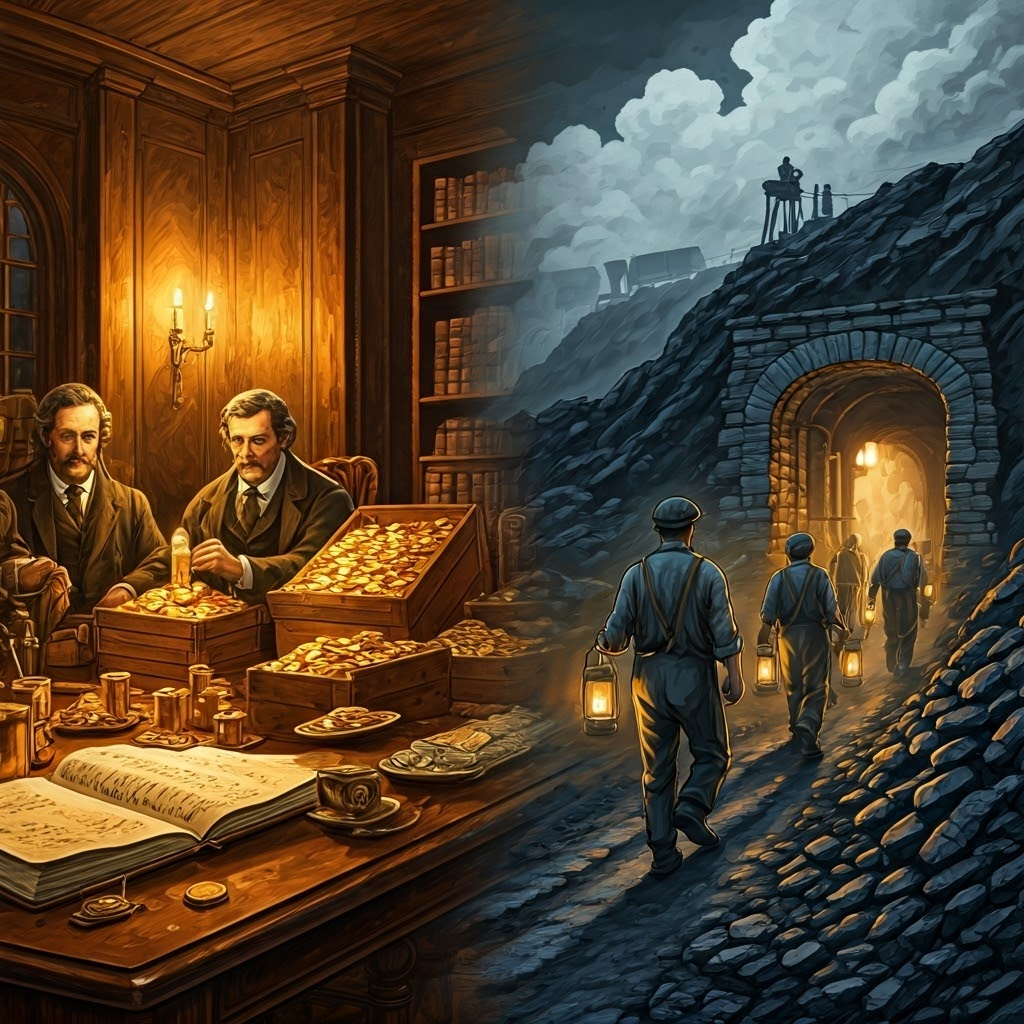
Coal’s heat powers steam engines. Towns rise around pits, and tracks link mines to ports and mills. Without cheap coal, new inventions would stall.
The First Machines: Steam, Spinning, and Weaving
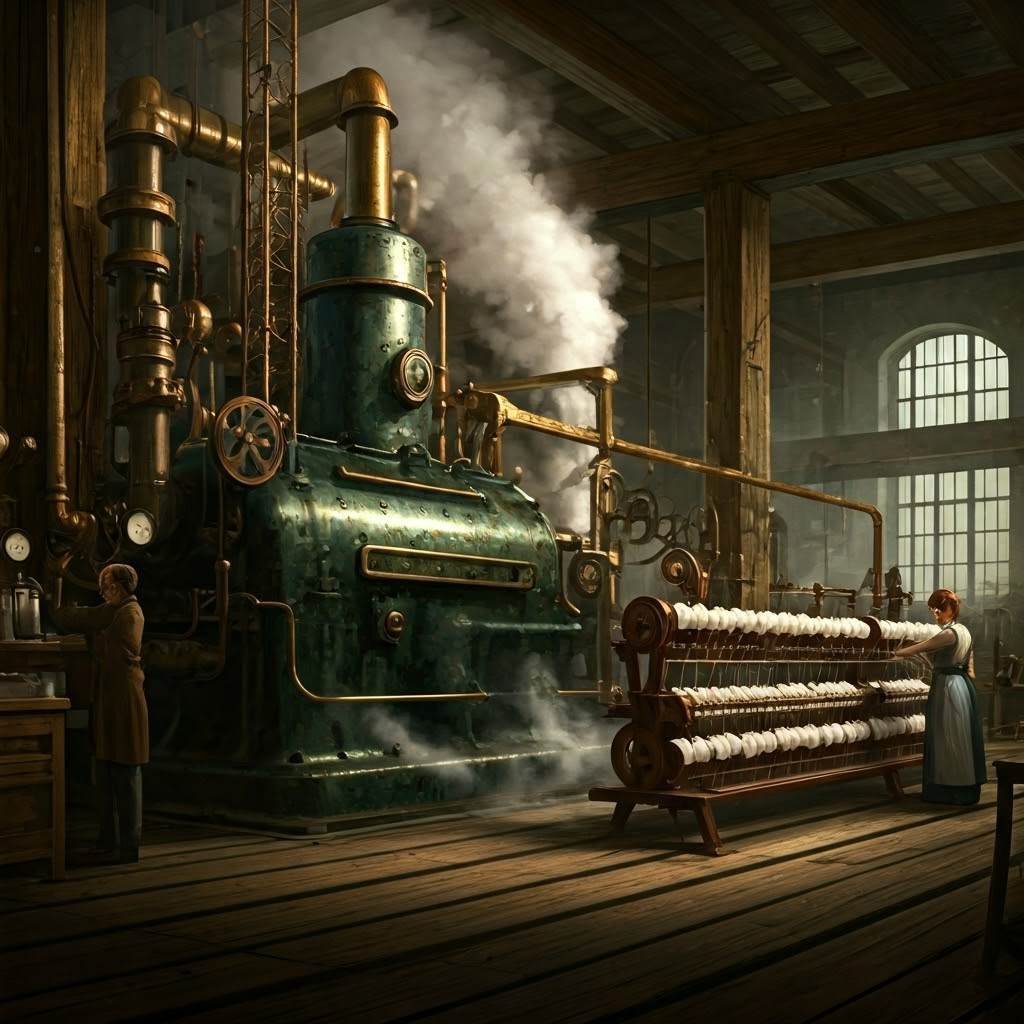
James Watt refines the steam engine in 1769. It pumps water from mines far better than older models. Soon, steam turns wheels, spins cotton, and drives factory floors.
Before machines, one spinner made a single thread. James Hargreaves’s spinning jenny changes that in 1764—one worker now spins many threads at once.
Weaving lags until Edmund Cartwright patents the power loom in the 1780s. The loom’s gears race through cloth much faster than any pair of hands.
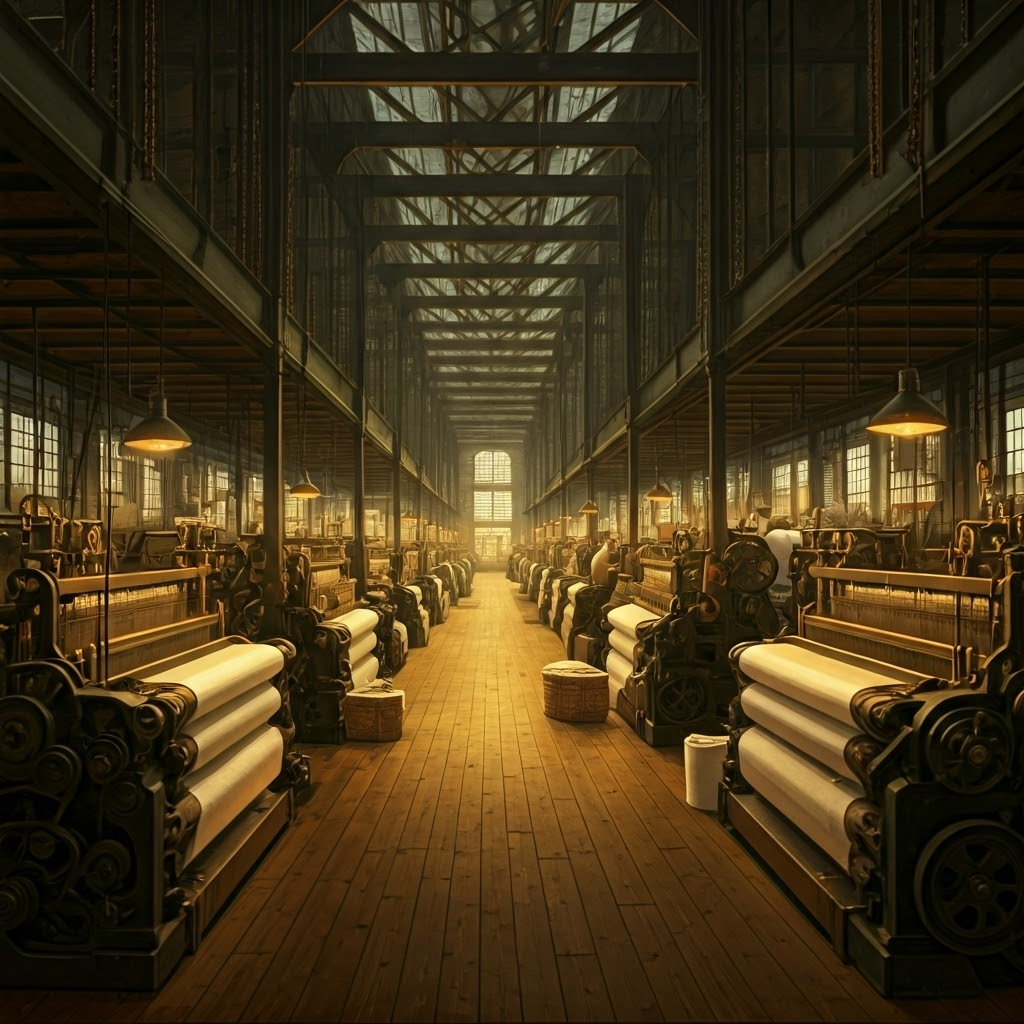
Factories grow loud and bright. Steam powers both spinning and weaving, so owners build larger mills and hire armies of workers. Cloth becomes affordable for nearly everyone.
Ideas spread quickly. Inventors tweak designs, and entrepreneurs copy successes. Each improvement speeds life further. Cheap T-shirts and city buses trace their roots back to surplus crops, spare cash, rich coal seams, and a handful of daring machines.
