14 min read  •  10 min listen

CRISPR Crash Course

A beginner’s guide to gene editing, from bacterial defense to Nobel Prize headlines.

CRISPR Crash Course

AI-Generated

April 28, 2025

You’ve heard the buzz about gene editing, but what’s really going on behind the headlines? Get a clear, no-nonsense look at the science, the tools, and the real-world impact of CRISPR. Whether you’re curious, cautious, or just want to know what all the fuss is about, this tome gives you the straight story—no jargon, just the essentials.


Meet the gene-editing toolkit: CRISPR’s origin story and key players
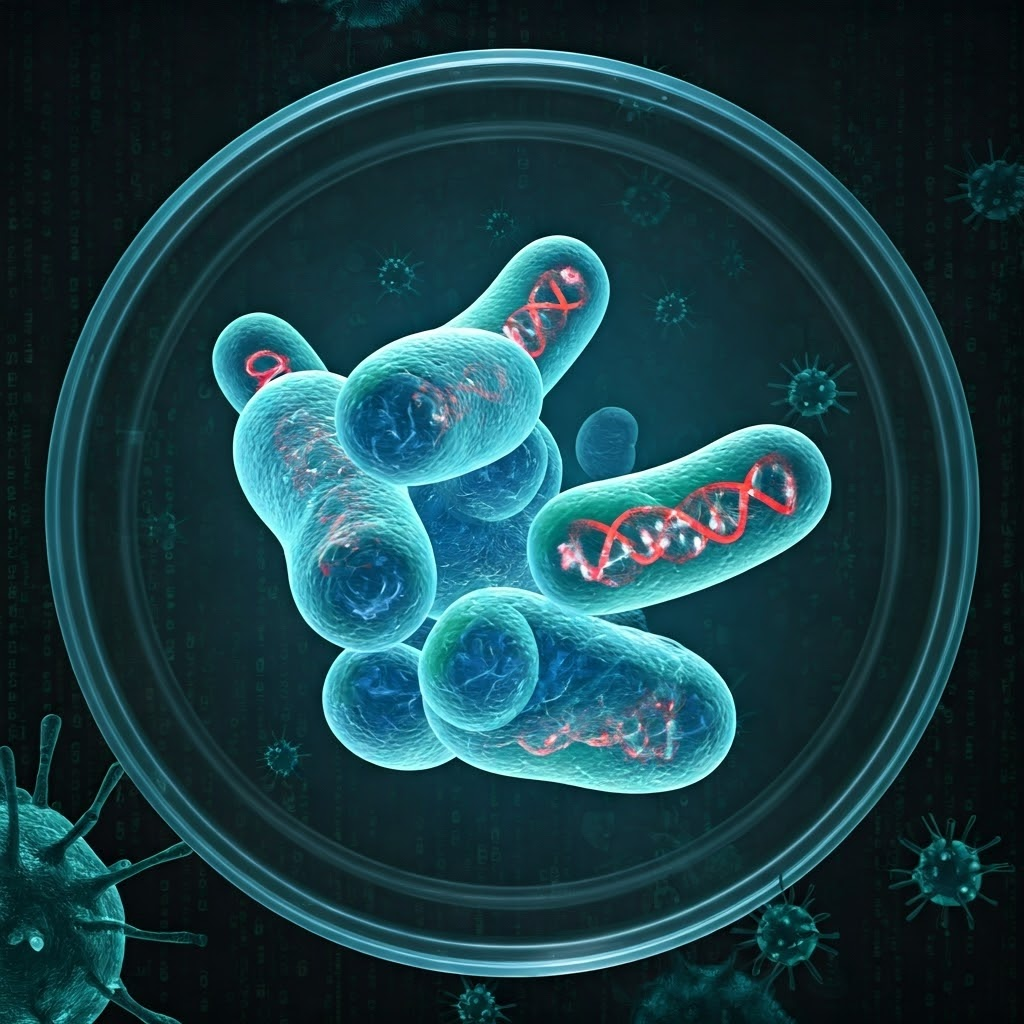
Cyberpunk-style scene of glowing bacteria with red DNA repeats and looming bacteriophages, illustrating the ancient CRISPR defense

Bacteria face constant viral attacks, yet they survive thanks to a clever genetic alarm system called CRISPR.

From bacteria to breakthrough: where CRISPR comes from

Futuristic montage of six scientists linked on a glowing world map, highlighting their shared CRISPR discoveries

In the late 1980s researchers noticed repeating DNA bits in bacteria. The repeats were separated by fragments that matched viruses. These fragments acted like genetic mugshots. Over time scientists learned that bacteria store these viral snippets—building a memory bank to spot future invaders.

Early 2000s studies revealed the repeats were more than clutter. Bacteria cut viral DNA and tuck pieces into their own genome. When a known virus returns, the cell matches it to the stored record and slices the invader apart. This immune memory keeps the microbe safe.

Francisco Mojica first linked CRISPR to defense. Teams in Spain, France, the Netherlands, and the United States confirmed the idea. Later, Emmanuelle Charpentier and Jennifer Doudna showed the system could edit any DNA, launching modern gene editing.

Playful robot scissors holding a holographic map above a DNA strand, symbolizing programmed precision

The main cast: Cas9, guide RNA, and PAM

The CRISPR toolkit has three key parts. Cas9 is the protein that cuts DNA. The custom guide RNA steers Cas9 to the correct spot, acting like GPS coordinates. Finally, the PAM sequence—often the simple code NGG—confirms the address before the cut.

Retro-futuristic poster of neon scissors connected by a glowing cable to a door marked NGG, showing the PAM safeguard

Cas9 and guide RNA patrol the genome together. The guide matches its target, but Cas9 slices only when it also sees PAM. This double check makes editing precise—one wrong letter and the cut never happens.

Stylized portrait of Jennifer Doudna and Emmanuelle Charpentier holding a Nobel medal under dramatic lights

A pop-culture moment: the Nobel prize and the CRISPR craze

In 2020 Jennifer Doudna and Emmanuelle Charpentier shared the Nobel Prize in Chemistry for turning CRISPR-Cas9 into a versatile editing tool. Their win made gene editing headline news and inspired documentaries, books, and movie scripts.

Floating book with glowing pages surrounded by cameras and film reels, symbolizing CRISPR’s media impact

Doudna’s memoir A Crack in Creation describes the fast-paced race to master CRISPR. Public imagination jumped to curing diseases, growing hardier crops, and even designing traits before birth. The technology promises vast change, yet its roots remain simple: Cas9, guide RNA, and PAM working in concert.


Tome Genius

Genetics & Genomics: From Molecules to Medicine

Part 6

Tome Genius

Cookie Consent Preference Center

When you visit any of our websites, it may store or retrieve information on your browser, mostly in the form of cookies. This information might be about you, your preferences, or your device and is mostly used to make the site work as you expect it to. The information does not usually directly identify you, but it can give you a more personalized experience. Because we respect your right to privacy, you can choose not to allow some types of cookies. Click on the different category headings to find out more and manage your preferences. Please note, blocking some types of cookies may impact your experience of the site and the services we are able to offer. Privacy Policy.
Manage consent preferences
Strictly necessary cookies
Performance cookies
Functional cookies
Targeting cookies

By clicking “Accept all cookies”, you agree Tome Genius can store cookies on your device and disclose information in accordance with our Privacy Policy.

00:00