14 min read  •  10 min listen

Cosmic Alchemy

How Stars and Explosions Made You and Everything You Know

Cosmic Alchemy

AI-Generated

April 28, 2025

Ever wondered where the atoms in your body came from? This tome takes you on a journey from starlight to stardust, showing how cosmic events forged the elements that make up everything you know. Discover the secrets hidden in light, the drama inside stars, and the wild story behind gold’s cosmic origins.


Reading the Universe’s Secret Code

A beam of multicolored starlight travels through deep space toward a telescope on Earth, symbolizing cosmic messages carried by light

Light as a Messenger

Light carries messages from far-off stars and galaxies, revealing their hidden stories. Each photon travels huge distances to bring data about its source. Picture sunlight bending through a glass of water and splitting into a rainbow—this spectrum shows the many colors inside white light.
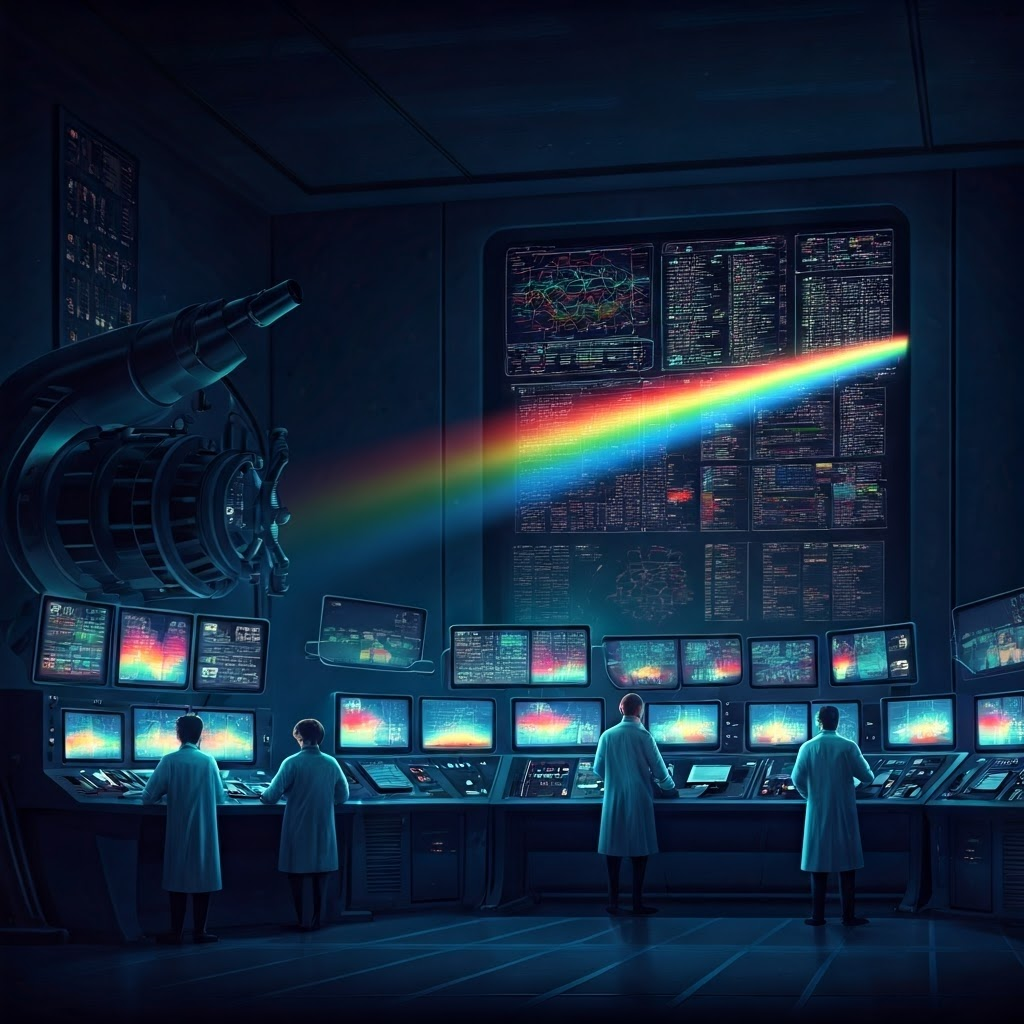
Scientists in a futuristic control room study bright spectral bands on large screens, representing the analysis of cosmic light

Every glowing object has its own spectrum, a pattern like a barcode. Astronomers use telescopes and spectrographs to decode these patterns. They learn a star’s temperature, makeup, and life cycle by reading its colors.

Night-time fireworks burst in yellow, blue-green, and red, each color hinting at distinct atomic signatures

Colors in Everyday Life

Fireworks reveal atomic fingerprints here on Earth. Sodium sparks yellow, copper glows blue-green, and strontium blazes red. Excited atoms emit light at fixed wavelengths, the same fingerprints astronomers detect in distant stars.
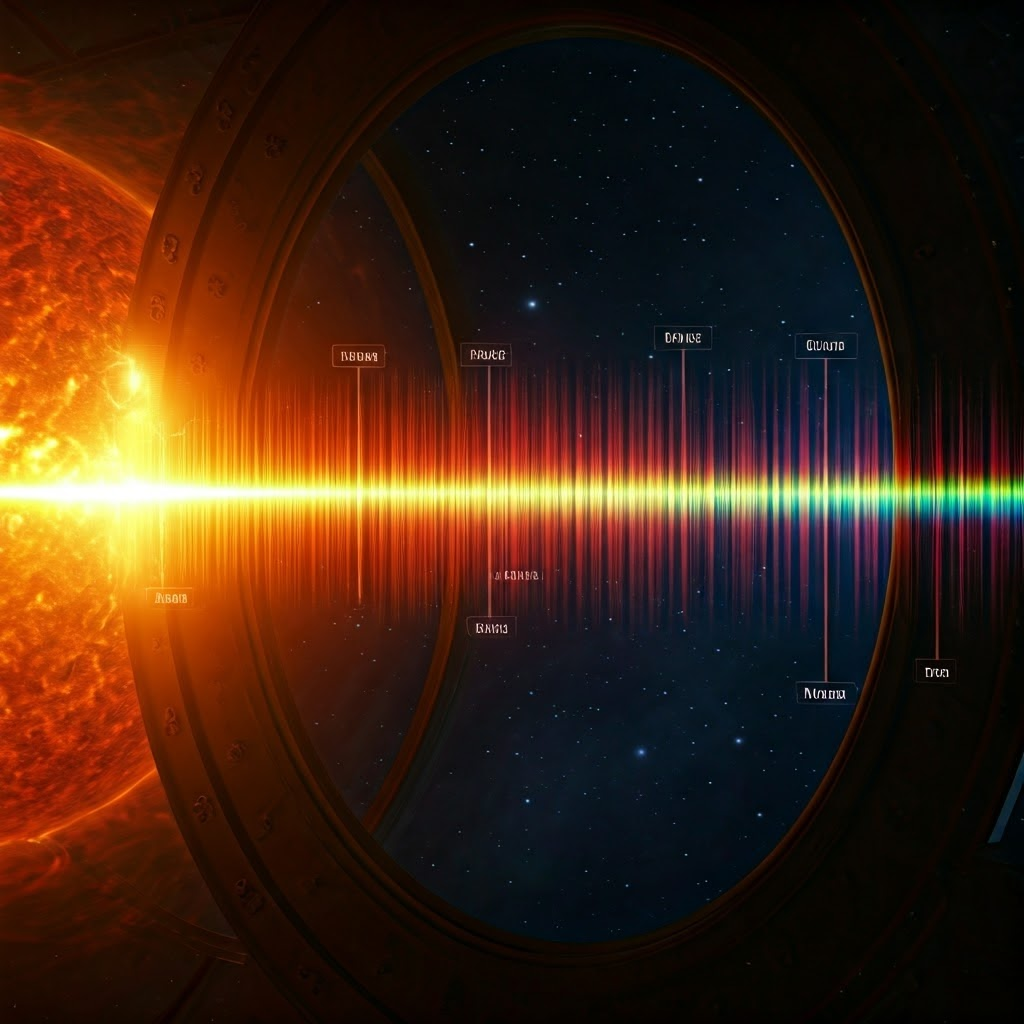
A glowing band of solar colors shows thin dark Fraunhofer lines labeled with element names

The Fingerprints of Atoms

Spread sunlight into a rainbow and you’ll notice tiny dark gaps called Fraunhofer lines. Each element—hydrogen, sodium, iron—creates a unique set. These lines act as stable identifiers for atoms, produced by electrons absorbing or emitting specific colors.
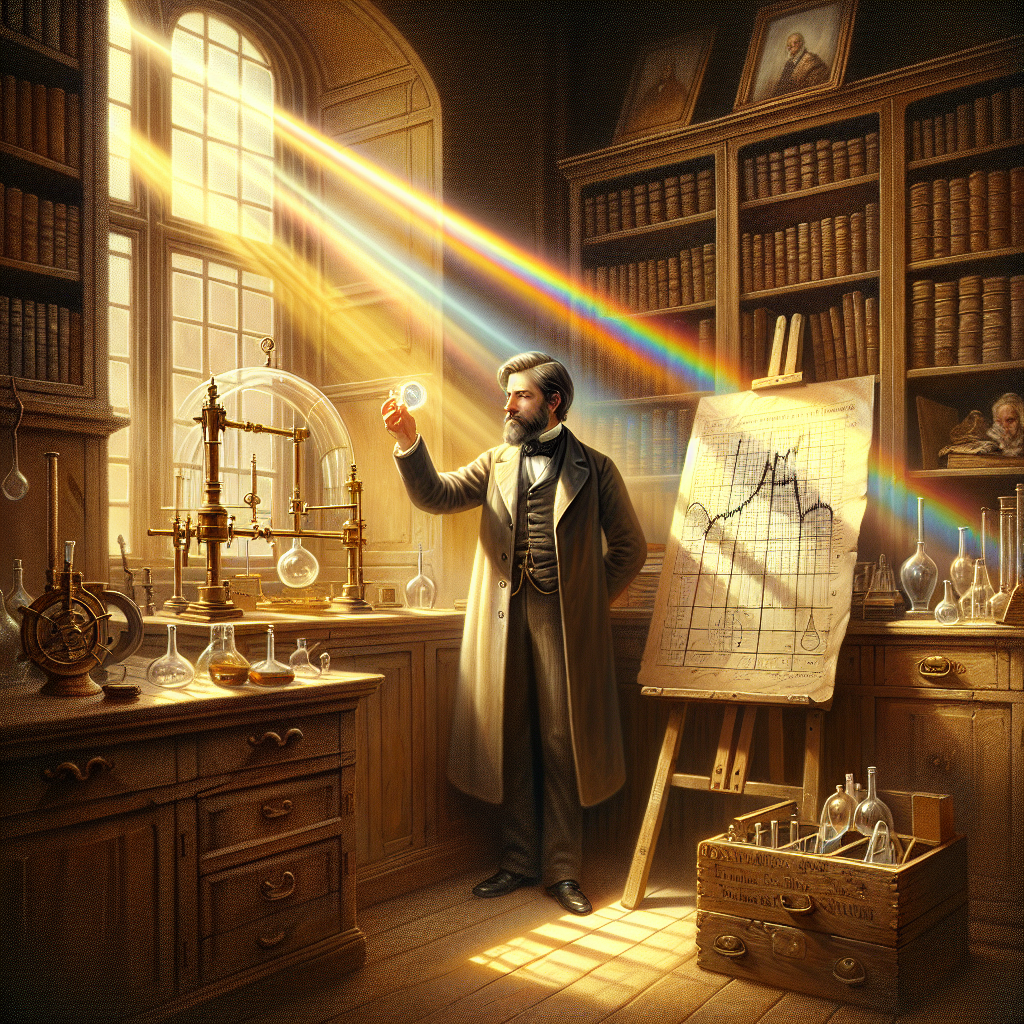
Joseph von Fraunhofer studies a prism while sunlight projects a spectrum onto his notes

Fraunhofer’s Discovery

In 1814 Joseph von Fraunhofer charted more than 500 solar lines with simple prisms. Decades later, lab experiments matched these lines to heated elements, proving the Sun shares Earth’s atoms—a breakthrough that opened stellar chemistry to science.
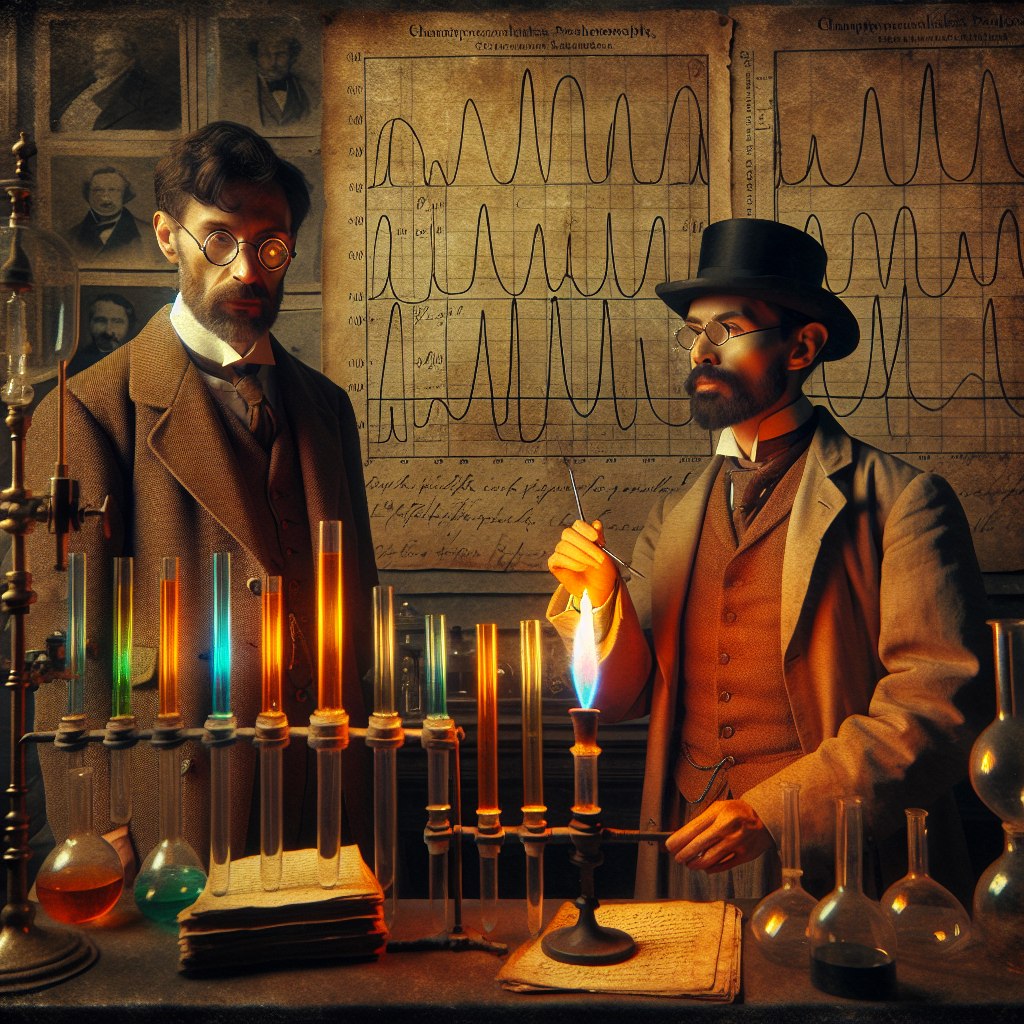
Kirchhoff and Bunsen observe colored emission lines from a flame in an 1860s laboratory

Kirchhoff’s Big Breakthrough

By the 1860s Gustav Kirchhoff and Robert Bunsen linked spectral patterns directly to elements. They formed three laws:

  1. A hot dense source gives a continuous spectrum.
  2. A hot thin gas shows bright emission lines.
  3. Light passing through cooler gas shows an absorption spectrum with missing lines.
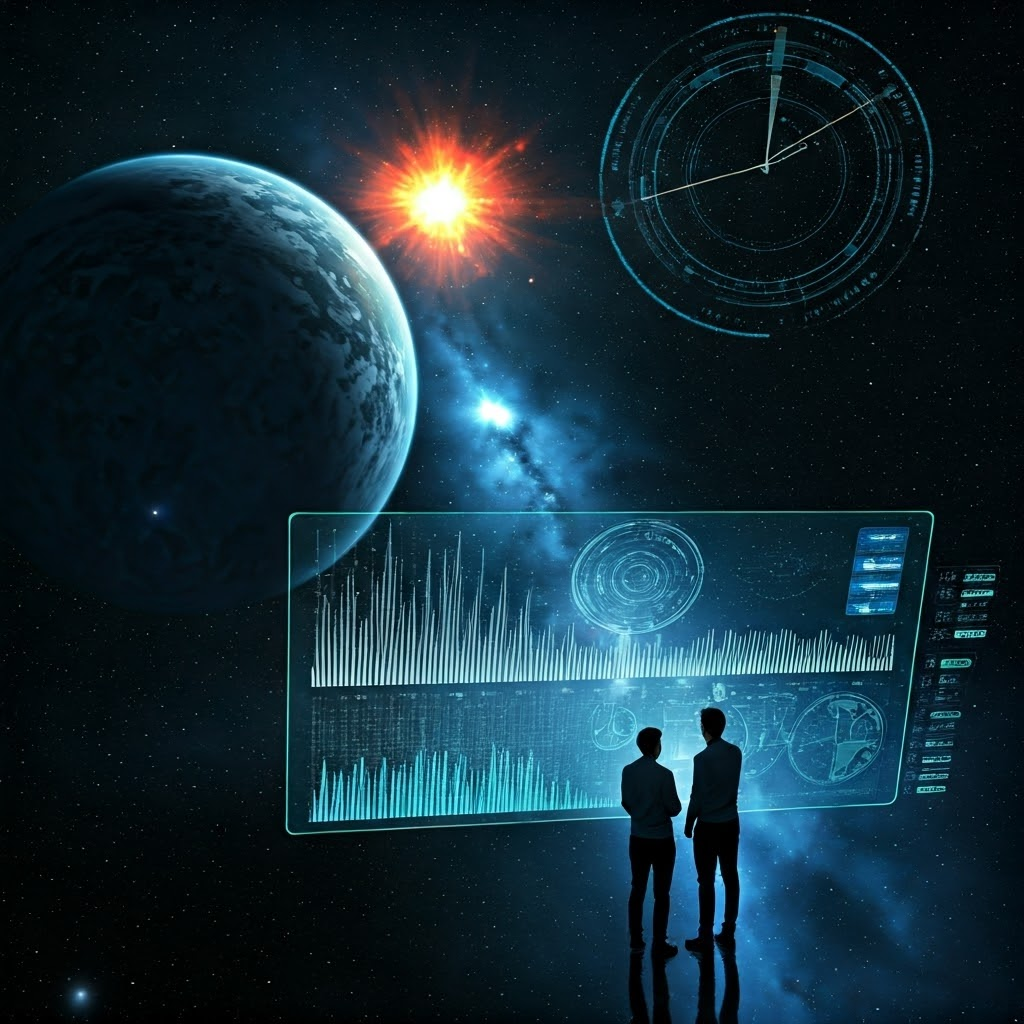
A panoramic sky overlaid with holographic spectral lines and Doppler arrows while astronomers analyze data

Spectroscopy: The Universal Decoder

Modern spectroscopy builds on those laws. Shifts in spectral lines reveal motion via the Doppler effect, while magnetic fields split lines. Even a simple diffraction grating lets you view neon red or mercury blue—proving you can read the same cosmic code at home.
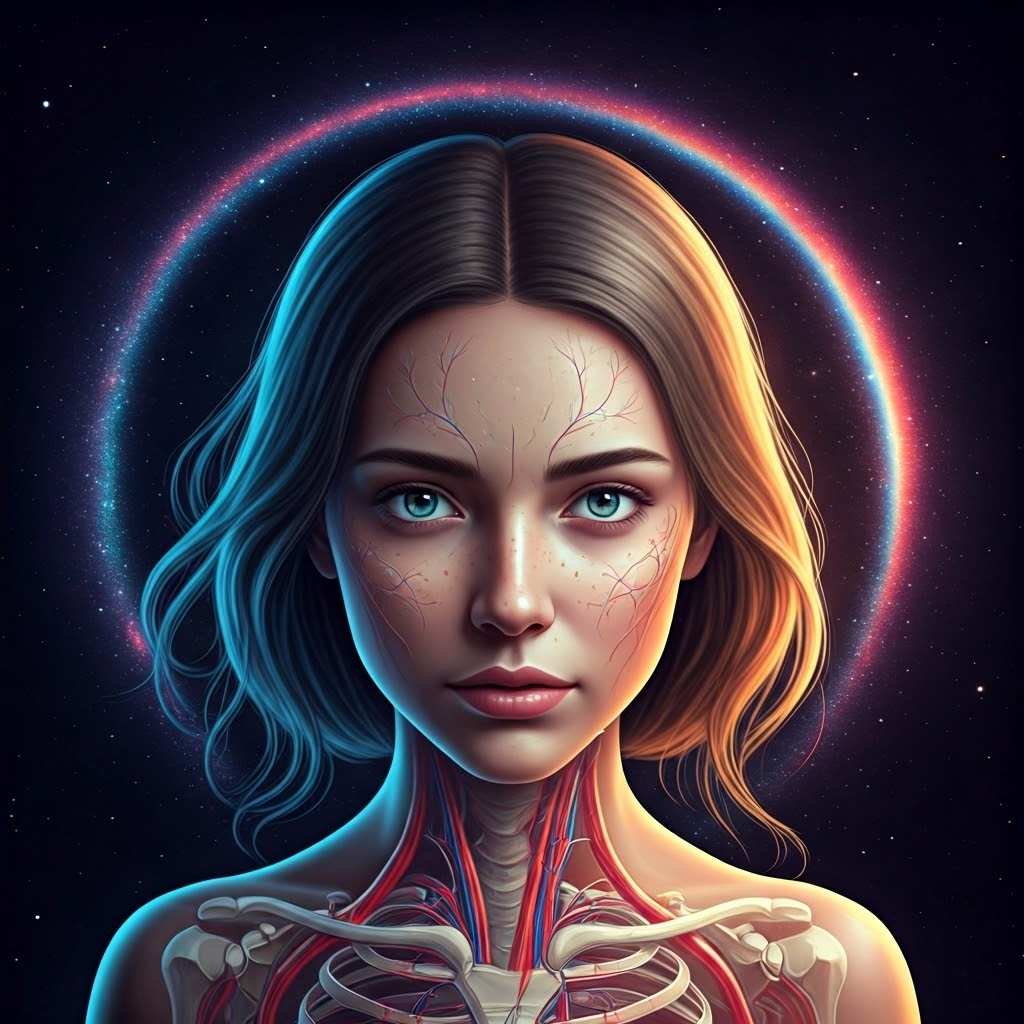
A dreamlike portrait shows spectral lines glowing within a person’s body against a backdrop of stars

Seeing Yourself in the Spectrum

Your body holds the same atoms once identified in sunlight. Blood, bones, and brain share those stellar signatures. Each rainbow ties you to ancient stars, inviting you to see the universe’s story in every flash of color.


Tome Genius

Astronomy 101: Exploring the Cosmos

Part 8

Tome Genius

Cookie Consent Preference Center

When you visit any of our websites, it may store or retrieve information on your browser, mostly in the form of cookies. This information might be about you, your preferences, or your device and is mostly used to make the site work as you expect it to. The information does not usually directly identify you, but it can give you a more personalized experience. Because we respect your right to privacy, you can choose not to allow some types of cookies. Click on the different category headings to find out more and manage your preferences. Please note, blocking some types of cookies may impact your experience of the site and the services we are able to offer. Privacy Policy.
Manage consent preferences
Strictly necessary cookies
Performance cookies
Functional cookies
Targeting cookies

By clicking “Accept all cookies”, you agree Tome Genius can store cookies on your device and disclose information in accordance with our Privacy Policy.

00:00