
Meet the Messengers: The Basics of Brain Chemistry

The Brain’s Secret Language
Every thought, feeling, and action relies on messages that race between brain cells called neurons. The brain speaks without words.
Tiny chemical messengers named neurotransmitters carry each signal. Picture two people tossing notes. Multiply that image by millions of rooms, and you sense the buzz inside your head.
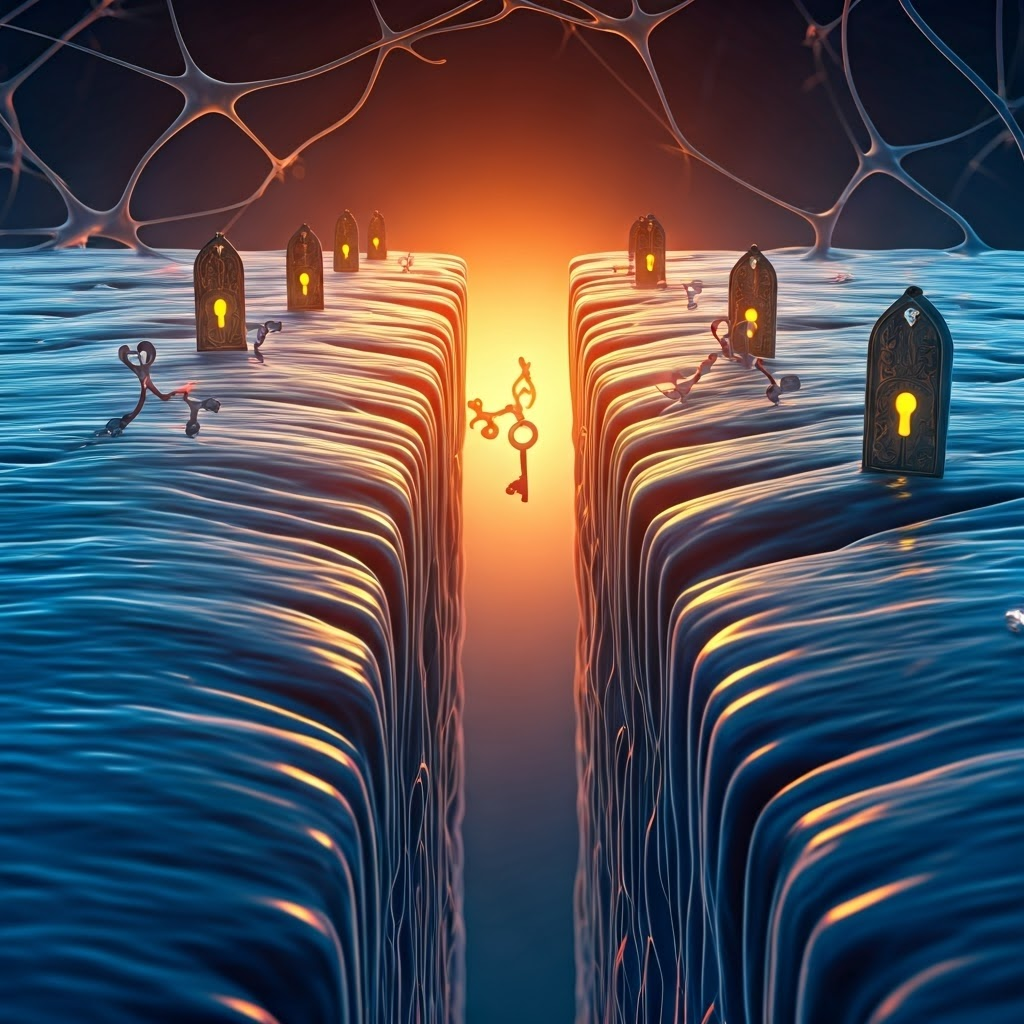
Neurons never touch. A thin space—the synapse—separates them. The sending cell releases neurotransmitter molecules that drift across this gap.
Matching receptors on the next neuron wait like locks for the right keys. When the fit is right, the message tells the cell to fire, relax, or stay silent.
That rapid exchange speeds your heartbeat when you’re scared, helps you recall a friend’s name, and sparks joy after a joke. Without it, the brain would be quiet and disconnected.
Families and Famous Faces

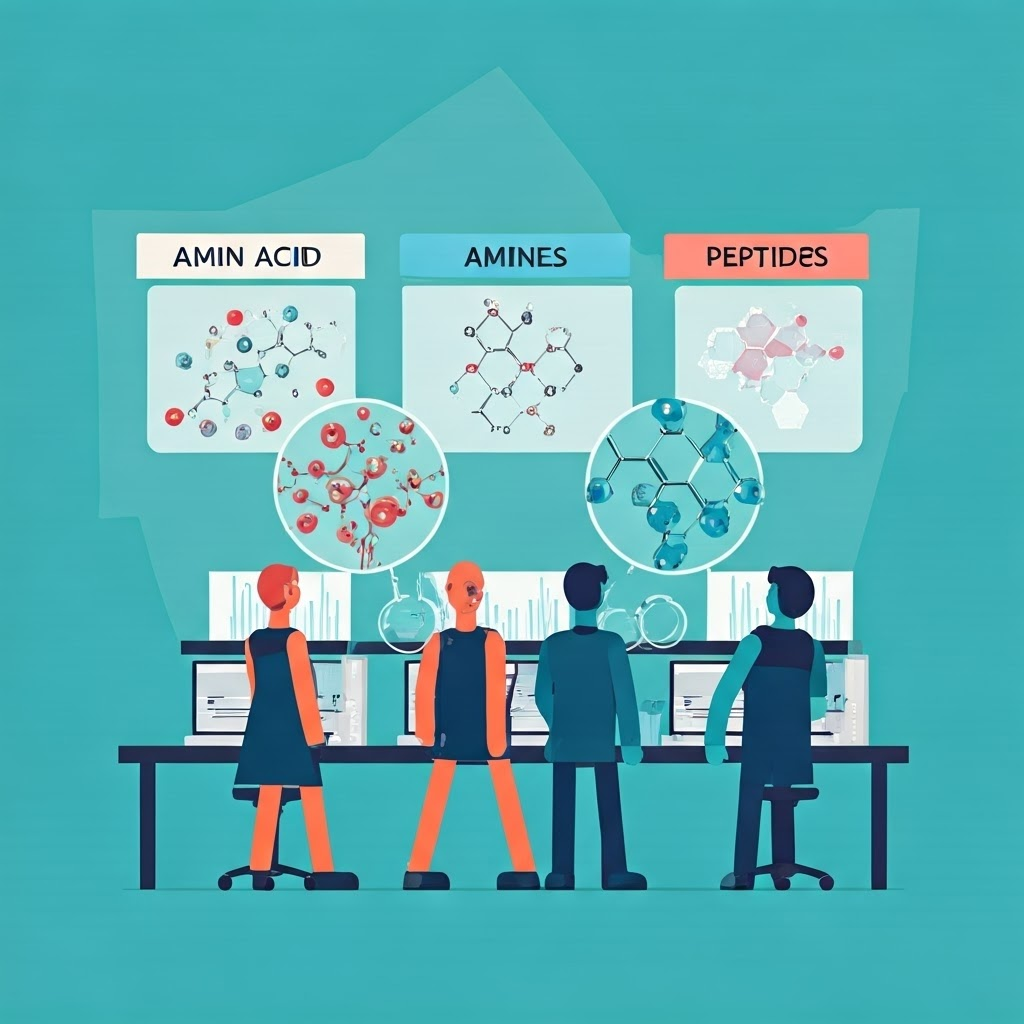
The brain groups its messengers into three families—amino acids, amines, and peptides. Each family serves distinct roles.
Amino acids work daily. Glutamate sends the main “go” signal, vital for learning and memory.
GABA provides the main “slow-down” cue, helping you unwind and sleep.

The amine group includes well-known names. Dopamine boosts reward, movement, and focus. Low levels slow movement, as in Parkinson’s. Excess activity in some areas links to schizophrenia.
Serotonin guides mood, appetite, and sleep. Low serotonin can trigger depression or anxiety.
Norepinephrine gears the body for action, while acetylcholine drives muscle movement and supports attention and memory.

Peptides form larger chains and handle specialized tasks. Endorphins dull pain and lift pleasure, creating the runner’s high or post-laugh calm.
Many other peptides fine-tune stress, hunger, and thought, often partnering with smaller messengers for precise control.

How the Message Gets Across
Synaptic transmission unfolds like a relay race. An electrical burst reaches the neuron’s end and triggers the release of neurotransmitters.
These molecules cross the synapse and touch receptors on the next cell. The result either excites the neuron to pass the message along or inhibits it.

Classic transmitters such as glutamate and GABA act quickly and locally—like a whisper. Their effects fade in milliseconds.
Neuromodulators—including dopamine, serotonin, and some peptides—broadcast broader, longer-lasting signals. They can shift the tone of entire brain regions.

Why So Many Messengers?
The brain keeps many messengers for precision. Each chemical unlocks a unique response depending on its target receptor.
Think of a toolbox: a hammer, screwdriver, and paintbrush. The right job needs the right tool—and often several working together.
If just one messenger drifts out of balance, you may feel mood swings, lose focus, or face disease. When timing and balance shine, your brain tells a seamless, ever-changing story.
