16 min read  •  12 min listen

Clockwork Cosmos

How Newton’s Laws, Calculus, and a Falling Apple Changed Everything

Clockwork Cosmos

AI-Generated

April 29, 2025

What if the universe ran like a perfect machine? Step into the world of Isaac Newton, where apples fall, comets return, and math explains everything from tides to the stars. Discover how one quiet thinker changed the way we see the world—and why his ideas still matter.


The Apple, the Sky, and the Scholar
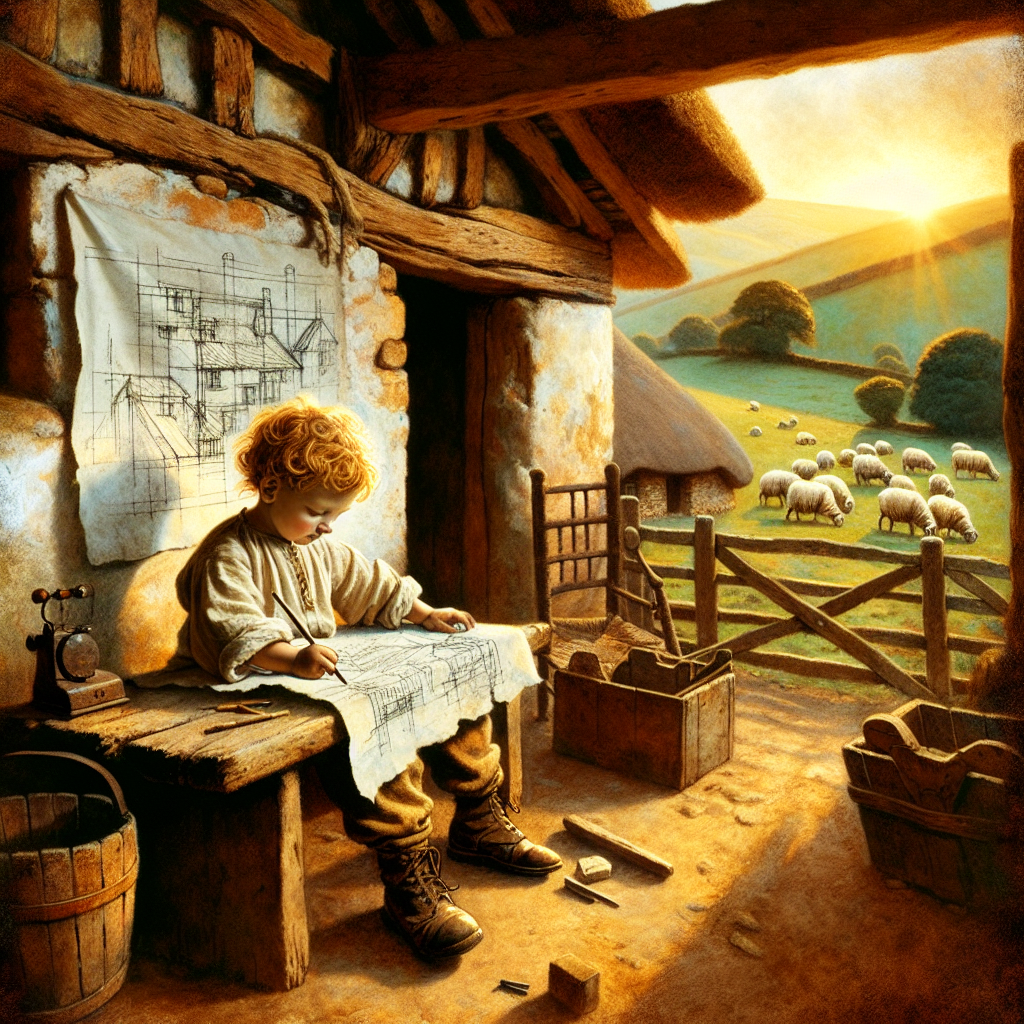
Watercolor scene of toddler Isaac Newton sketching on a cottage wall at dawn in rural 17th-century England.

Woolsthorpe’s Quiet Genius

Imagine a calm English countryside where sheep roam and the weather sets the daily rhythm. Isaac Newton spent his childhood here at Woolsthorpe Manor in the 1600s. He arrived early, tiny, and fragile, with his father gone and his mother away, raised mostly by his grandmother.

Candlelit chamber where young Newton builds small mechanical toys beside a brass sundial while storm clouds gather outside.

During the deadly Great Plague of 1665, Cambridge closed its doors, so Newton returned home. Alone and undistracted, he let his thoughts wander. In this short “year of wonders,” he devised new math, explored light and color, and asked why apples fall.

Newton seated under an apple tree, a fallen fruit at his feet, while a faint moon hangs in the bright sky above rolling fields.

The Apple and the Question

Many know the tale of an apple striking Newton. The event was ordinary, yet the question it sparked was bold. Why does the apple drop straight down instead of sideways or up? Could the same pull that guides the fruit also keep the moon circling Earth?
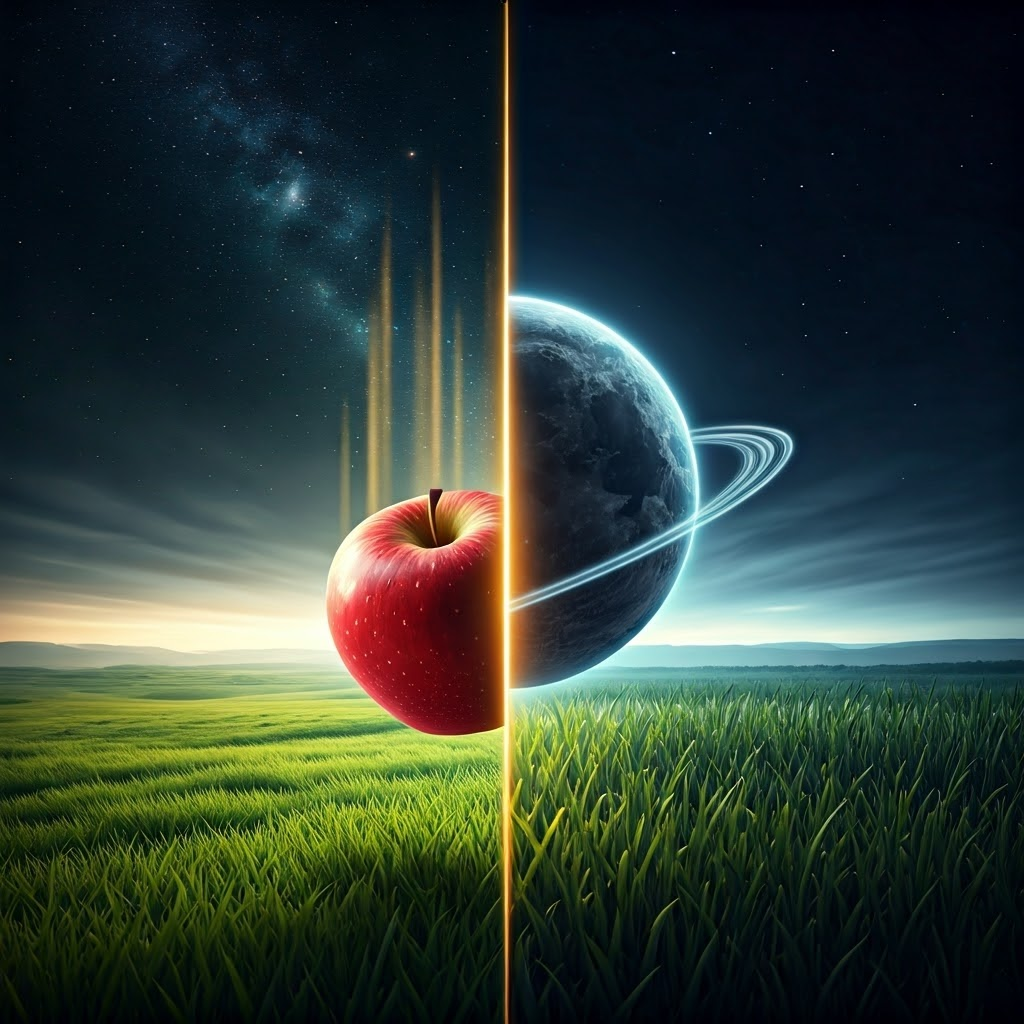
Split illustration showing an apple falling toward grass while the moon orbits Earth, linked by a glowing line.

Newton linked the common and the cosmic. He suggested one simple force rules both apples and planets. In his time, people believed heaven and Earth obeyed separate laws. His insight bridged that divide and hinted at a unified universe.
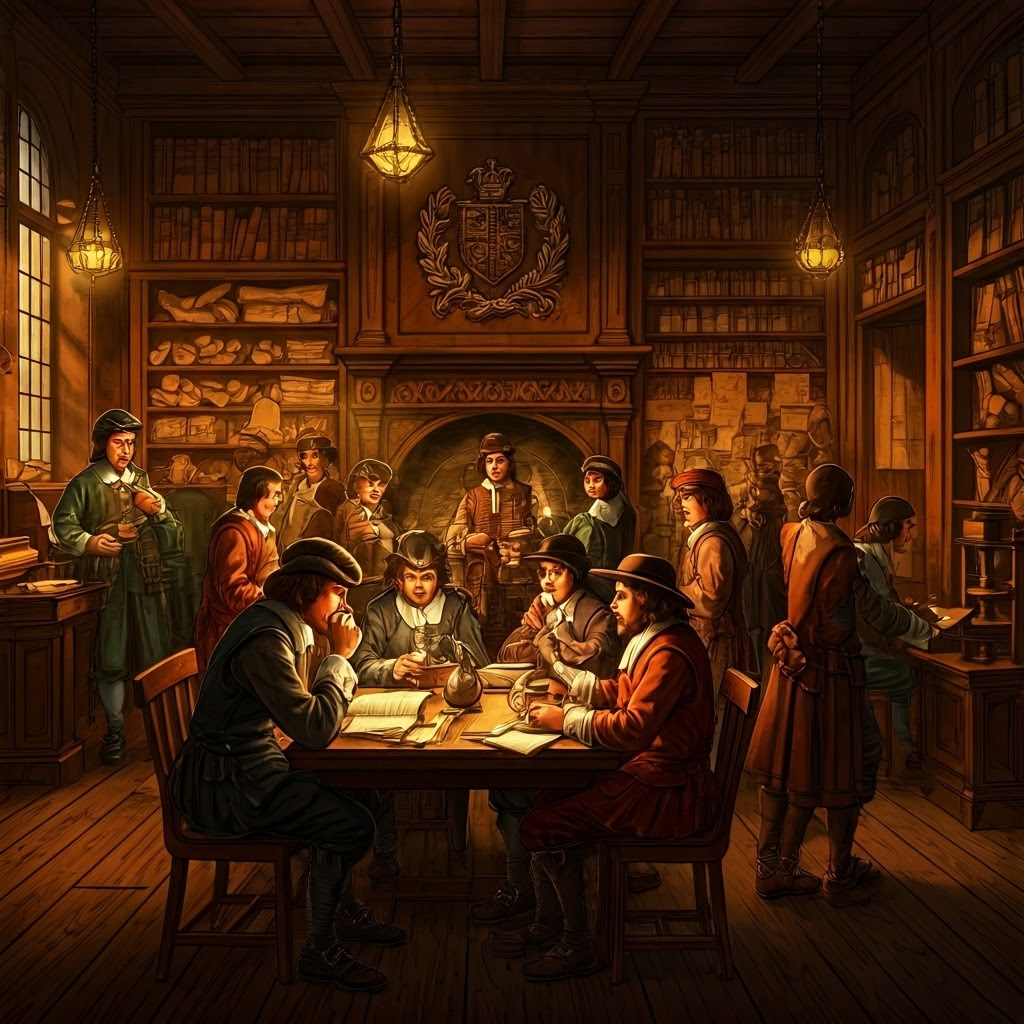
Bustling 1660s London coffeehouse filled with scholars debating under warm candlelight and the Royal Society’s emblem.

England’s Scientific Buzz

Seventeenth-century England crackled with new ideas. Coffeehouses welcomed lively debate, and the freshly founded Royal Society offered scientists a place to test and share discoveries. Its journal, Philosophical Transactions, spread news faster than letters alone and encouraged public experiments.
Candlelit desk scattered with Latin letters and a closed leather journal, suggesting slow knowledge exchange.

Sharing insights remained hard. Messages crawled along muddy roads, and reputation mattered. Newton, intensely private, hid notebooks in drawers, wrote in Latin, and even coded his findings. His reluctance kept brilliance tucked away.
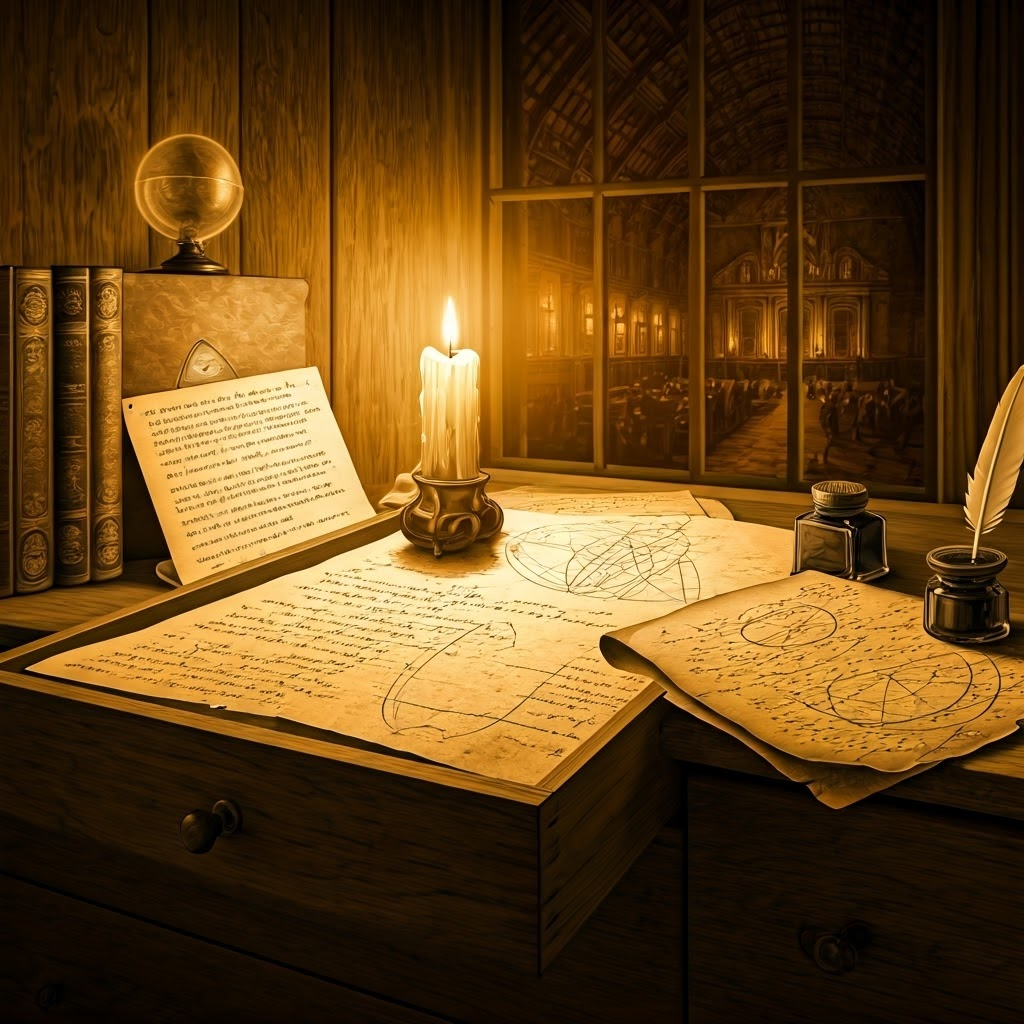
Open drawer revealing Newton’s coded diagrams beside a window that hints at distant Royal Society gatherings.

When he finally revealed his work, he chose careful letters, then landmark books. The Royal Society provided a stage, yet colleagues had to nudge him forward. Thanks to this network, a quiet scholar and a falling apple reshaped how we see a universe ruled by shared laws.


Tome Genius

History of Science & Discovery

Part 5

Tome Genius

Cookie Consent Preference Center

When you visit any of our websites, it may store or retrieve information on your browser, mostly in the form of cookies. This information might be about you, your preferences, or your device and is mostly used to make the site work as you expect it to. The information does not usually directly identify you, but it can give you a more personalized experience. Because we respect your right to privacy, you can choose not to allow some types of cookies. Click on the different category headings to find out more and manage your preferences. Please note, blocking some types of cookies may impact your experience of the site and the services we are able to offer. Privacy Policy.
Manage consent preferences
Strictly necessary cookies
Performance cookies
Functional cookies
Targeting cookies

By clicking “Accept all cookies”, you agree Tome Genius can store cookies on your device and disclose information in accordance with our Privacy Policy.

00:00