
From Rocks to Riches: The Birth of Bronze
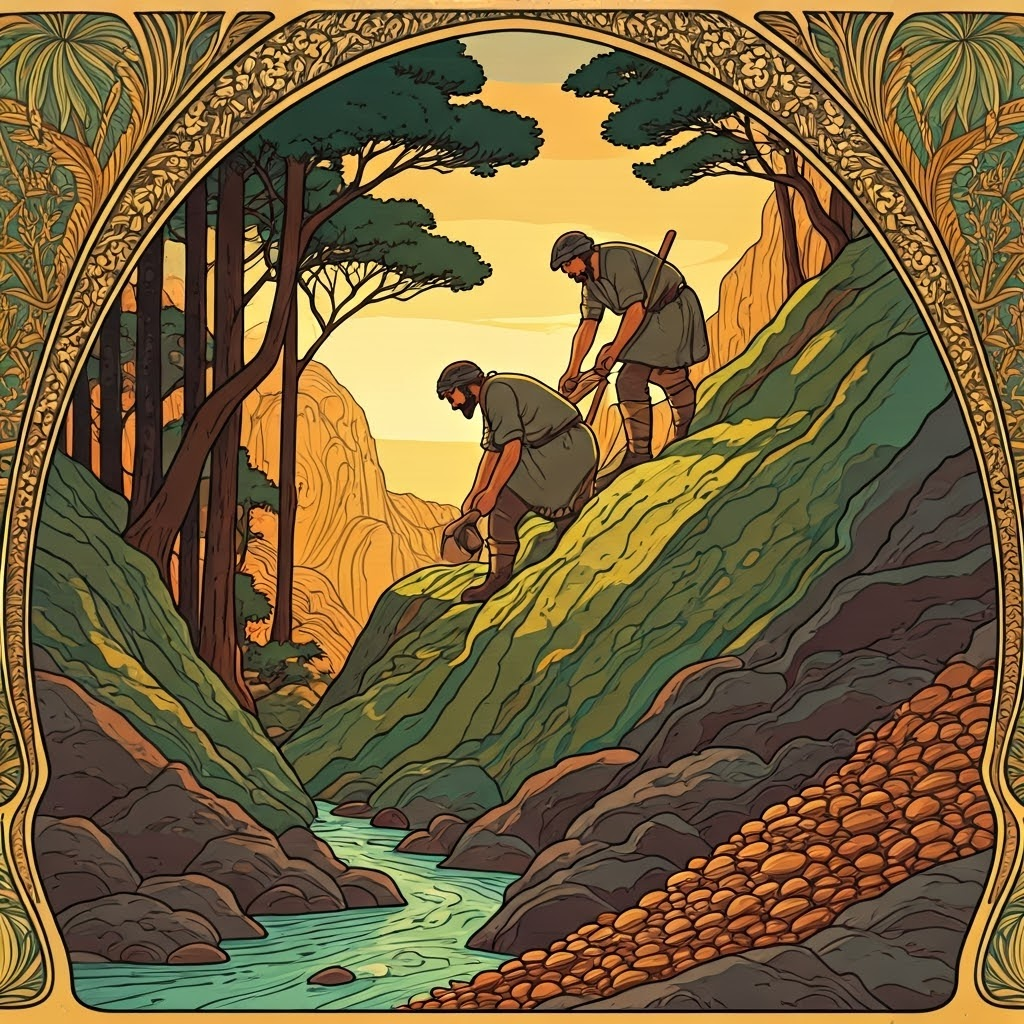
Ancient prospectors scanned hillsides for green and blue streaks that pointed to copper. Streams sometimes revealed shiny nuggets, signaling richer seams upstream. Tin was rarer. It hid in distant mountain veins or rolled downstream as smooth pebbles. Finding both metals opened the door to a new age.
Digging Up the Good Stuff
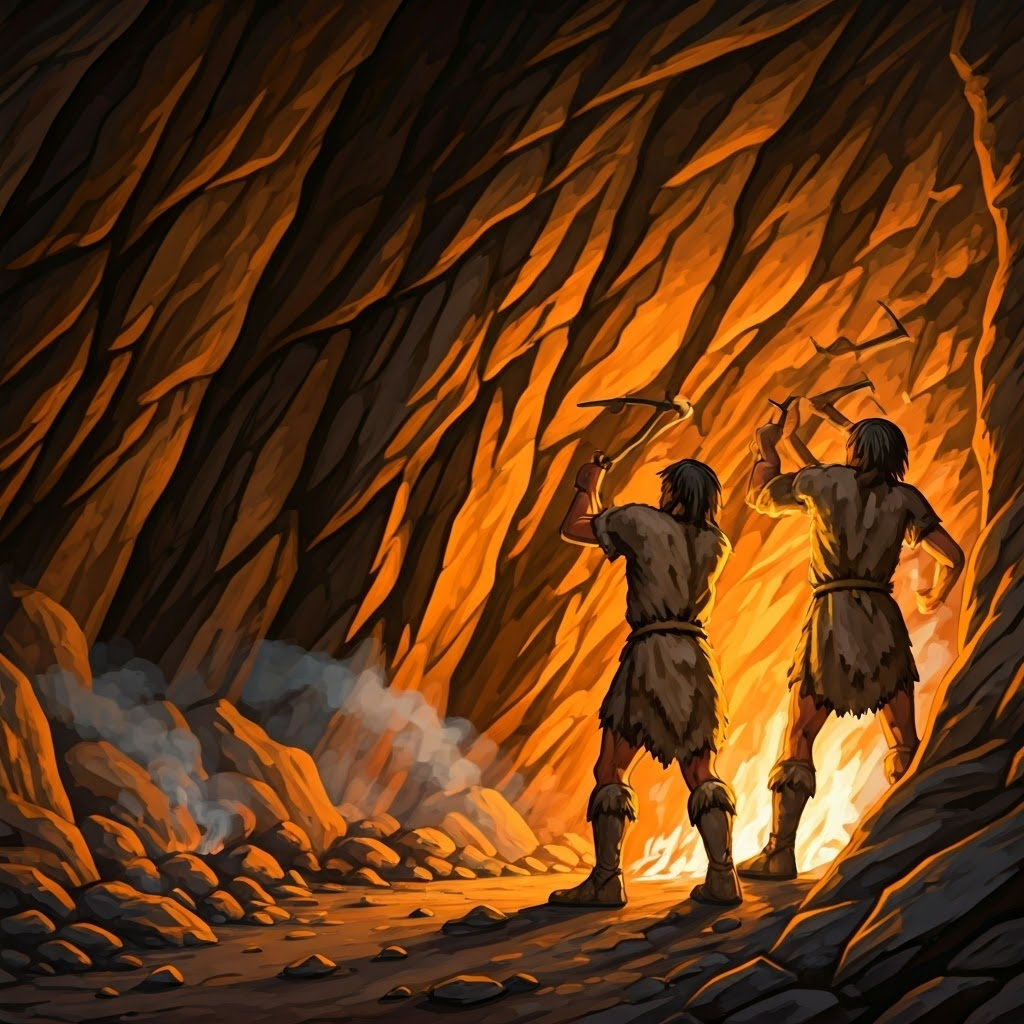
Teams armed with stone hammers, then antler picks, chipped away for hours to fill a small sack of ore. They built fires against rock walls, then doused the hot surface with cold water. The sudden shock cracked the stone, freeing ore chunks—but dust, cave-ins, and fumes made every shift risky.
Copper flowed from Cyprus and Anatolia, while Cornwall and Central Asia supplied tin. Merchants soon linked these distant sources, because workers needed both metals for the next breakthrough.
Turning Rocks Into Metal
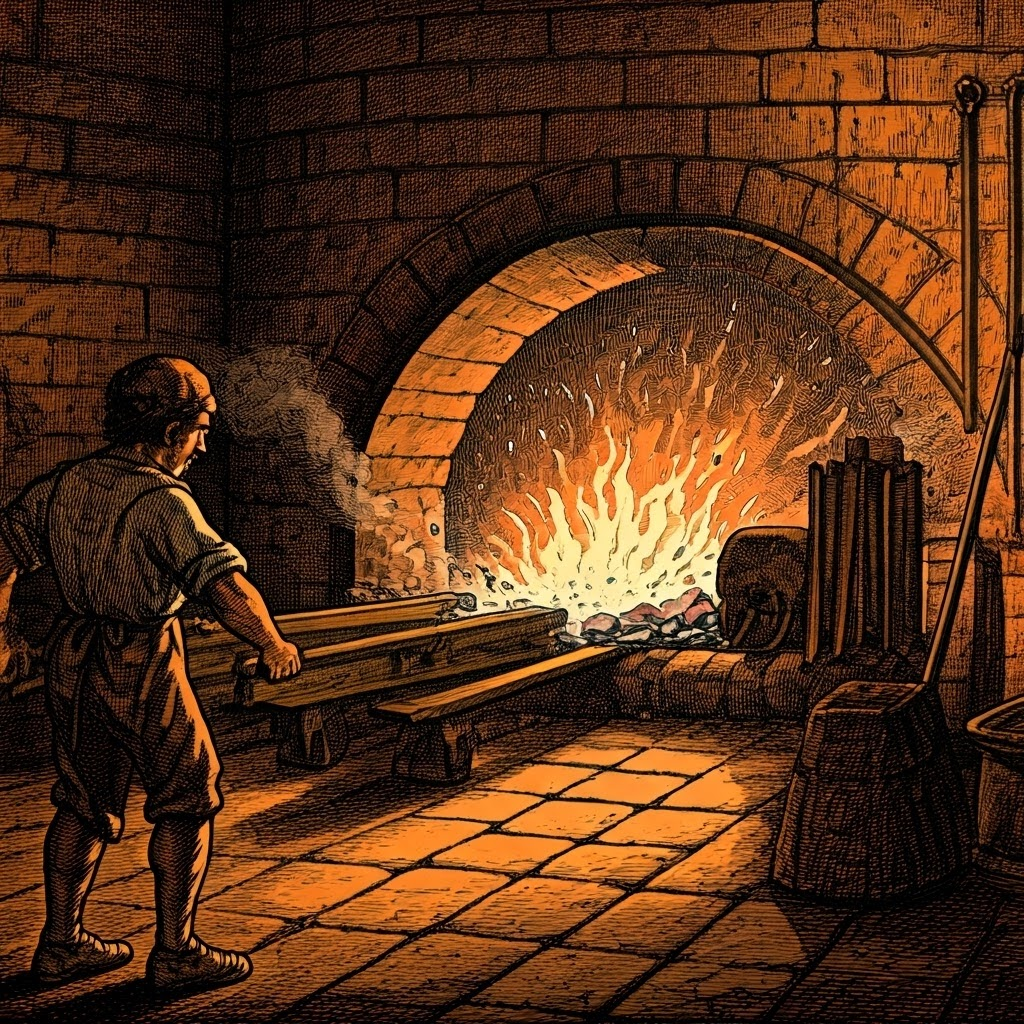
Smelting changed dull stones into shining metal. Craftspeople built clay furnaces lined with stone and pushed air through bellows to reach 1,000 °F. Charcoal stripped oxygen from the ore. At the right moment, a thin stream of molten copper trickled out—hot, bright, and astonishing to first-time viewers.
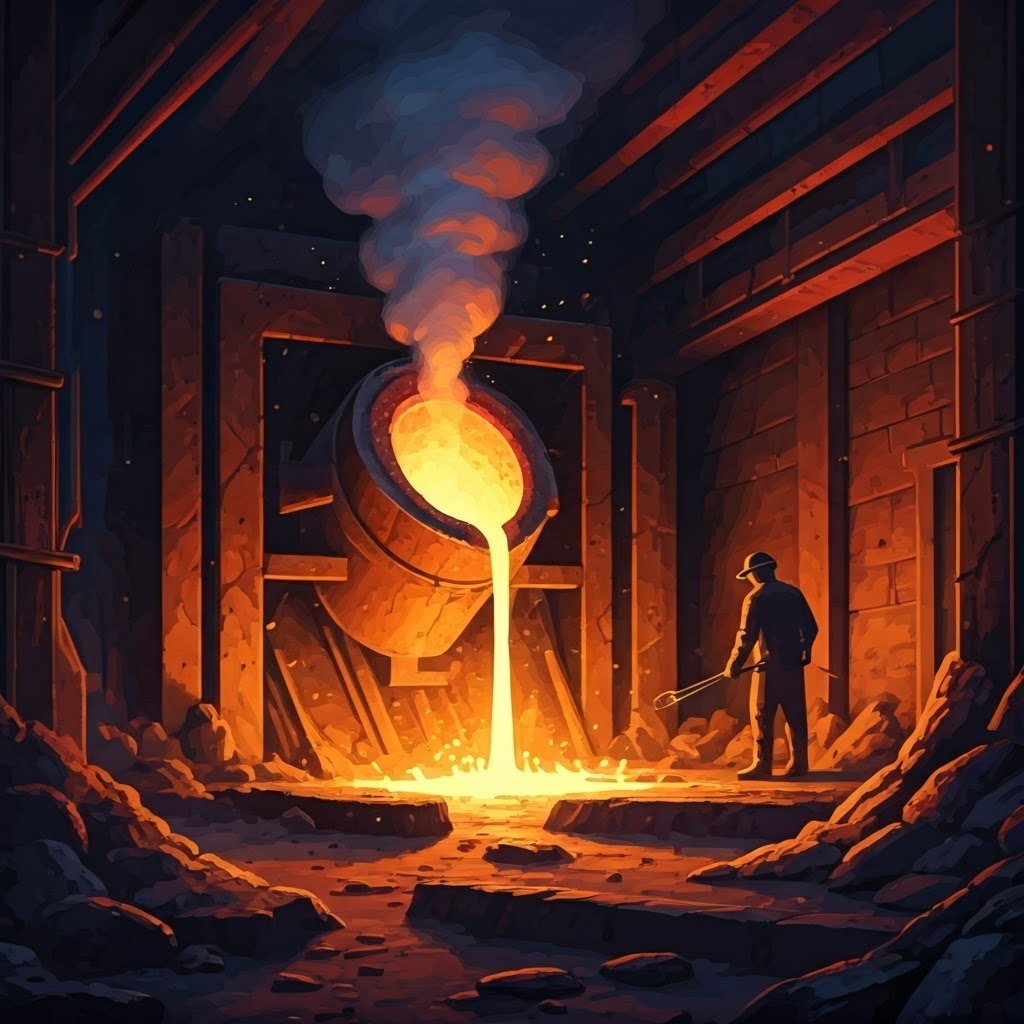
Workers caught the liquid in clay or sand molds, forming ax heads, blades, or trade bars. Fumes burned throats, and fires often flared out of control. Yet the reward—a solid lump of usable copper—kept furnaces roaring night after night.
Mixing Up Bronze: The First Super-Material

Metallurgists discovered that adding about 10 percent tin to copper produced bronze. The new alloy was harder, held a sharper edge, and resisted bending. Word spread from Sumer to China. Bronze knives, plows, and helmets quickly outclassed tools made of stone or pure copper.
Museums now display ornate daggers and chisels that prove how fast communities adopted this recipe once they saw its power.
Bronze in Action: Changing the Game
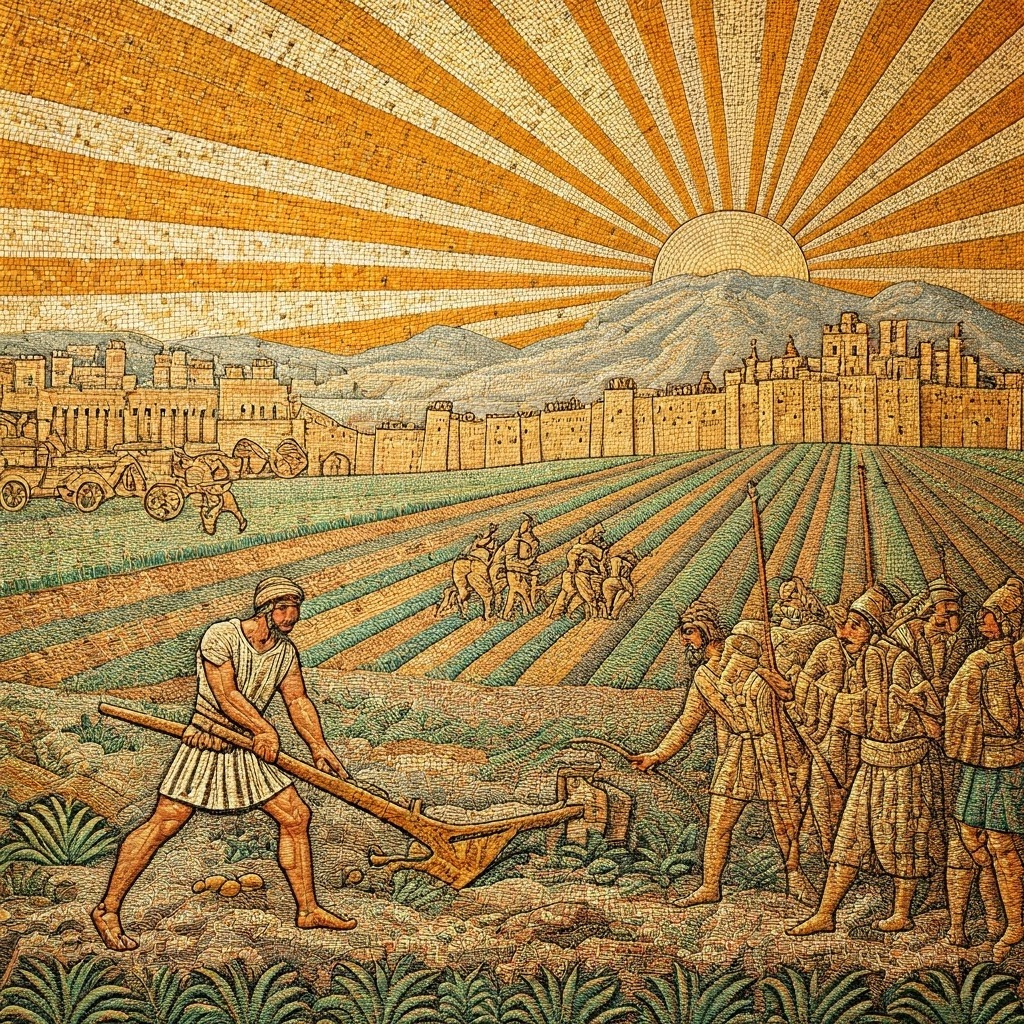
Bronze plows turned soil faster, boosting farming yields and freeing labor for new crafts. Extra food supported denser cities, which spurred trade, writing, and fresh ideas. Control of copper and tin created new elites, while miners, metalworkers, and guards formed emerging social layers.

Historian James Burke notes how one invention triggers chains of change. Bronze sparked metal currency, sturdier buildings, and more lethal weapons. Each advance nudged societies in directions no one could predict.
What Bronze Taught Us

Look around your desk: forks, phones, and hinges echo those first alloys. Bronze showed people that mixing, melting, and experimenting could reshape their world. That lesson—human ingenuity over raw nature—still powers every workshop, lab, and factory today.
