
When Newton’s Clock Broke: The End of Certainty
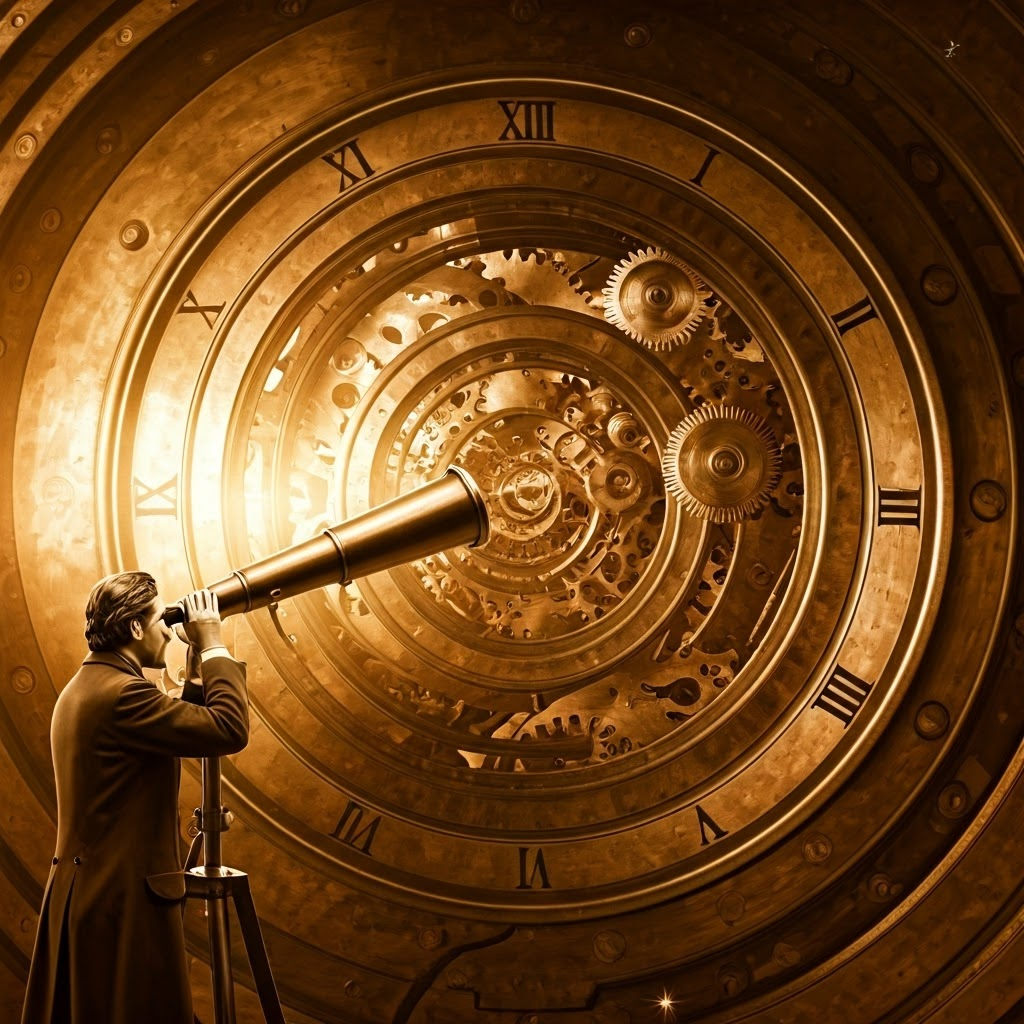
Picture the universe as a flawless clock—every gear turning with perfect precision. That vision guided science for two centuries because Newton’s laws made nature look orderly and certain.
The World According to Newton
Newton showed that objects follow clear rules. An apple falls, the Moon orbits, and cannonballs arc through the air because gravity and motion act in predictable ways. Know a body’s position and speed, and you can forecast its future—tick after tock. Confidence grew as every test confirmed the same reliable outcomes.

Newton’s math left the lab and reshaped daily life. Engineers built bridges, armies aimed artillery, and astronomers predicted eclipses years ahead. Absolute space and time acted like a fixed grid and a steady metronome for everyone, everywhere.
It felt reassuring. If the universe is a machine, then the right equations could unlock any mystery. People began to believe that everything was knowable with enough care, measurement, and calculation.
Cracks in the Foundation
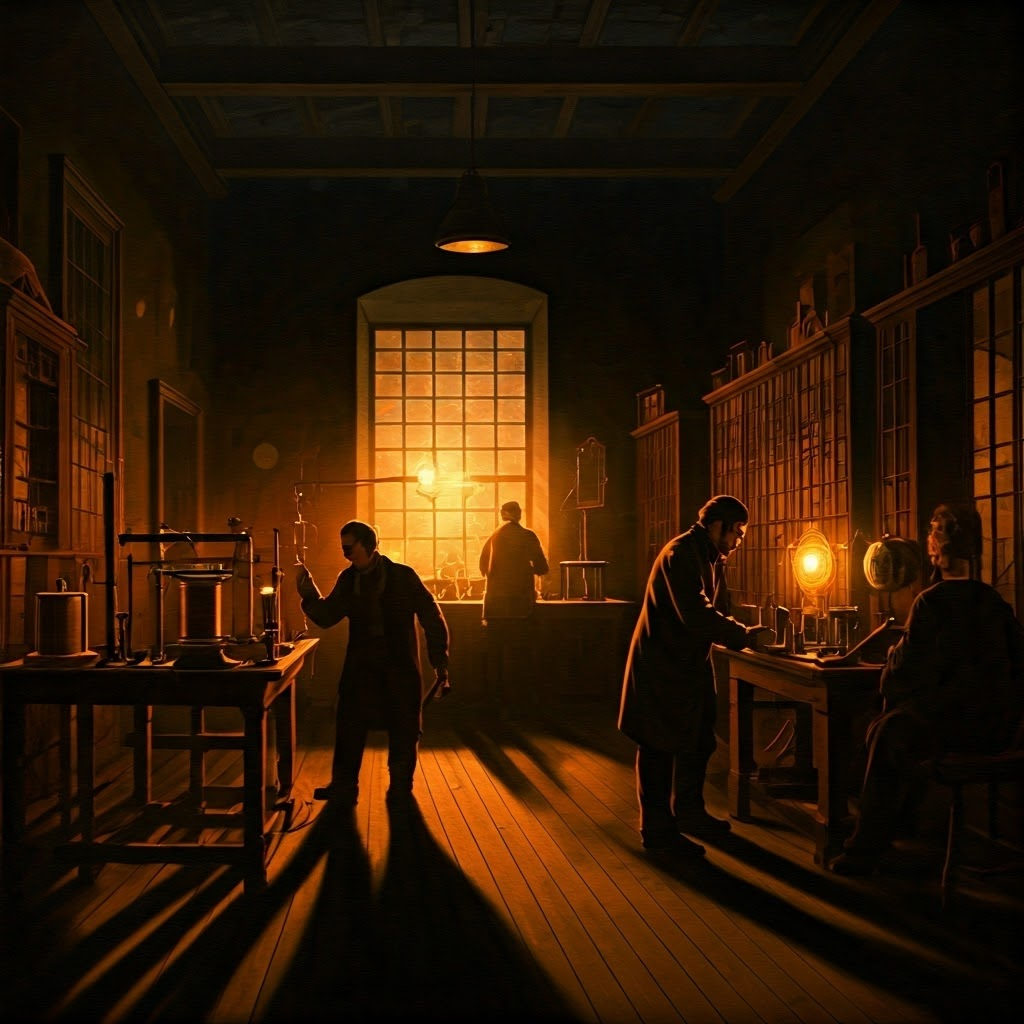
Reality soon pushed back. Late-1800s researchers found that light, electricity, and magnetism sometimes ignored Newton’s tidy script. Laboratories crackled with new effects—and occasional shocks—that hinted at deeper rules.

The speed of light caused the biggest stir. Maxwell’s equations said light always travels about 300,000 kilometers per second. Yet Newtonian logic insisted that speeds should add up—so light fired from a moving train ought to look faster to someone on the tracks. Something didn’t fit.
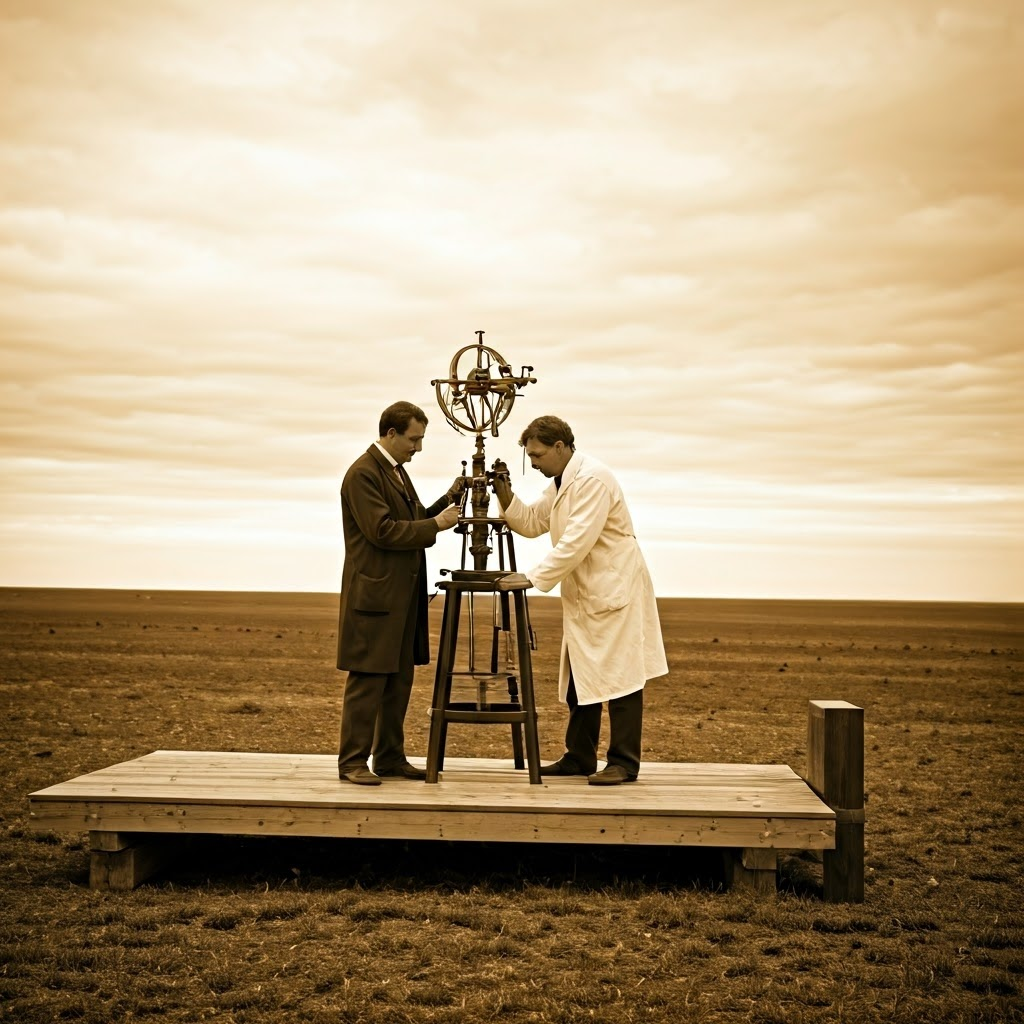
Michelson and Morley tested the idea in 1887. They searched for an “aether” that was supposed to carry light waves. If Earth moved through this medium, light should speed up or slow down depending on direction. Their finely tuned device saw no change at all. Light’s speed stayed constant, defying expectation.
The Mystery of Light
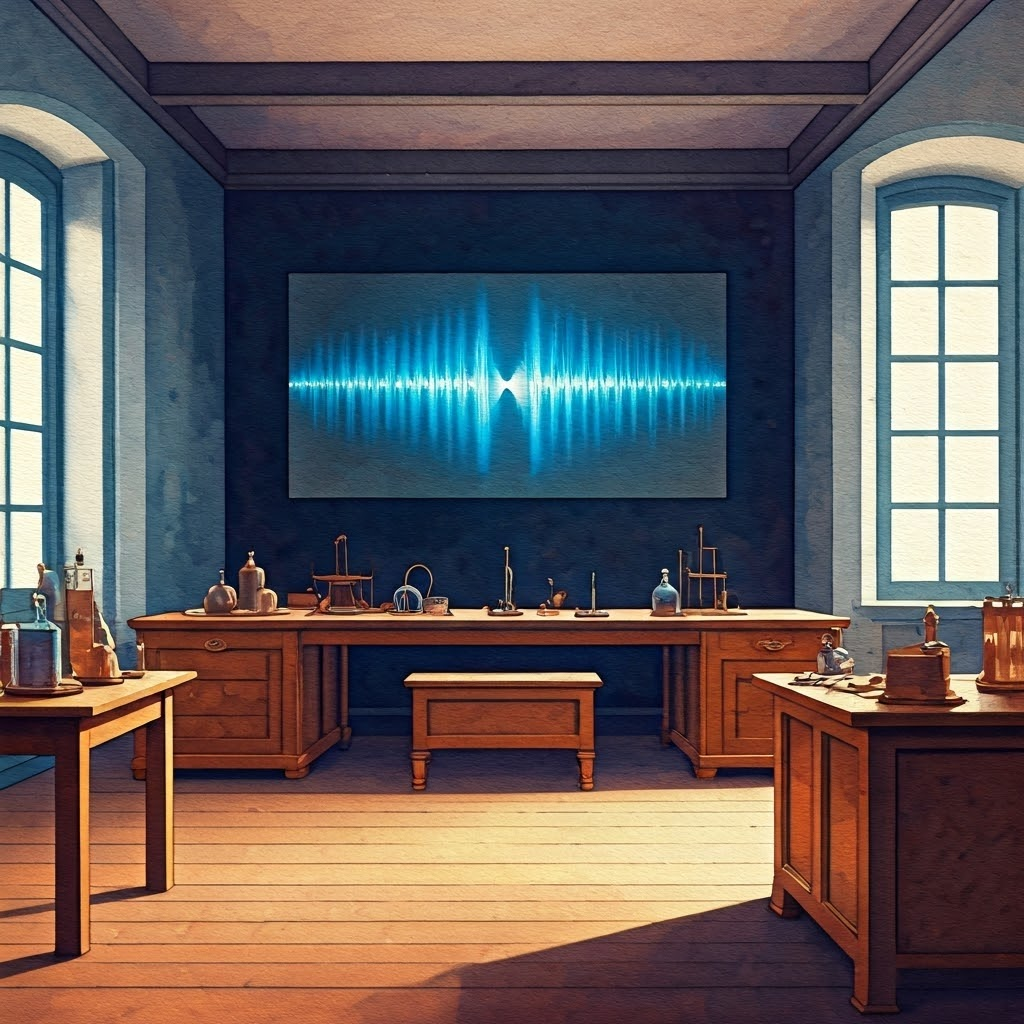
Debate raged over light’s true nature. Thomas Young’s double-slit test in 1801 displayed interference fringes, making waves seem right. Yet sharp shadows and straight-line travel still hinted at particles. The evidence tugged both ways.
Other studies deepened the puzzle. In the photoelectric effect, light knocks electrons from metal only if its frequency is high enough, as though it arrives in discrete packets. Waves alone couldn’t explain that jumpy energy transfer.

By the century’s close, experts admitted they were stuck. Light sometimes behaved like a wave and other times like a particle, and Newton’s equations offered no rescue. These contradictions cracked the once-solid clockwork view and opened the door to a radical new physics—one that would reveal a universe far stranger than anyone had imagined.
