
Gravity’s Gone: How Space Changes Your Body
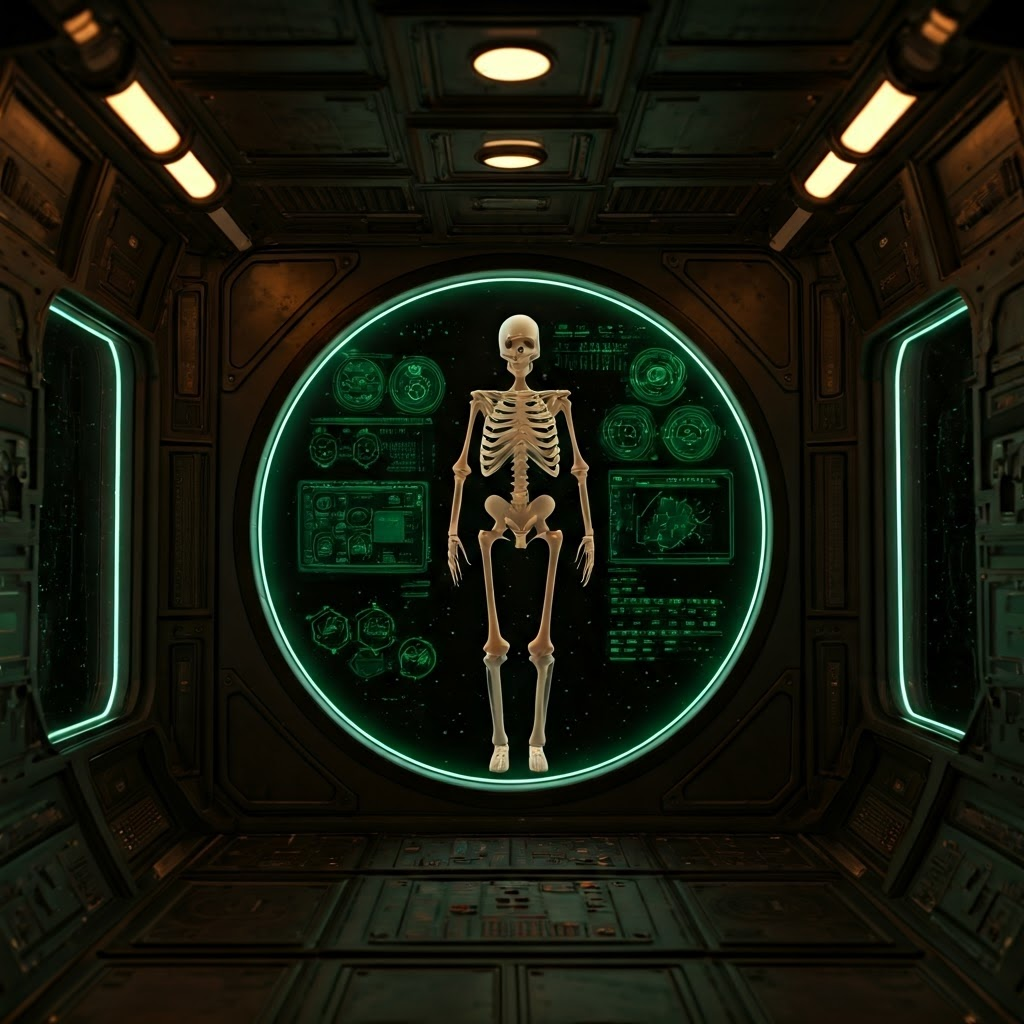
Bones Without Burden
On Earth, bones quietly support you against gravity. Remove gravity and your skeleton relaxes.
Without that pull, bone cells stop rebuilding. Astronauts can lose 1 % to 2 % of bone mass each month—mainly in the spine, hips, and legs. It feels like wearing a full-body cast that never comes off.
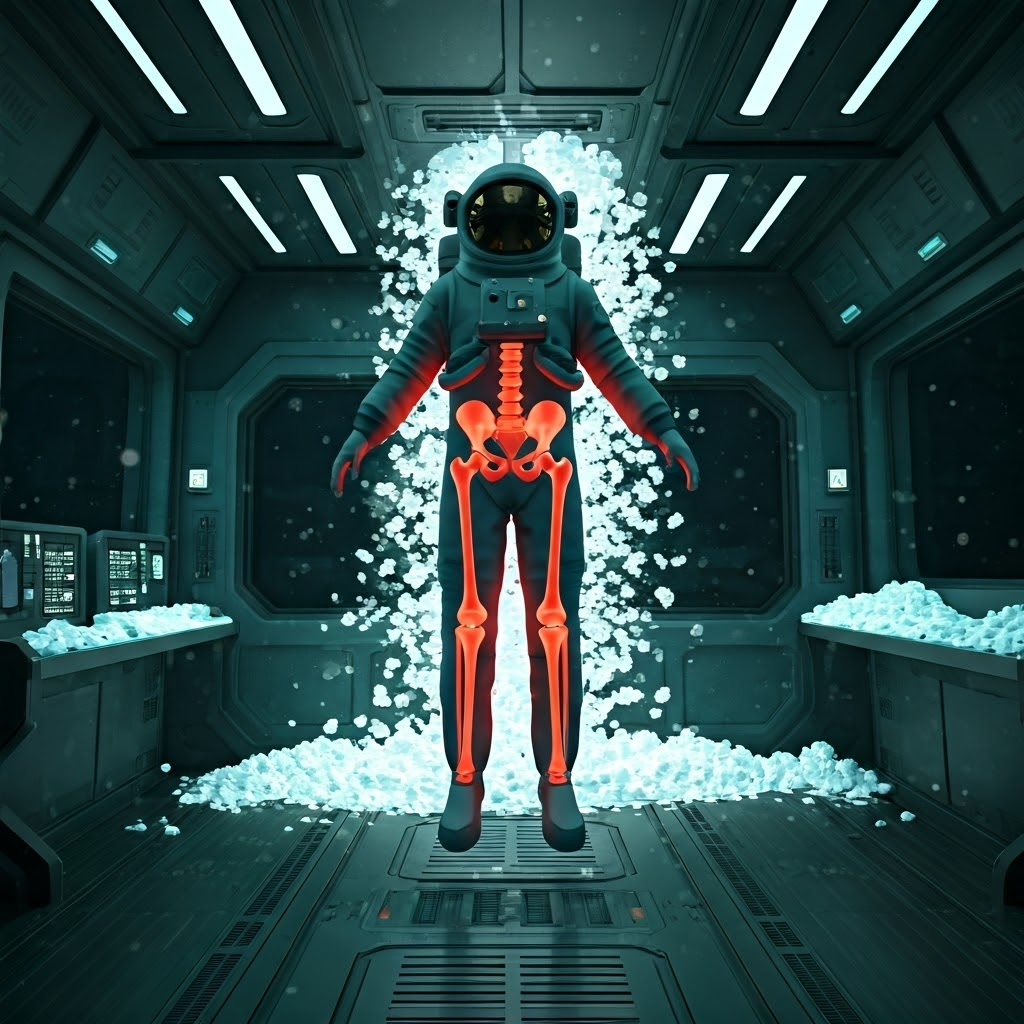
After six months, most crew members shed about 6 % of load-bearing bone density. Calcium then moves into the blood and urine, raising the risk of painful kidney stones.
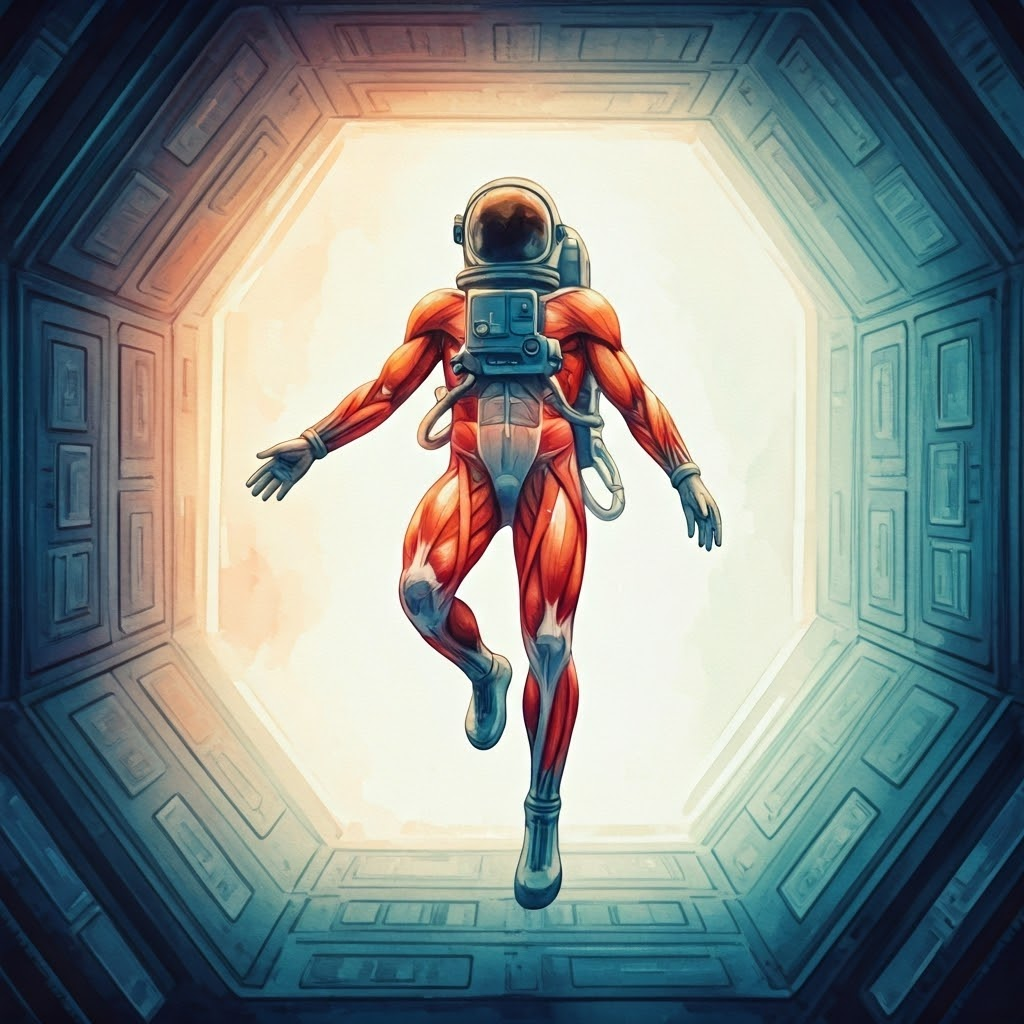
Muscles in Freefall
In microgravity, the muscles that keep you upright start to shrink within days.
Calves, thighs, back, and neck relax because floating needs little effort. Long-term missions can cut muscle strength by up to 20 %. Peggy Whitson joked that stairs on Earth felt like hauling a refrigerator.
Fast-twitch fibers, built for quick moves and heavy lifts, wither fastest. After months away, even standing can feel like a workout.

The Upside-Down Body
Microgravity shifts about two liters of fluid from legs to chest and head.
The result is a puffy “moon face,” clogged sinuses, and a constant head-stand sensation. Astronauts adapt, but the swelling never fully fades while they remain in orbit.
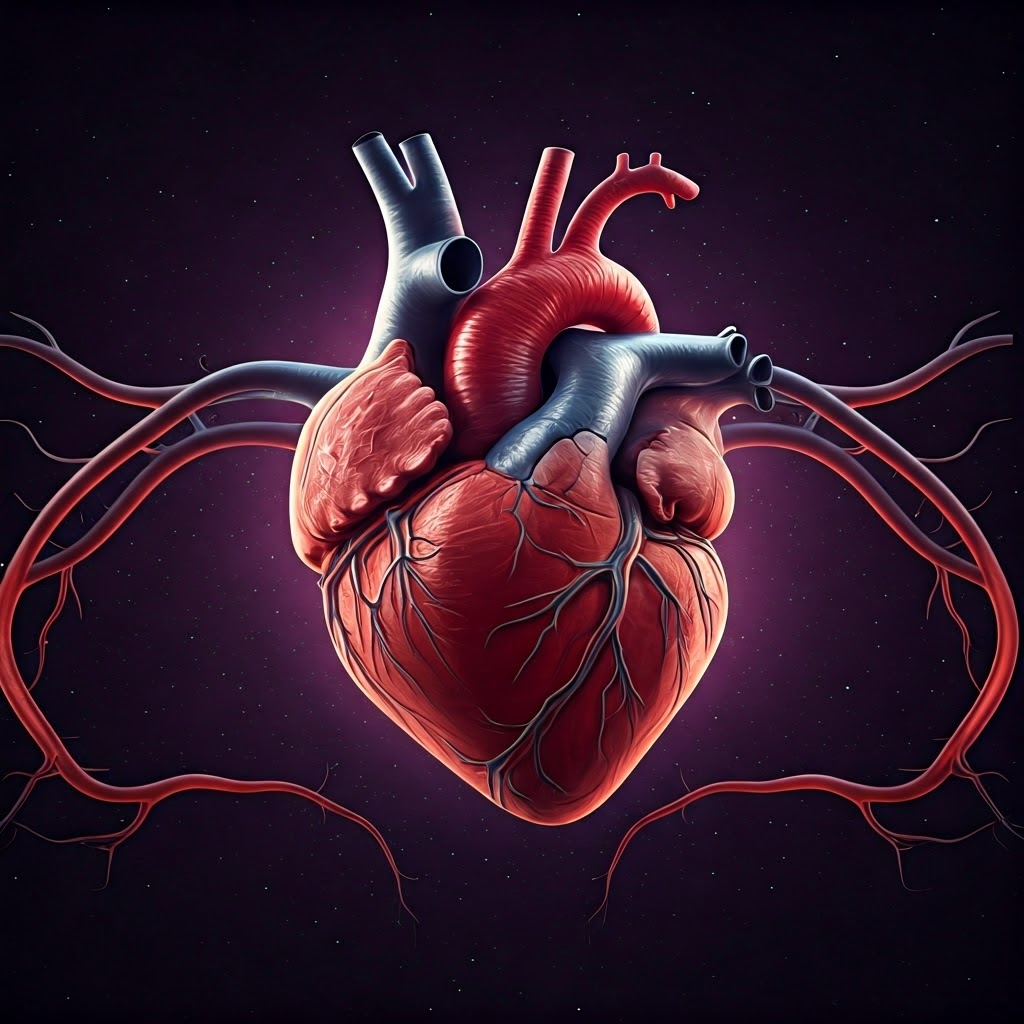
Hearts and Vessels Under Pressure
With gravity gone, the heart grows slightly rounder—about 10 % more spherical.
Blood pools higher, confusing sensors that regulate pressure. Back on Earth, many crew feel dizzy or even faint until vessels relearn to push blood downward.

Eyes on the Horizon
Over half of astronauts develop blurred vision from spaceflight-associated neuro-ocular syndrome, or SANS.
Fluid pressure flattens the eye’s back, swells the optic nerve, and creases the retina. Scott Kelly likened it to viewing the world through Vaseline.

Immune System on Holiday
In orbit, the immune system turns sluggish. White blood cells respond slowly, and dormant viruses can flare.
NASA’s Twin Study showed that space tweaks gene activity tied to defense. Cuts heal slowly, rashes linger, and minor colds overstay their welcome.
