
Into the Deep: Where Sunlight Fades
The Ocean’s Layers: From Sunlight to Darkness
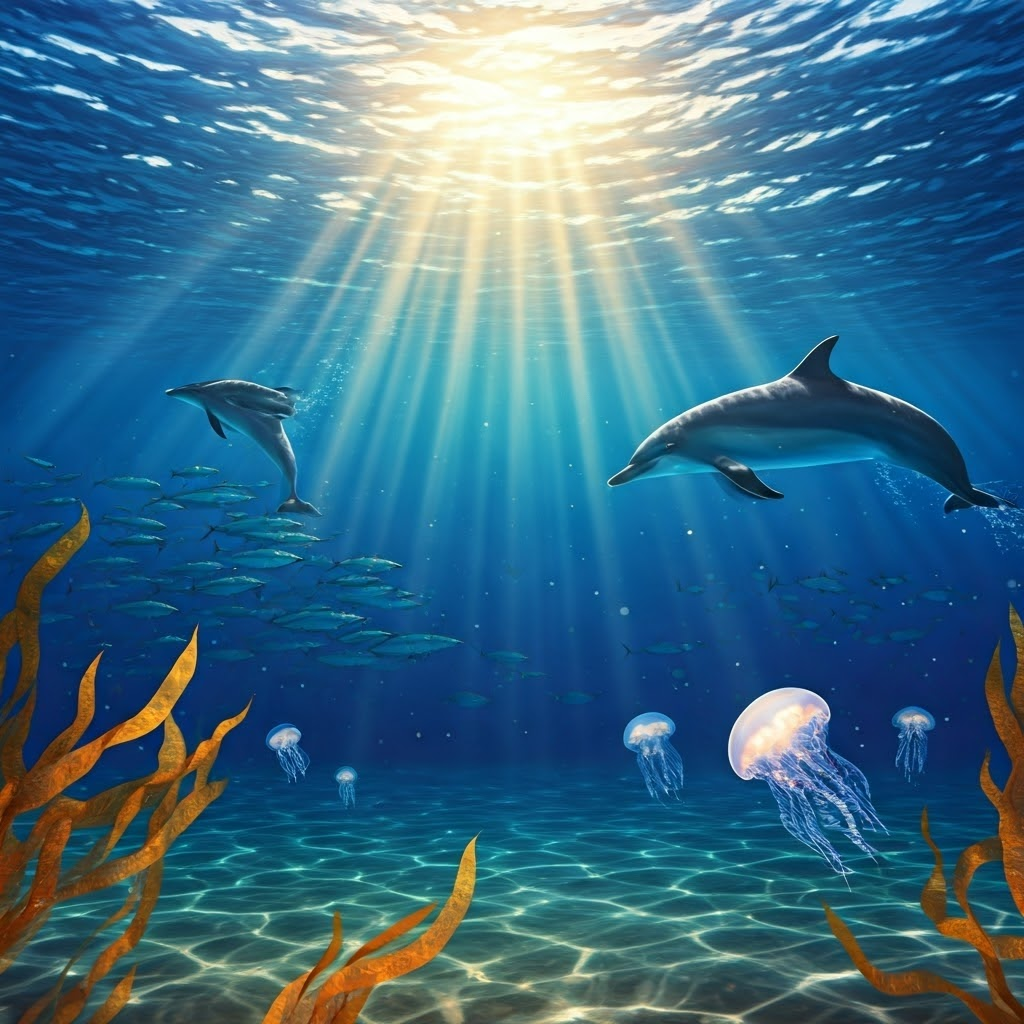
Picture the ocean as a layered cake. At the very top—the sparkling epipelagic zone—strong sunlight feeds drifting plants and lively animals.
Warm water and bright light let phytoplankton grow. Their growth supports dolphins, tuna, jellyfish, and countless smaller creatures.
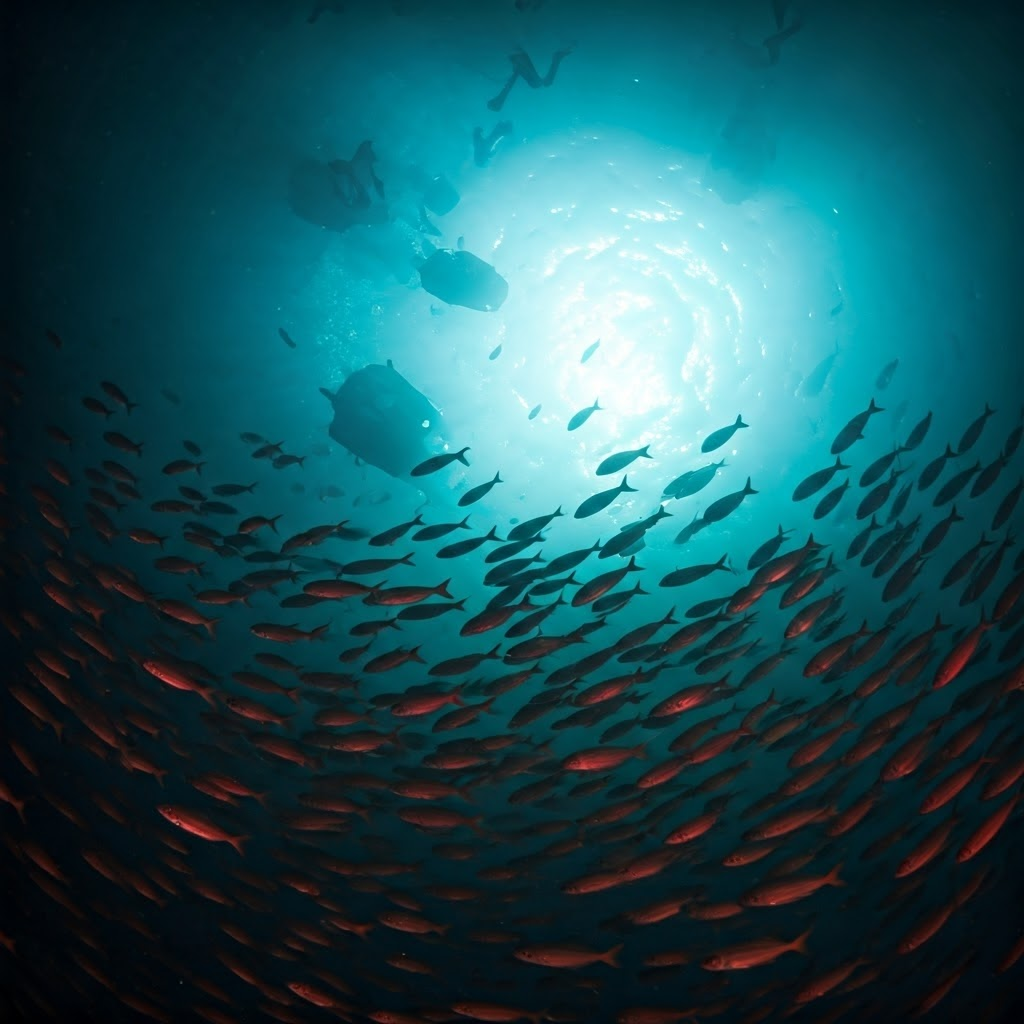
Slip down about 200 meters and you meet the mesopelagic or twilight zone. Light weakens fast. Colors fade; red appears black, yellow turns blue-green.
Temperatures drop to 4 °C. Pressure climbs—about one atmosphere every 10 meters—making each descent feel heavier and colder.
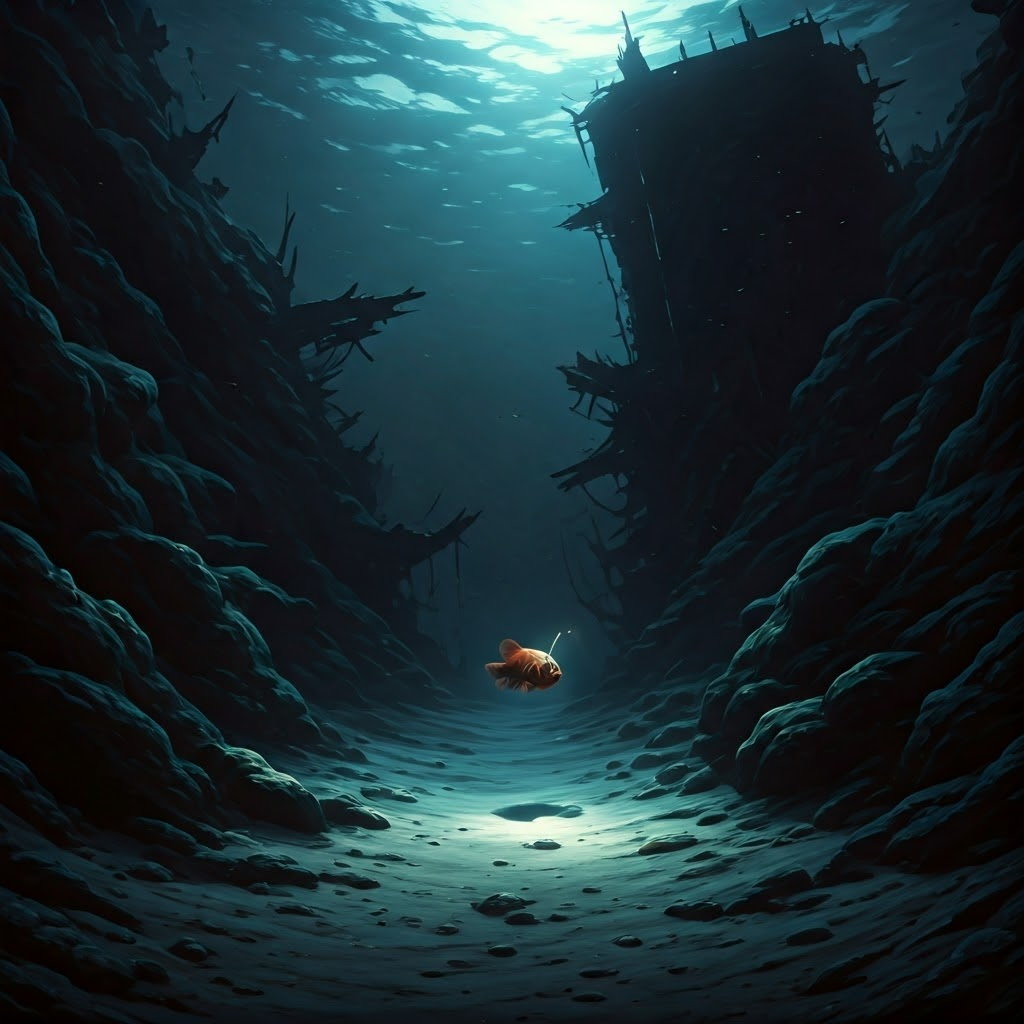
Past 1 000 meters lies the bathypelagic or midnight zone. Sunlight vanishes. Permanent darkness and crushing force rule, yet squid and anglerfish still roam.
Below 4 000 meters, the abyssopelagic zone stays just above freezing. Pressure exceeds 400 surface atmospheres, creating a world that feels alien.
Deeper than 6 000 meters, the hadal zone occupies trenches like the Mariana. Here, pressure surpasses 1 000 atmospheres, and darkness is absolute.
Why These Layers Matter
Only a thin surface film hosts most familiar life. Light availability, temperature, and pressure dictate who thrives where.
Whales and sharks stay near the top to hunt and breathe. Glowing fish and huge jellyfish flourish deeper, adapted to cold, dark water.
Life in the Shadows: Adapting to the Deep
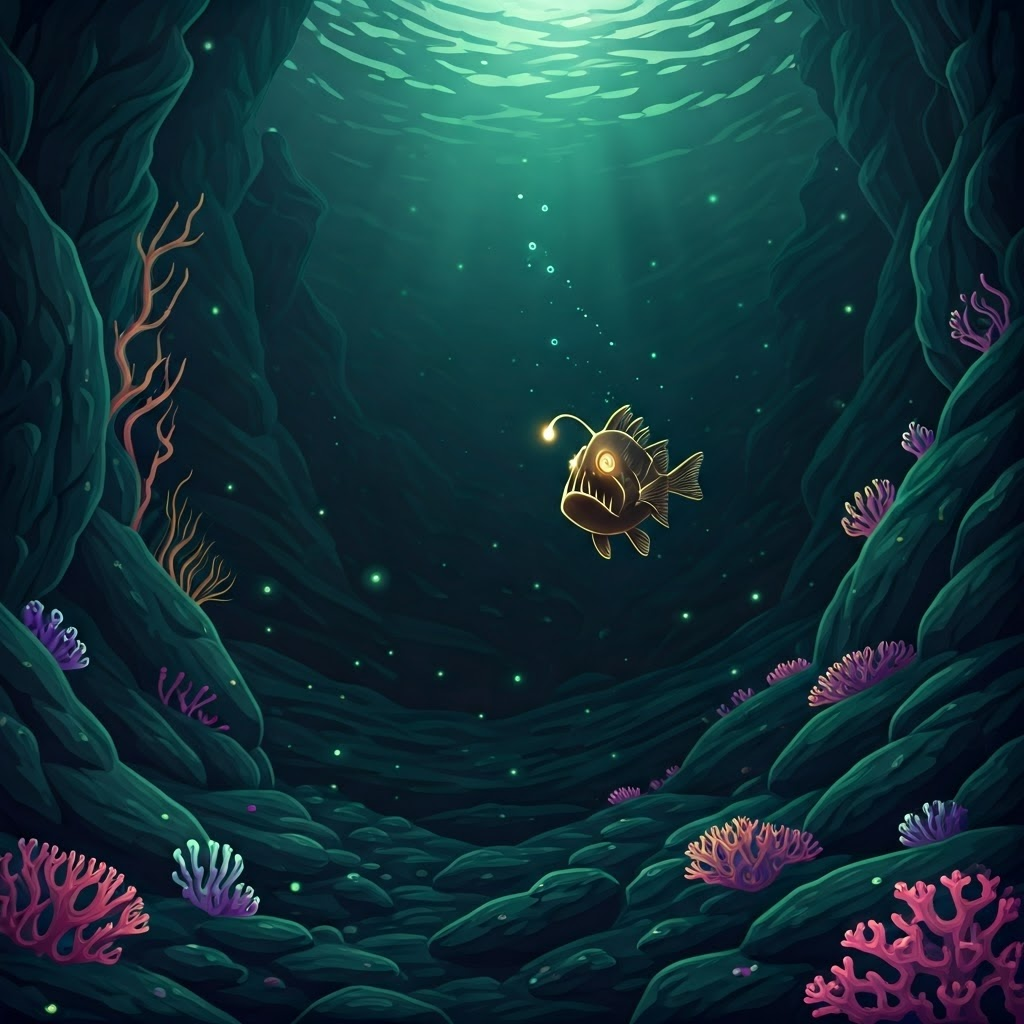
The deep sea surprises us. Many creatures create their own bioluminescence to lure prey, hide, or startle attackers.
Anglerfish wave a glowing lure. Hatchetfish match faint light from above to disappear. Some squid release clouds of shining ink to confuse threats.
Huge eyes help certain fish gather scarce photons. Others, like gulper eels, rely on sensitive skin and whiskers rather than sight.
Food is scarce, so growth is slow. Many animals wait for drifting “marine snow” or scavenge anything edible, living for decades or centuries.
Adaptations That Will Surprise You
The giant squid stretches up to 13 meters and owns the largest eyes in the animal kingdom, perfect for spotting dim glows.
Vampire squid drift gently, using filmy arms to catch falling debris. Barreleye fish even have transparent heads so their eyes can scan above.
The Deepest Places: Trenches and Beyond
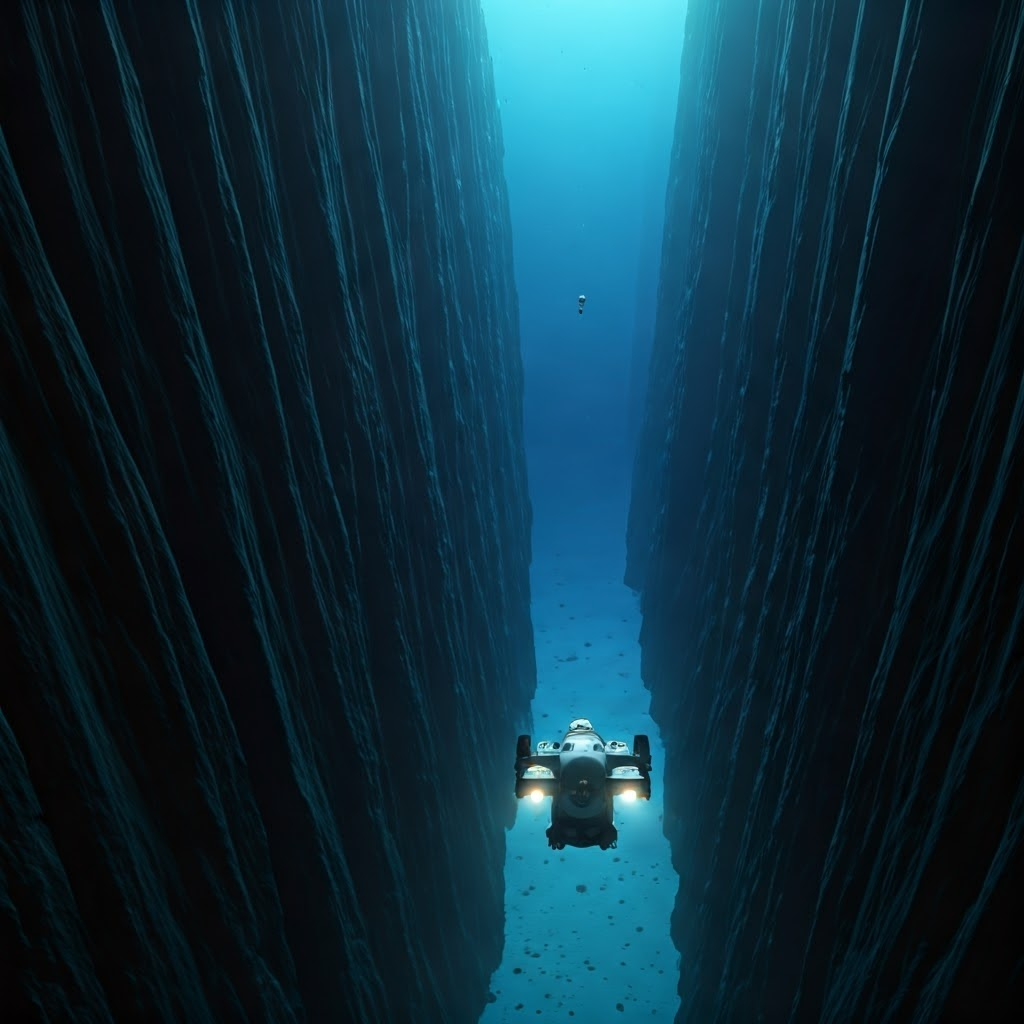
The Pacific’s Mariana Trench is Earth’s deepest chasm. Challenger Deep reaches nearly 11 000 meters—far below Mount Everest’s height.
In 1960, the bathyscaphe Trieste carried two explorers there. They saw shrimp-like animals, possible flatfish, and endless mud.
Exploring the Abyss
Deep-ocean exploration blends science and adventure. Machines must endure cold, darkness, and pressure that can crush steel.
Much of the seafloor remains unmapped. Fewer people have visited these depths than have walked on the Moon, yet each robotic dive reveals new life and possibilities.
