
The Invisible Wall: What Barriers Really Mean

Seeing the Wall: Classical vs Quantum
Picture a ball racing toward a steep hill. In classical physics, the ball needs enough energy to crest the top. If the energy falls short, the hill blocks it—period. Classical barriers feel absolute, like paying a toll: no full fee, no passage.
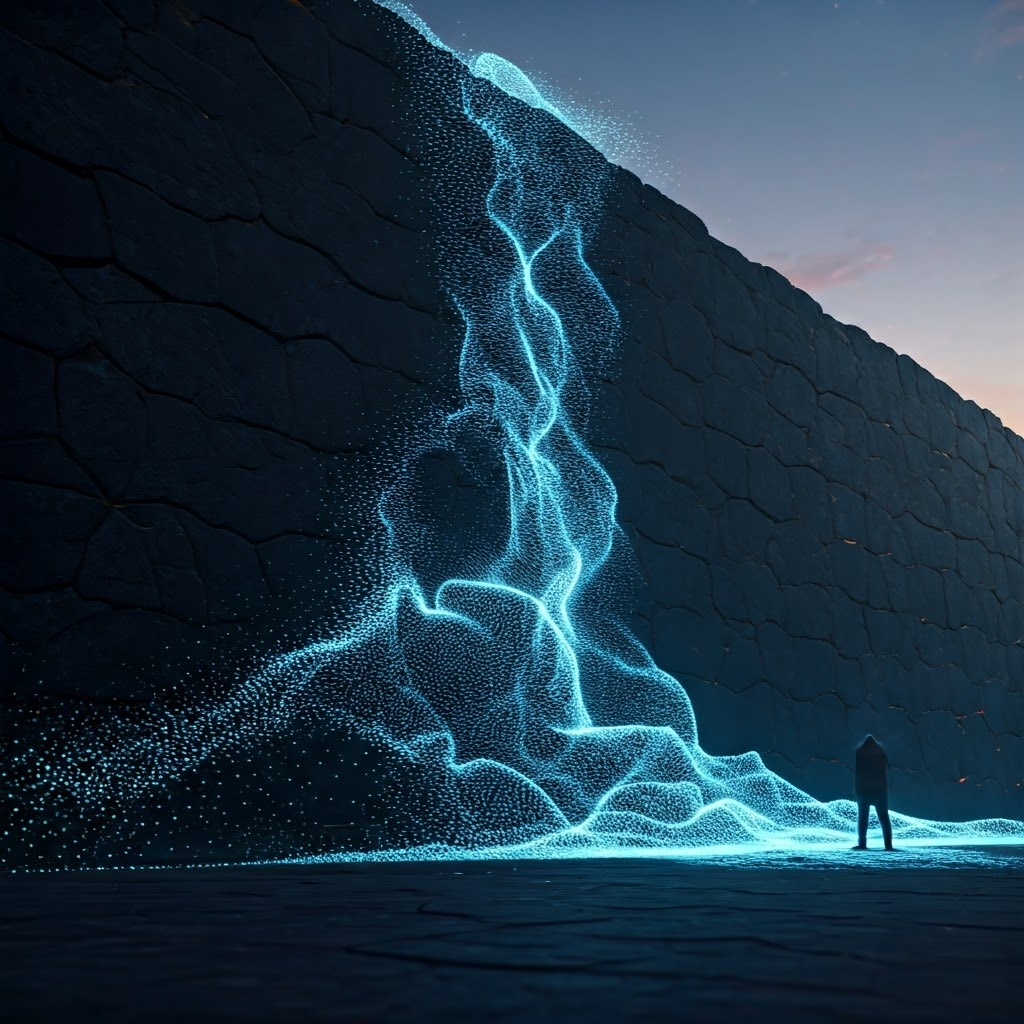
Now shift to the quantum game. Here the ball turns into a fuzzy cloud of chances. Even without the needed energy, a sliver of that cloud may slip past the hill. Quantum rules let unlikely events happen, so barriers soften into possibilities.
The Tunneling Trick
Picture the ball again, but as a mist spread over space. When this mist strikes a wall, part of it fades into the barrier. A tiny portion can reappear beyond. This striking leap is tunneling—a particle showing up where classic rules said “no.”

Cloud Through a Fence
Blow smoke at a fence and watch wisps drift through narrow gaps. In quantum terms, the smoke is a map of chance. Math predicts how much mist passes—usually tiny, never zero.

Probability and Penetration
Quantum theory never hands exact positions, only odds. Thicker or taller walls push those odds down fast. A thin barrier raises them. The mist’s slow fade inside the wall sets the penetration depth—the reach of possibility.

The Numbers Game
Simple formulas show the odds fall off exponentially. For soccer balls the chance rounds to zero, yet for electrons tunneling happens often. Electrons tunnel in batteries, enzymes, and computer chips every moment.

When Walls Aren’t Really Walls
Quantum reality teaches that many limits blur. Events once deemed impossible still occur—just with low odds. Each “solid” barrier becomes an invitation to explore the unexpected, reminding us that the universe quietly bends its own rules.
